


Jeremy Mock - UC Davis
Biography:
Abstract: The LUX detector, a 350 kg dual phase xenon detector operating in the Black Hills of South Dakota, is currently the world’s most sensitive dark matter detector. Limits were published earlier this year, representing the culmination of year of development followed by 90 days of operation. As a rare event search experiment, LUX is highly sensitive to background radiation, which necessitated a careful program of screening of all materials used in its construction. In this talk I will discuss a novel way of screening material, notably the titanium used in the cryostats, for trace radioactive impurities present within. A complete and accurate simulation is also necessary to ensure a precise understanding of the detector’s response to incident particles. I will present a model for simulating pulse shapes in xenon that is in use within the NEST/LUXSim software package. Finally, I will discuss analysis techniques that can be used to lower the energy threshold of LUX, thereby improving its sensitivity to the regime where dark matter has a mass below 10 GeV. Preliminary results on detection efficiencies and their effect on the overall WIMP sensitivity will be presented.
Gabriele Benelli - The University of Kansas
Biography: Gabriele Benelli is a senior postdoctoral researcher at the University of Kansas working on the CMS experiment. He is currently the strip calibration, simulation, local reco and DB group convener and is actively involved in the CMS single top analysis subgroup. He is one of the main author of the CMS W-associated single top production analysis (7 and 8TeV). He is a tracker calibration expert and has worked as a CERN fellow in CMS simulation and software performance, contributing to the first CMS top pair cross-section measurement in the lepton+jets final state. He worked on BaBar as an OSU postdoc on a unitarity triangle gamma analysis and successfully commissioned the LST detector (built the OSU LST HV system, wrote firmware and the slow control code). He graduated as a PhD from UC Riverside working on a search for heavy stable charged particles at the OPAL experiment at LEP, he completed his undergraduate studies at University of Bologna, Italy.
Abstract: Millions of top quarks have been produced in the first LHC run. While most top quarks are produced via strong interactions, the large statistics enabled the study of single top production via electroweak interactions. In this seminar the results of these studies will be reported using the data collected by the CMS detector at 7 and 8TeV. The single top production cross sections for all the electroweak production modes are presented with particular emphasis on the first observation of the W associated single top production.
Andrei Gritsan - Johns Hopkins University
Biography: -
Abstract: The recently discovered Higgs boson is a completely new form of matter-energy and is believed to be a manifestation of the all-penetrating Higgs field responsible for generating mass of all elementary particles. It has been observed as a resonance in the decay to a pair of two vector bosons on ATLAS and CMS experiments at LHC. The width of this resonance is expected to be just about 4 MeV, yet experimental resolution allowed us to set an upper limit on the width of about 3400 MeV. However, an interplay between the off-shell suppression of either the Higgs boson production or the vector bosons in its decay allows a new technique for a measurement of the Higgs boson width. Using the data collected by the CMS experiment at the LHC in 2011 and 2012, we perform a simultaneous maximum likelihood fit to the measured kinematic distributions of four leptons near the resonance peak and above the Z-boson pair production threshold, including the final states with neutrinos. This leads to an upper limit on the Higgs boson width of 22 MeV. Theoretical assumptions and experimental techniques leading to this measurement will be discussed.
Matteo Cremonesi - INFN
Biography: -
Abstract: Studies of the properties of the top quark are being actively pursued at the Fermilab's Tevatron and at the CERN LHC. Besides top-antitop pair production by strong interaction, which is the most common production mechanism, the less common single-top production via electroweak interaction is now being tackled. Collisions that produce a single top quark through the weak nuclear force are rarer, and the events are much less distinctive than top pairs. According to the Standard Model, single-top production can be induced by several amplitudes. Production through the exchange of a virtual W boson in the s-channel is very hard to isolate. This production channel is barely accessible at the Tevatron and is presently out of reach at the higher energy LHC. On the other hand, new physics effects might most readily show up in this channel. The observation of this production channel was one of the ultimate goals of the Tevatron. The analysis methods adopted by the CDF and D0 experiments to isolate s-channel single-top quark production will be described. The speaker will illustrate the main analysis features, underling the challenges and describing the techniques employed in order to accomplish such a difficult task. The CDF and D0 results will be shown, claiming discovery by combining them.
Frank Calaprice - Princeton University
Biography: -
Abstract: New experiments with high sensitivity are making rapid progress in searches by direct detection for evidence of dark matter WIMPs. Among these new experiments are cryogenic liquid xenon and argon detectors. I will describe the Darkside 50-kg liquid argon detector, and one of the first liquid argon detectors for dark matter searches, now operating in the Gran Sasso Laboratory in Italy. The detector exploits the unique capability of argon to discriminate against beta and gamma background with powerful pulse shape discrimination. The design of the detector incorporates other features that aim to produce “background free” results, including the use of underground argon to avoid 39Ar radioactivity in normal argon, and a combination of large scale liquid scintillator and water shielding that is highly effective for suppressing radiogenic and cosmogenic backgrounds. The scintillator-water shielding for the Darkside-50 detector was designed with ports to accommodate other detectors. I will also discuss plans to use this feature of Darkside to test and house the SABRE experiment, an array of low-background NaI(Tl) scintillation detectors designed to check the DAMA/LIBRA evidence for dark
Ana Ovcharova - LBNL
Biography: -
Abstract: The LHC has been referred to as a top quark factory, and indeed the 20 fb-1 8TeV proton-proton collisions dataset collected in the LHC Run I should contain ~5 million top pairs! An abundance of top events to analyze means we are entering an era of precision top physics. The theoretical understanding of top pair production has similarly been advancing. As of 2013, the total top pair production cross-section is known at exact next-to-next-to-leading-order (NNLO). Improved theoretical understanding and experimental measurements translate into immediate benefits to the rest of the LHC physics program. In particular, many searches for physics beyond the Standard Model include top as a main background and its modeling is one of the dominant uncertainties. Therefore, the detailed study and improved understanding of the top pair production as a function of kinematics of the tops will play an important role in increasing the sensitivity of these searches in the future. In the first part of this talk, I will present the ATLAS top pair differential cross-section measurement using traditional reconstruction methods, where all top decay products are resolved individually. In the second part, I will review methods aimed at improving the efficiency for selecting boosted top quarks and how these methods are being used to extend the differential top cross-section as a function of top pT up to the TeV range.
Francesco Rubbo - CERN
Biography: -
Abstract: The unexpectedly large forward-backward asymmetry in top pair production observed at the Tevatron experiments represents one of the main puzzles in Top Physics today. At the LHC, despite the charge-symmetric initial state, it is possible to define a charge asymmetry sensitive to the same underlying dynamics as the FB asymmetry at the Tevatron. In this talk we will present the status of the charge asymmetry measurements at the LHC and the comparison with Standard Model and New Physics predictions.

Matthew Toups - MIT
Biography: Matt completed his undergraduate work at Duke University in 2004. He then did his Ph.D. work at Columbia University on the Double Chooz experiment with Prof. Mike Shaevitz. His thesis was on the initial "far detector only" Double Chooz theta_13 result. He is now a postdoctoral associate with Prof. Janet Conrad at MIT working primarily on the MicroBooNE experiment.
Abstract: There is a broad effort in the U.S. neutrino physics community to develop the technologies necessary to build a kiloton scale liquid argon time projection chamber (LArTPC) detector for the Long Baseline Neutrino Experiment (LBNE). Liquid argon scintillation light collection is an essential component of this R&D effort, as it can be used to determine the absolute drift time of an event, reject cosmic backgrounds, and complement TPC-based particle reconstructions. The challenge for liquid argon scintillation light collection systems is that the scintillation light is emitted with a peak wavelength in the far UV (128 nm) and cannot be directly detected by a photomultiplier tube. Instead, the photons must first be wavelength-shifted to the sensitive range of the light detection elements. In this talk we briefly review LArTPC technology using the MicroBooNE detector as our example. We then focus on recent efforts to understand and improve liquid argon scintillation light collection efficiencies, and their implications for both the neutrino and dark matter communities.
Pier-Olivier Deviveiros - NIKHEF (NL)
Biography: -
Abstract: Events with three energetic, isolated leptons are a very striking experimental signature predicted by many theoretical extensions to the Standard Model. In 2012, the ATLAS experiment collected a large dataset corresponding to 20 fb-1 of integrated luminosity at a center-of-mass energy of 8 TeV. This dataset provides an opportunity to search for the existence of new physics at kinematic regimes which have never been probed before. I will present the results of a recent search for the anomalous production of such multilepton events at the ATLAS experiment. This analysis uses a model-independent, signature-based search strategy in an effort to remain sensitive to a wide range of new physics processes. In particular, I will highlight the format used to present the final results, which was designed specifically to facilitate potential recasts by the theory community, and the inclusion of tau leptons in the search, along with the associated experimental challenges.
Ryan Martin - University of South Dakota
Biography: Ph D, Physics, Queen's University, 2009 MS, Physics, Queen's University, 2006 BS, Physics, Queen's University, 2003 Research Interests: Neutrino physics, dark matter physics, underground physics. Member of the Majorana Collaboration.
Abstract: The Majorana Demonstrator experiment is currently under construction at the Sanford Underground Research Facility (SURF) in South Dakota. The experiment will deploy an array of ~30kg of point contact germanium detectors, enriched in 76Ge to search for neutrinoless double-beta decay. One of the main goals of the experiments is to demonstrate a design with unprecedentedly low levels of backgrounds that is suitable to build a tonne scale experiment. This talk will give an overview and status of the experiment, as well as future prospects.
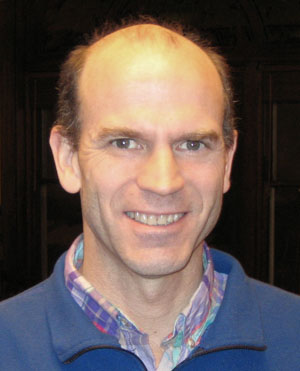
John Carlstrom - University of Chicago, KICP
Biography: -
Abstract: From its discovery nearly 50 years ago through recent measurements of its fine angular scale anisotropy, the study of the cosmic microwave background (CMB) has led to surprises and spectacular progress in our quest to understand the origin, make up and evolution of our universe. We now have a standard cosmological model, LambdaCDM, that fits all cosmological data with only six parameters -- although tensions in the data are beginning to surface. Far from being the last word in cosmology, the model points to exciting times ahead using the cosmic frontier to explore new physics, i.e., inflation, dark matter, dark energy, neutrino masses and possibly extra relativistic species such as a sterile neutrino. Precision measurements are needed to test this model fully and either magnify or resolve the cracks developing within it. This talk will review the current status of CMB measurements, with an emphasis on recent results from the South Pole telescope, and discuss ongoing work and future plans for increasingly sensitive polarization and fine angular scale anisotropy to thoroughly test LambdaCDM.

Joshua Swanson - Brown University
Biography: I did my undergraduate study in Physics with an emphasis in Astrophysics at Saint Cloud State University in Minnesota achieving a B.S in May 2008. I followed that with my graduate study at The University of Wisconsin Madison where I worked on CMS and finished my PhD in May 2013. I am currently a postdoctoral researcher at Brown University.
Abstract: The latest results of the direct coupling of a standard model Higgs boson and tau leptons using events recorded by the CMS experiment at LHC in 2011 and 2012 are presented. The dataset used corresponds to an integrated luminosity of 4.9 fb-1 of pp collision data collected at sqrt(s) = 7 TeV and 19.7 fb-1 collected at sqrt(s) = 8 TeV. Results of a search for a MSSM neutral Higgs bosons decaying to tau pairs will also be briefly summarized.
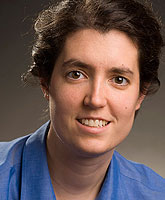
Kathryn Zurek - University of Michigan
Biography: Education: Bethel University B.S. 2001 University of Washington Ph.D. 2006. Currently Associate Professor at the University of Michigan. Professor Kathryn Zurek works at the interface of particle physics with cosmology and astrophysics. Her work spans both studies of new physics signatures at colliders, as well as astrophysical searches for dark matter (DM) and physics beyond the Standard Model in the neutrino sector. Recently, she has been most active in the study of DM. The presence of DM (five times as prevalent as ordinary matter in the universe) provides strong evidence that there are new particles beyond those in the Standard Model (which describes all currently known particles and interactions). Professor Zurek works on theories of DM and ways that we can detect it in the lab by DM-nucleus interactions, at colliders through high energy collisions, and in the galaxy by DM self-annihilations.
Abstract: Theories of weak scale dark matter are becoming increasingly squeezed by probes from direct and indirect detection and from the LHC. On the other hand, well-motivated theories of dark matter (such as Asymmetric Dark Matter) predict dark matter well below the weak scale, in some cases with mass around the proton mass. These particles typically must interact with dark forces, and the interactions with this dark force may give observable signatures at intensity experiments. We make explicit connections between intensity experiments and cosmological signatures for these dark matter candidates.
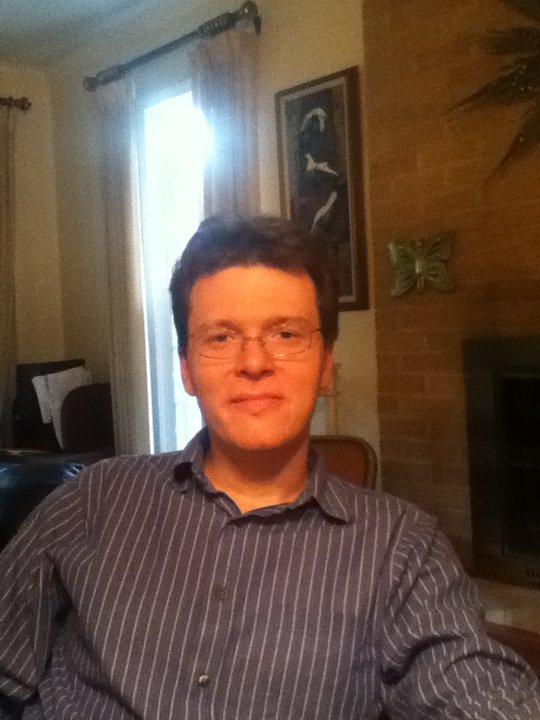
Matthew Szydagis - UC Davis
Biography: Matthew Szydagis received his Ph.D. in physics from the University of Chicago in 2010. His advisor was Juan Collar and he worked on the COUPP (Chicagoland Observatory for Underground Particle Physics) direct WIMP dark matter detection experiment, for which he constructed a 15 kg windowless bubble chamber. Since then he is known for his development of the NEST (Noble Element Simulation Technique) model for understanding the physics underlying charge and light production in noble-element-based detectors, especially TPCs. He currently works on the LUX and LZ liquid-xenon-based dark matter experiments, in addition to LBNE and CAPTAIN.
Abstract: The Long Baseline Neutrino Experiment (LBNE) will be a multifaceted 1300 km baseline neutrino beam experiment between Fermilab and SURF (Sanford Underground Research Facility). LBNE plans to study neutrino and anti-neutrino oscillations in detail, in the hopes of determining the nature of the neutrino mass hierarchy and measuring the CP violating phase. The broad physics program of LBNE will also include supernova neutrinos, atmospheric neutrinos, and proton decay. In this talk, I focus on new work performed on the subtleties of the underlying physics of the ionization and scintillation yields of the liquid argon which comprises the TPC (time projection chamber) to be deployed at SURF. I will discuss the dependence of these yields on the particle type, energy or dE/dx, and drift electric field magnitude in the context of the new NEST-based (Noble Element Simulation Technique) physics model, applicable to any noble element detector, and detail a simulated application, the discrimination of electrons and gammas in the detector.

Laura Fields - Northwestern
Biography: I grew up in Arkansas and went to the University of Arkansas as an undergraduate. I got my PhD at Cornell working on the CLEO-c experiment under Ritchie Patterson. My thesis was a study of D semileptonic decays. In 2010, I got a postdoc with Heidi Schellman at Northwestern, working on MINERvA and LBNE.
Abstract: High precision measurements of neutrino interaction cross-sections are crucial to current and future neutrino oscillation experiments that hope to measure CP violation. The MINERvA experiment at Fermilab was designed to make many such measurements. The MINERvA collaboration recently published its first studies of quasi-elastic scattering, one of the most important channels for oscillation experiments. We find evidence of nuclear effects that are similar to those observed in electron-nucleus scattering but are not included in many standard neutrino event generators. These results and prospects for future cross-section measurements at MINERvA will be discussed.
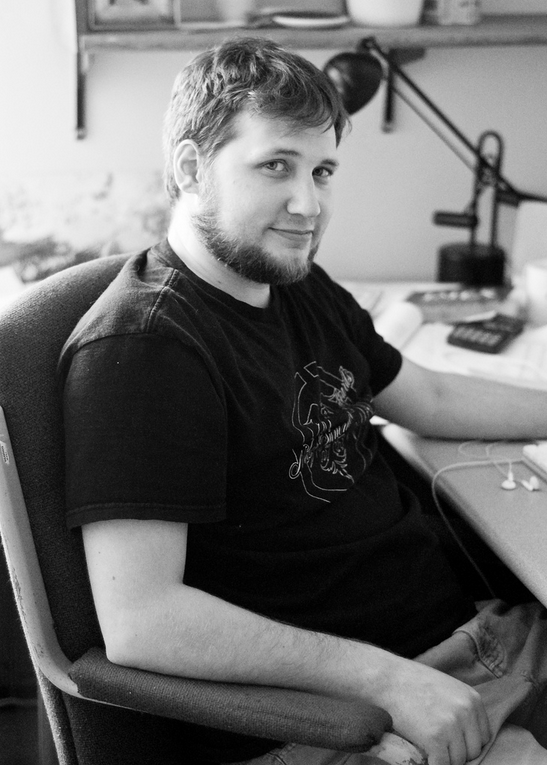
Matt Graham - SLAC
Biography: PhD from U of Minnesota in 2002 (FNAL E835). Moved to SLAC/BaBar in 2003, first with the University of Wisconsin and then (2006) with SLAC. Since 2010, worked on HPS and (recently) LBNE.
Abstract: There has recently been a flurry of activity around the idea of a new, "hidden" sector and it's relation to dark matter. This hidden sector couples weakly to the Standard Model through at least one of a limited number of portals. Via the vector portal, the Standard Model photon kinetically mixes with a new U1 gauge boson in the hidden sector (a "dark photon"). This presentation will lay out the current status and future prospects of searches for the dark photon, focusing primarily on the Heavy Photon Search experiment (HPS). Additionally, we will discuss possible experiments designed to search for light dark matter using high intensity proton or electron beam dumps. These two approaches (dark photon and light dark matter searches) are complimentary ways to explore the vector portal and both are necessary to obtain a complete picture of the hidden sector.
Bertrand Echenard - Caltech
Biography: I am currently a Senior Research Fellow in high-energy physics at Caltech, collaborating to the BABAR and Mu2e experiments. I completed my Ph.D. in physics at the University in Geneva in 2005 on studies of non-perturbative QCD at the L3 experiment at LEP. I joined BABAR in 2006, and I am currently convener of the “New Physics Searches group”, focusing on searches for New Physics and dark matter. I recently joined the Mu2e experiment, designed to search for charged lepton flavor violation in muon decays, participating to the construction of the electromagnetic calorimeter.
Abstract: Of the vast array of dark matter candidates proposed during the last decades, the possibility of dark sector(s) has recently received much attention. This class of models introduces a new hidden sector with WIMP-like dark matter particles charged under a new Abelian gauge group. The corresponding gauge boson, dubbed a dark photon, must be lighter than a few GeV to explain recent astrophysical and terrestrial anomalies. Thanks to their large luminosities and low-background environments, low-energy e+e- colliders offer an ideal environment to probe these scenarios, complementing searches for dark matter at the LHC or in direct detection and satellite experiments. In this talk, I'll briefly review the motivation and phenomenology of dark sectors, present recent searches for dark sector particles and discuss future experiments designed to further probe these possibilities.

Antonio Boveia - University of Chicago
Biography: ATLAS EXPERIMENT, POSTDOCTORAL SCHOLAR at Enrico Fermi Institute, The University of Chicago
Abstract: With the Large Hadron Collider now probing much higher energies and delivering much larger datasets than ever before, collider searches for physics beyond the Standard Model are entering their prime. In this talk, I'll discuss ATLAS searches for new physics in hadronic final states, with an emphasis on searches for intermediaries between the SM and dark matter.
Eva Halkiadakis - Rutgers
Biography: Associate Professor Rutgers University. Past experiments: KTeV, CDF. Current experiment: CMS. Worked on precision ewk measurements, top quark physics, and searches for new physics, including SUSY.
Abstract: In this talk, I will highlight some the latest searches for SUSY performed with the CMS detector at the LHC using the 8TeV dataset up to 20/fb. The results cover a broad range of signatures and final states, and probe a large range of the SUSY parameter space. The searches set stringent limits on the production of 1st and 2nd generation squarks and gluinos, 3rd generation squarks, EWK gauginos, sleptons, and include searches for R-parity violating SUSY.
Kendall Mahn - Triumf
Biography: Kendall Mahn is a postdoctoral research fellow at TRIUMF. Kendall studies neutrinos as a member of a large (~500 person) international experiment called T2K. The Tokai-to-Kamioka experiment sends a beam of neutrinos from the eastern coast of Japan to a mine on the western side (295km) to make precision measurements of neutrino oscillation and neutrino interactions. Kendall currently serves as the T2K oscillation co-convener and T2K cross section co-convener. She has also done work on nonstandard neutrino interactions, as her PhD thesis was on a search for sterile neutrino oscillations with MiniBooNE."
Abstract: The observation that neutrinos change from one flavor to another as they propagate, or "neutrino oscillation", has been one of the most surprising results in particle physics in the last two decades. Through neutrino oscillation, we now know neutrinos have a small but non-zero mass, which has wide ranging implications for astrophysics, and cosmology. The T2K experiment studies neutrino oscillation by using a>99.5% pure beam of muon neutrinos sent through Japan. This seminar will describe the recent T2K results on electron neutrino appearance and muon neutrino disappearance in a muon neutrino beam, the consequences for the origin of neutrino mass and implications for the future of neutrino physics. The wider T2K physics program, including cross section measurements and dark matter searches, will also be discussed.
Barbara Wang - Berkeley
Biography: Barbara Wang is a graduate student in nuclear engineering at the University of California, Berkeley. She currently conducts research for the Cryogenic Underground Observatory for Rare Events (CUORE), a neutrinoless double-beta decay experiment located at the Gran Sasso National Laboratory in Italy. The focus of her doctoral dissertation is characterizing and estimating the background contribution in CUORE from cosmogenic neutron activation of TeO2.
Abstract: The Cryogenic Underground Observatory for Rare Events (CUORE) is an experiment that will search for the neutrinoless double-beta (0íââ) decay of 130Te. The CUORE detector, currently being constructed underground at the Gran Sasso National Laboratory in Italy, is an array of 988 high-resolution, low-background cryogenic bolometers. Each bolometer is comprised of a thermal sensor and a TeO2 crystal that serves as both a source and a detector of 0íââ decay. The 0íââ decay signature for 130Te is a peak at the Q-value 2528 keV. Observation of 0íââ decay requires that the background rate at the peak be ultra-low; CUORE is aiming for a rate less than 0.01 counts/keV/kg/y. Background-source identification and characterization are therefore extremely important. One source of background that is poorly characterized is activation of the TeO2 crystals by sea-level cosmic-ray neutrons. This process, known as cosmogenic activation, produces long-lived radioisotopes that can obscure the 0íââ decay peak. Existing cross-section data is insufficient to estimate this background; therefore an additional cross-section measurement has been performed in which a TeO2 target is irradiated with a neutron spectrum similar to that of cosmic-ray neutrons at sea-level. The cross-sections obtained have been combined with Monte Carlo simulations of the CUORE detector to estimate the cosmogenic activation background that will be present in CUORE.
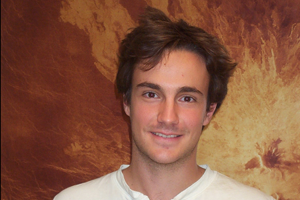
Julien Billard - MIT
Biography: I did my undergraduate and graduate studies in Grenoble in both the Grenoble Institute of Technology and the Universite Joseph Fourier. My PhD thesis was on directional detection of Dark Matter with the MIMAC detector where I have contributed to the R&D and the detection strategy of the detector. In parallel, I have also done some phenomenological studies to better anticipate the science reach of directional detection. I joined Tali's group at MIT in august 2012 to work on CDMS as part of both the analysis team and the detector R&D and testing group. In parallel, I am also involved in other low energy - rare event searches projects such as Coherent Neutrino Scattering and neutron background monitoring.
Abstract: Weakly Interacting Massive Particles (WIMPs) are a class of yet to be discovered particles hypothesized to be components of the non-baryonic dark matter content of the universe. By operating cryogenic semiconductor Ge/Si detectors, the CDMS collaboration identifies WIMP nucleus scattering events as such by measuring the induced ionization and athermal phonon energies. This talk will describe the recent CDMSII-Si results from a blind analysis of 140 kg-days of exposure that presented 3 WIMP-candidate events with an expected total background of 0.7 events. I will also discuss the measured performance of the new iZIP detectors installed in the Soudan mine and taking Dark Matter search data since march 2012. Moreover, I will present the new CDMSLite result which is a modified configuration of iZIP detectors that resulted in a world leading exclusion limit on low mass WIMPs. Eventually, I will present recent works about the expected neutrino background to direct Dark Matter searches that places a lower limit on the WIMP-nucleon cross section achievable by upcoming ton-scale experiments.
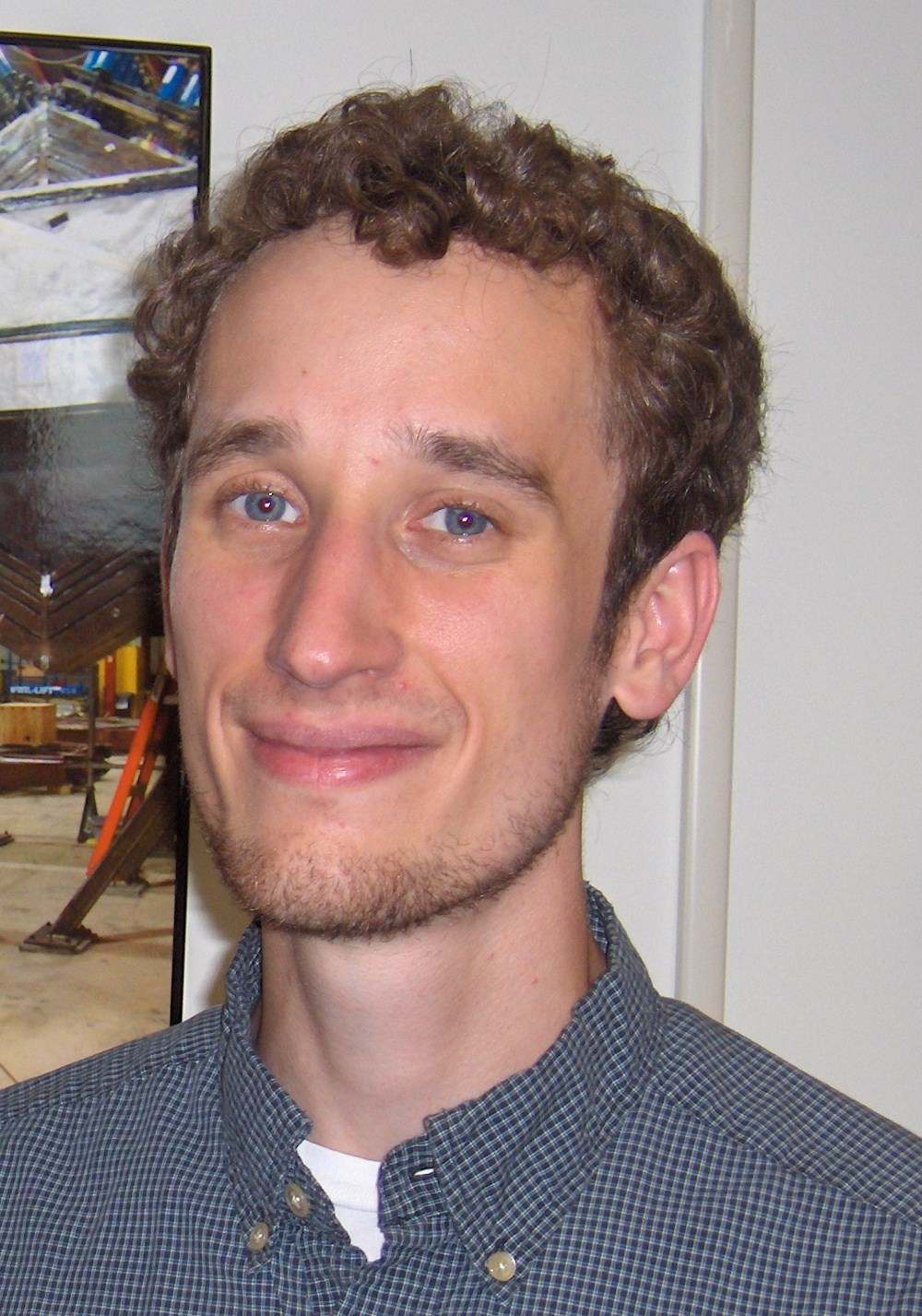
Brandon Eberly - U. Pittsburgh
Biography:
Abstract: Precise knowledge of neutrino-nucleus interactions is increasingly important as neutrino oscillation measurements transition into the systematics-limited era. In addition to modifying the initial interaction, the nuclear medium can scatter and absorb the interaction by-products through final state interactions, changing the types and kinematic distributions of particles seen by the detector. MINERvA, a fine-grained scintillator tracking detector that sits in the few-GeV NuMI beam line at Fermilab, is well-suited to study these nuclear effects in a variety of inclusive and exclusive neutrino interaction channels. In this talk, I will present the status of MINERvA's analysis of charged current pion production on plastic scintillator. The pion kinetic energy and angular distributions are measured using the complete MINERvA low energy neutrino data set. The shapes of these distributions, which vary greatly with final state interaction strength, are compared to Monte Carlo predictions with and without final state interactions.
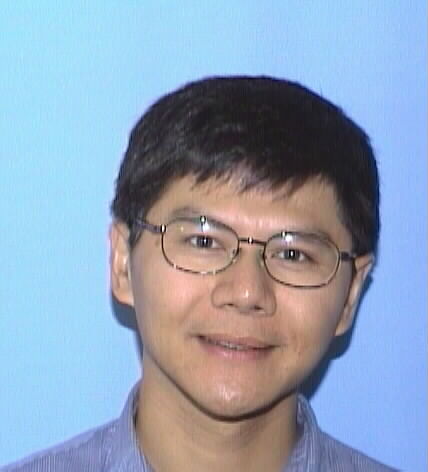
Hogan Nguyen - FNAL
Biography:
Abstract: Fermilab E989 is a new initiative to measure the Muon Anomalous Magnetic Moment (g-2) to better than one part in 10 million, a factor of 4 improvement over BNL E821. The technique is to measure the muon spin precession in a storage ring at 3.1 GeV/c (the "magic" momentum). The improvements will come from a new Fermilab accelerator complex, state-of-the art detector technologies, and better optimization of the storage ring magnetic field. E989 will reuse as much as possible the equipment from BNL E821. The 3 50' diameter superconducting cryostats were successfully transported from BNL to Fermilab in late July 2013. I will describe the E989 initiative, focusing on the spectacular 5 week journey of the 50' g-2 superconducting cryostat.
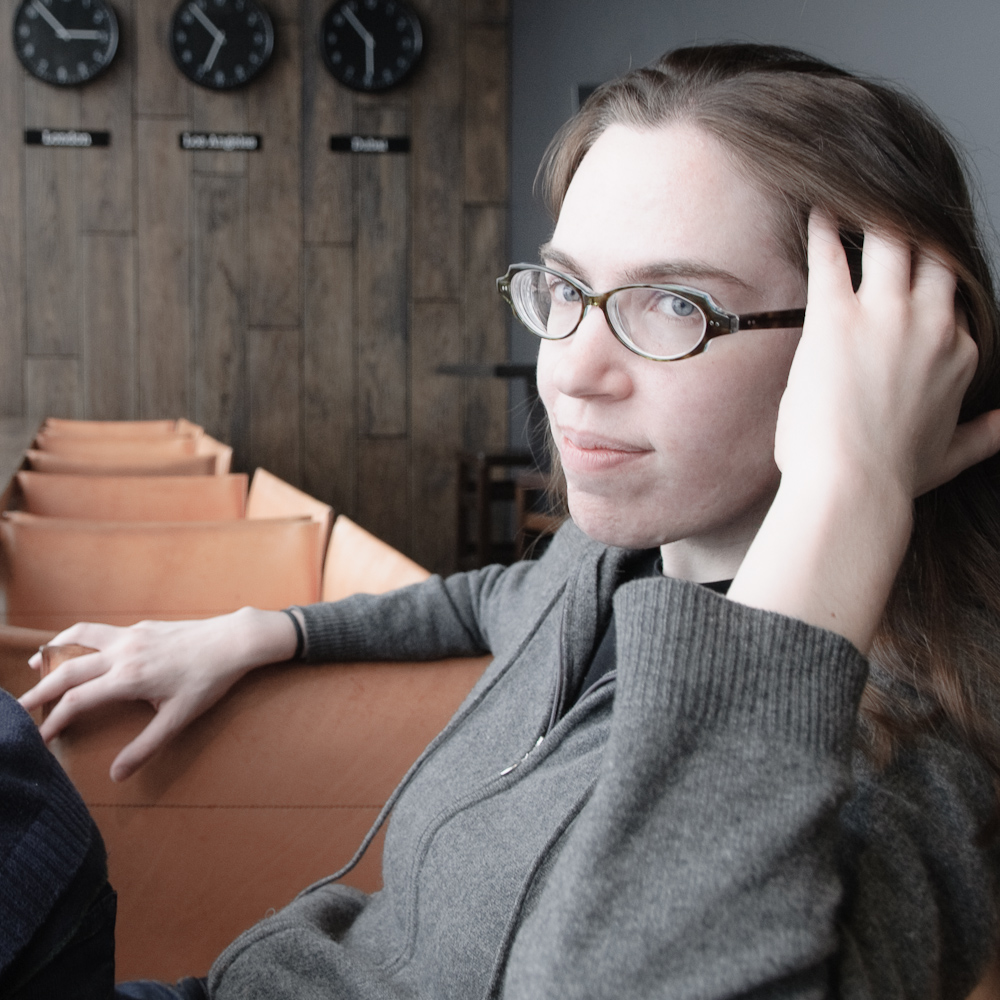
Karen Gibson - Case Western Reserve Univ.
Biography: The speaker is a postdoctoral researcher at Case Western Reserve University working in dark matter direct detection on the LUX experiment since 2009. Before she began working on dark matter, she studied B hadron physics on the CDF experiment at FNAL, contributing to the first flavor-tagged measurement of CP violation in Bs to Jpsi phi decays and several semileptonic Bc meson measurements. She is particularly interested in applying likelihood techniques to the analysis of dark matter search data.
Abstract: Results from 85.3 days of data collected by the LUX experiment. The LUX detector is a two-phase xenon time-projection chamber designed to search for the scattering of WIMP dark matter in liquid xenon. LUX has been operating underground at the 4850' level of the Sanford Underground Research Facility in Lead, SD, since February 2013, and WIMP search data was collected between April and August 2013. I will review the unblinded analysis of our initial dataset and discuss the results from our WIMP search."

Ryan Mitchell - University of Indiana
Biography:
Abstract: The spectrum of charmonium states -- particles composed of a bound charm and anti-charm quark -- has long served as a fundamental tool for studies of quarks and the strong force. The discovery of charmonium in the mid-1970's heralded the widespread acceptance of the reality of quarks. And contemporary advances in the precision of both experimental measurements and theoretical predictions have now allowed for meaningful quantitative inquiries into the workings of the strong force. But there are still a number of unresolved questions. Most strikingly, there are a number of new charmonium states, the "XYZ" states, that are yet to be fully interpreted. I will present a brief review of the importance of charmonium, what the new "XYZ" states could be telling us, and how the BESIII Experiment in Beijing, China is working to answer outstanding questions.

Yun-Tse Tsai - Rochester
Biography: The speaker received her undergraduate degree in both physics and mathematics from National Taiwan University in 2005. Based upon the search for two-body baryonic B decays at Belle, she earned a Master of Science in Physics in 2006. The speaker soon thereafter went to the University of Rochester, and continued research in the field of particle physics under the supervision of Professor Aran Garcia-Bellido. She participated in the t-channel single top quark observation, and her work culminated in her PhD thesis, which led to evidence for s-channel single top quark production and her winning of the Lobkowicz Thesis Prize of the University of Rochester in May 2013.
Abstract: Single top quarks at the Tevatron are produced via the electroweak interaction from the decay of an off-shell W boson in the s-channel, or fusion of a virtual W boson with a b quark in the t-channel. In particular, the s-channel production rate is comparatively low at the LHC, and the much larger background contamination at the LHC would make it very difficult to measure the s-channel cross section. In this talk, I will present the analysis that led to the first evidence for s-channel single top-quark production. The measurement is based on 9.7/fb ppbar collisions at sqrt{s} = 1.96 TeV collected with the D0 detector. Both the s and t-channel cross sections are simultaneously measured without assuming the standard model prediction for either, and the CKM quark mixing matrix element |Vtb|, which describes the Wtb coupling, is directly determined.
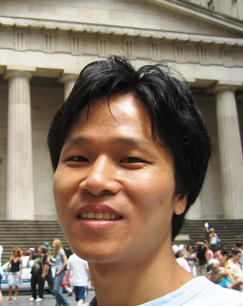
Jaewon Park - Rochester
Biography: Jaewon Park grew up in Seoul, Korea. He earned his BS and MS in physics from Korea University. He is currently pursuing a PhD from University of Rochester, working on neutrino-electron scattering in MINERvA experiment.
Abstract: Neutrino-electron scattering in MINERvA, an absolutely predicted pointlike weak process can constrain the neutrino flux of the Main Injector (NuMI) beam at Fermilab. The neutrino flux is important for MINERvA's absolute cross section measurements, which are valuable inputs for future accelerator-based neutrino oscillation experiments. Neutrino beam predictions have large uncertainties due to poor understanding of hadron production. The rare signal can be identified by requiring very forward single electromagnetic showers with dE/dx at the beginning of electromagnetic shower consistent with electrons rather than electron-positron pairs from photon pair production. This technique could be used for flux measurements in future high intensity neutrino oscillation experiments.
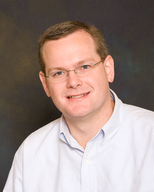
Matthew Shepherd - U. Indiana
Biography:
Abstract: It has long been suggested that spectrum of bound states of QCD may exhibit states with "valence gluons" as a result of the gluon-gluon interaction in QCD. This expectation has been bolstered by recent lattice QCD calculations of the light meson spectrum, which indicate the presence of states with gluonic degrees of freedom. The GlueX experiment plans to utilize a high intensity photon beam derived from the upgraded 12 GeV electron beam at Jefferson Lab to conduct a precision study of the light meson spectrum in search of hybrid mesons. The motivation, design, and current construction progress of the experiment will be discussed. In addition, the prospects for significantly enhancing the scientific scope GlueX using a particle identification system based on the BaBar DIRC detector will be presented.
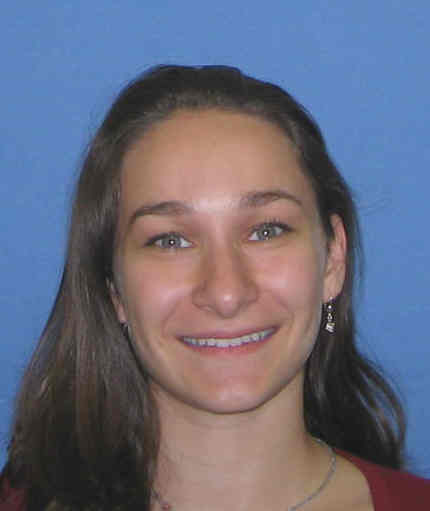
Dana Lindemann - SLAC
Biography: Dr. Dana Lindemann is a postdoc at SLAC National Accelerator Laboratory, currently working on the BaBar experiment. Originally hailing from New York, she received her BA from Wake Forest University, North Carolina, and a Masters in Teaching secondary-level science from Johns Hopkins University, Maryland. She received her PhD from McGill University, Montreal, where she worked on the BaBar and SuperB experiments.
Abstract: The study of B decays can offer indirect searches of new physics effects such as contributions from charged Higgs bosons. Recent analyses at BaBar aim to measure decays that are sensitive to new physics models. In this talk, I will discuss the B -> D(*) tau-nu results from BaBar, which are > 3 sigma from SM expectations, and the recent extensions to the analysis that further constrain new physics models. I will also discuss the related B -> tau-nu measurements. In addition, flavor-changing neutral currents are sensitive to various new physics models which can enter into the loop diagrams, so I will discuss two recent BaBar analyses on rare electroweak penguin decays, B -> K(*) nu nubar and B -> pi/eta l+l-.

Geraldine Conti - Harvard
Biography: Géraldine Conti grew up in Switzerland and studied physics at Ecole Polytechnique Fédérale de Lausanne (EPFL). In 2006, she received her Master of Sciences (Physics) from EPFL, with a master project performed in biophysics. Between 2006-2010, she did her PhD at EPFL within the LHCb collaboration at CERN. In 2010, she joined the ATLAS collaboration as a postdoctoral fellow from Harvard University (current position).
Abstract: During the last decades, the predictions of the Standard Model (SM) describing the fundamental particles and their interactions have successfully passed stringent tests performed in various particle physics experiments. Despite its success, the SM fails to address several open questions such as why there is such a large difference between the electroweak and the Planck scales, whether the forces unify or what the nature of dark matter is. Different types of models "beyond the SM" have emerged to try to address these. Among them, supersymmetry (SUSY) has received extensive theoretical and experimental attention as it can address these open questions in an elegant and natural way. SUSY is being put seriously to test with run 1 of the Large Hadron Collider (LHC) that collected 21 fb-1 of data at a centre-of-mass energy of 8 TeV. In this talk, I will review the latest SUSY results from the ATLAS experiment. In light of these, I will focus on electroweak production and explain why it could be the most promising path to SUSY for LHC run 2.
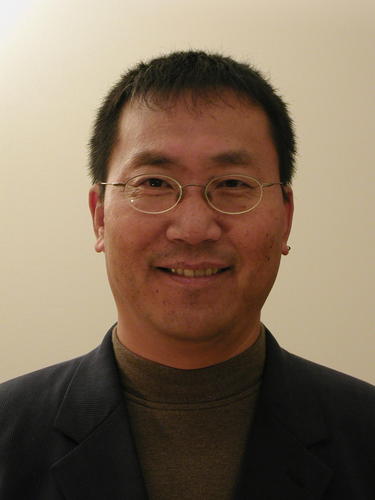
Chang Kee Jung - Stonybrook
Biography:
Abstract: At the European Physical Society meeting in Stockholm, the international T2K collaboration announced definitive observation of muon neutrino to electron neutrino transformation. In 2011, the collaboration announced the first indication of this process, a new type of neutrino oscillation, then; now with 3.5 times more data this transformation is firmly established. The probability that random statistical fluctuations alone would produce the observed excess of electron neutrinos is less than one in a trillion. Equivalently the new results exclude such possibility at 7.5 sigma level of significance. This T2K observation is the first of its kind in that an explicit appearance of a unique flavor of neutrino at a detection point is unequivocally observed from a different flavor of neutrino at its production point.
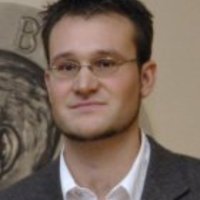
Andreas Jung - Fermilab
Biography:
Abstract: Recent results from the D0 experiment are presented based on proton anti-proton collision data at sqrt(s)=1.96 TeV, taken in Run II of the Fermilab Tevatron Collider. I will discuss measurements related to top quark physics including: top quark cross section, top quark mass and the forward-backward asymmetry in top quark production. I will also explain why measurements at the Tevatron are complementary to measurements at the LHC.

Peter Loch - Arizona
Biography:
Abstract: The proton-proton collisions at the Large Hadron Collider (LHC) at CERN, Geneva, Switzerland, at center of mass energies of sqrt(s) = 7 TeV and sqrt(s) = 8 TeV in 2011 and 2012, respectively, allow the exploration of previously unreachable kinematical regimes, where potentially new heavy particles can be produced with a significant momentum boost. Several models for these particles suggest collimated all hadronic two- or three-prong decays, with the decay products presenting themselves within a cone in rapidity and azimuth space, similar to particle jets generated by the fragmentation of light and heavy quarks, and gluons. In recent years a suite of jet substructure reconstruction techniques has been developed. Basically all of them exploit the observable differences in the internal structure of the boosted object jets, which reflect the particular decay pattern, with respect to the quark and gluon initiated (QCD) jets, which are generated by the parton shower and radiation driven particle flow. The efficiency of the individual techniques in determining the source for the jet is important for new particle searches and is presently evaluated using known boosted particle signatures like the hadronically decaying boosted W-boson and top quark. In this talk the most promising substructure reconstruction techniques are presented with respect to their performance in the experimental environment of the 2011 and 2012 data taking with the ATLAS detector at the LHC. Experimental results for substructure observables are discussed in the context of the increasing pile-up from additional proton-proton collisions in the same LHC bunch crossing as the triggered hard scatter event. The application of the substructure techniques in the reconstruction of the full hadronic top quark decay is shown, and the application of these techniques in selected searches is presented.
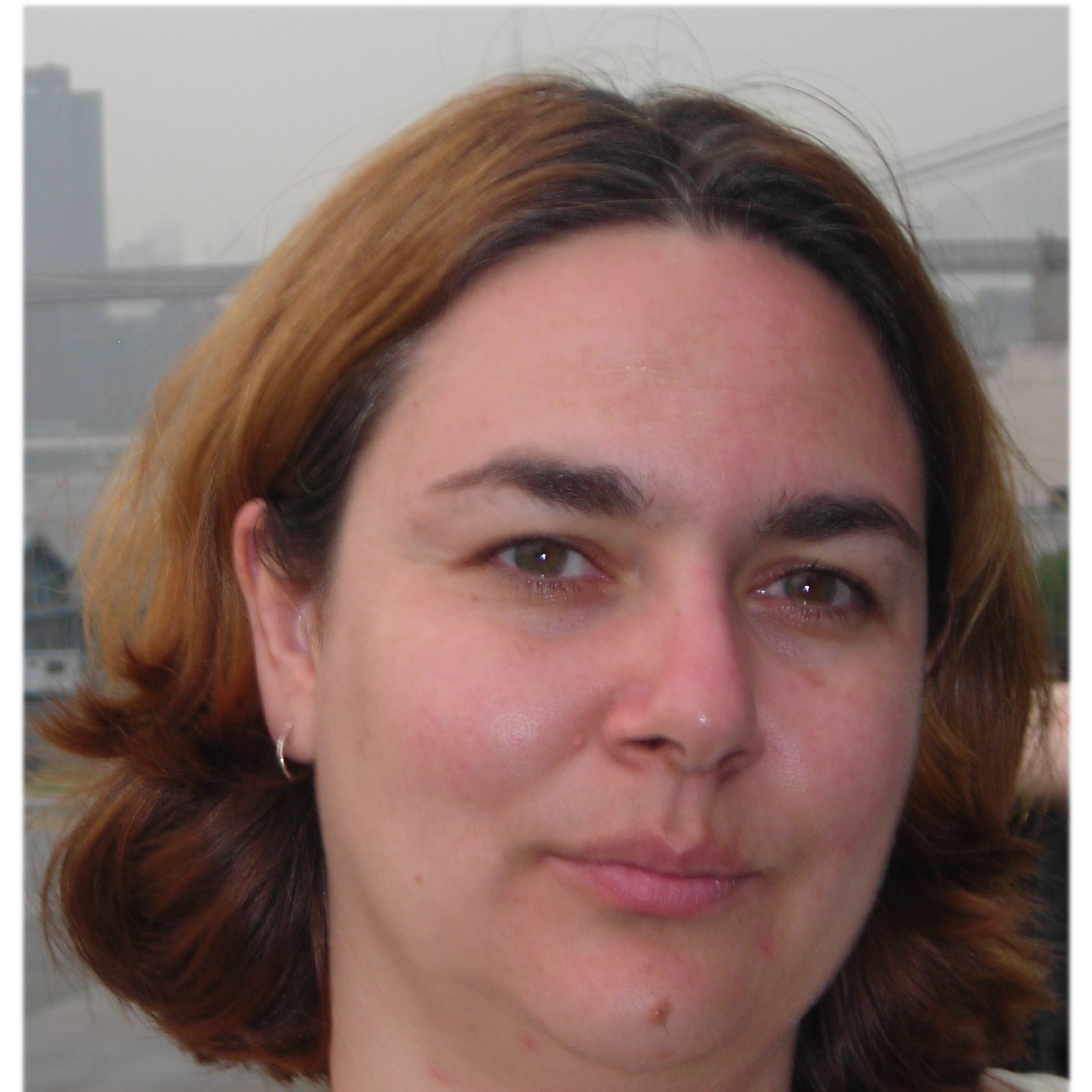
Lidija Zivkovic -
Biography:
Abstract: The Standard Model describes the unification of electromagnetic and weak interactions. It has been thoroughly tested over the past forty years, and represents one of the major successes of modern physics. This theory predictS the existence and the masses of the weak bosons and the existence of a Higgs boson which is crucial for our understanding of the origin of elementary particle masses. In July 2012, LHC experiments reported an observation of the new particle in the search for the Higgs boson with a mass of ~125 GeV decaying to predominantly to gammagamma and ZZ, while the Tevatron experiments provided evidence for the decay in bb pair of a particle compatible with the boson discovered at Cern To confirm that the discovered boson is a Higgs boson, it is necessary to establish the production and decay rates in the different modes, and its spin and parity properties. I will present an overview of the searches in all final states and combined results from the D0 experiment. In addition, I will review all Higgs boson Tevatron results with emphasis on coupling, and spin and parity determination.
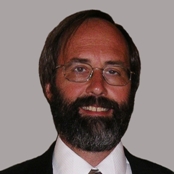
Gerald Gabrielse - Harvard
Biography:
Abstract: The most precisely measured property of an elementary particle is the magnetic moment of the electron, determined to 3 parts in 10^{13} in measurements that probe the lowest quantum levels of a single trapped electron. Perhaps the greatest triumph of the Standard Model of particle physics is a calculation of this moment that agrees with the measurement. With the assumption that the Standard Model is correct, the measurement determines the fine structure constant more precisely than any other method. Positrons are now available for a measurement of the positron magnetic moment at a similar precision to test the CPT Theorem of the Standard Model with leptons. As a baryon CPT test, our ATRAP collaboration has recently measured the antiproton magnetic moment 680 times more precisely than had previously been possible, with large precision increases hoped for as quantum methods are introduced. Finally, our ACME collaboration is probing the electric dipole moment of the electron using a beam of ThO molecules to test the prediction of the Standard Model (that such a moment is too small to measure) versus the prediction of most all extensions to the Standard Model (that the electron electric dipole moment is small but measurable with the experimental sensitivity of the new measurement).
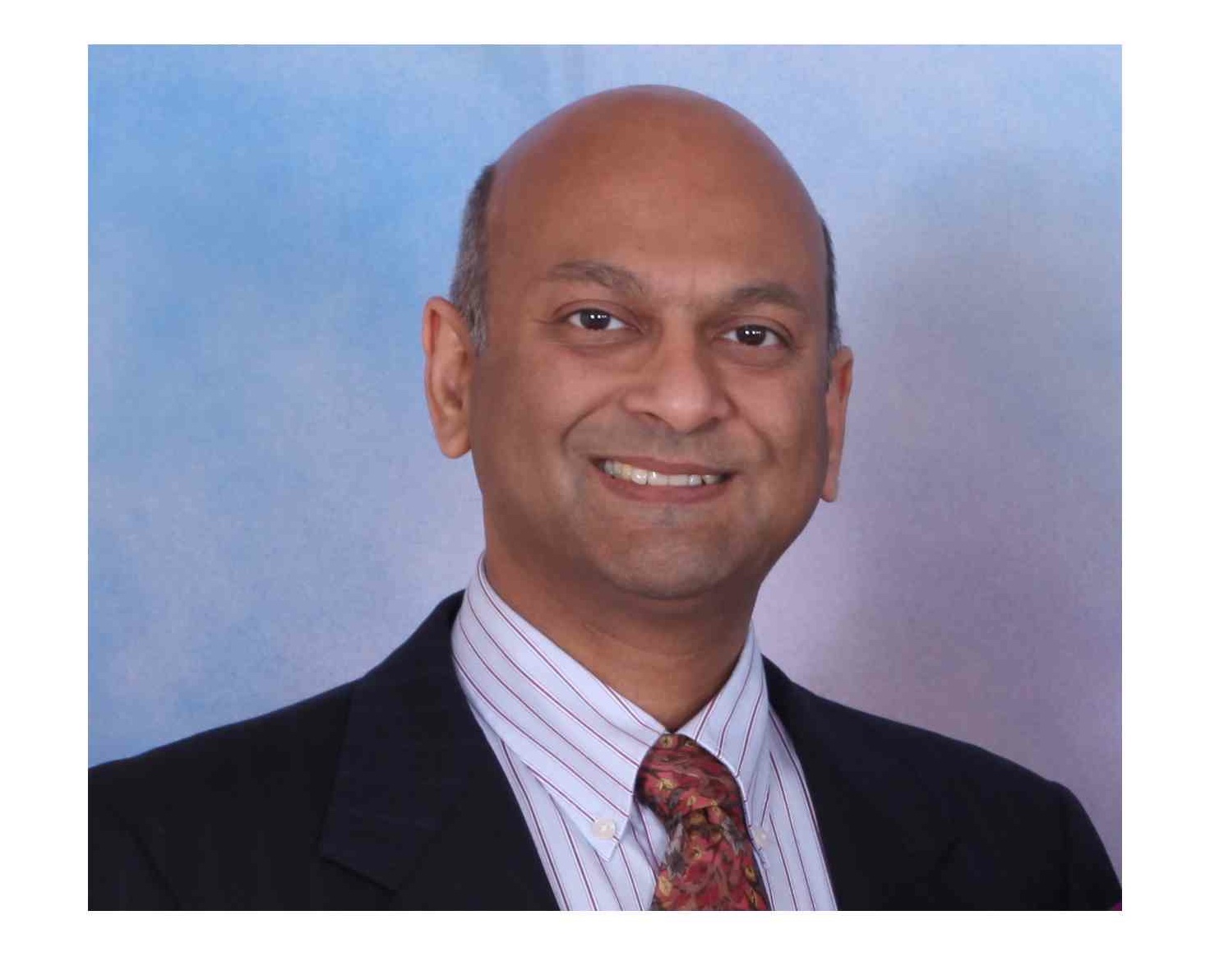
Milind Diwan - BNL
Biography: http://www.phy.bnl.gov/~diwan/
Abstract: In the US the strategy for a future long-baseline experiment has been under development over the last decade. The scientific goals of a future US based long-baseline neutrino project have been discussed and reviewed extensively by the US National Research Council and the Particle Physics Advisory Panels with recommendation for a large capable underground detector located at a distance of > 1000 km from Fermilab. In this presentation, the scientific requirements for an accelerator based long-baseline experiment will be reviewed including implications of the new determination of the third mixing angle (theta_13~9o) . The design of the US Long-Baseline Neutrino Experiment with a broad-band beam from Fermilab to the Homestake mine in South Dakota 1300 km away to a liquid argon time projection detector will be described.

Heather Gray - CERN
Biography: Heather Gray received her BSc(Hons) (2002) and MSc (2004) from the University of Cape Town in South Africa and her PhD from the California Institute of Technology (2010). From 2010-2012 was a research fellow at CERN and is currently a member of the research staff.
Abstract: In light of the discovery of a new boson at the LHC, a current critical question in the field of particle physics is whether this new particle is the long awaited Standard Boson Higgs boson or some other more exotic boson predicted by a theory beyond the SM. I will discuss how the H->bb decay mode can contribute to answering this question, review recent results from the ATLAS experiment and discuss future prospects.
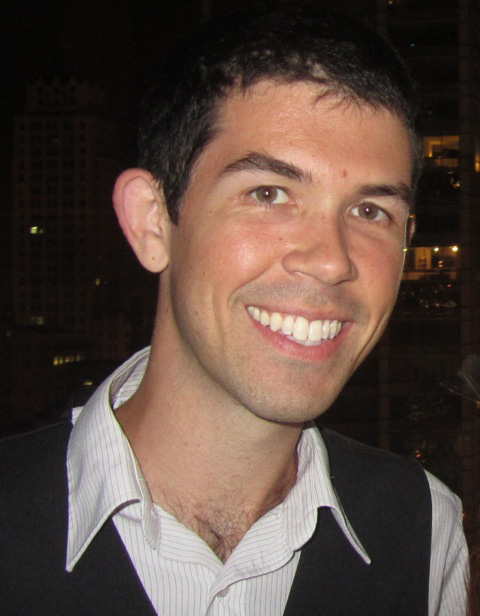
Joe Grange - University of Florida
Biography: Joseph Grange grew up in Portland, Oregon and studied physics as an undergraduate at the University of Puget Sound in Tacoma, WA. After a brief immersion in the science of candy making, he returned to physics with the University of Florida. He recently received his doctorate there for his studies of neutrino interactions, and will soon transition to work on the new g-2 project with Argonne National Lab.
Abstract: Since the discovery of the neutrino oscillations in 1998, the experimental program to precisely determine the details of how neutrinos change flavor has generally used heavy nuclei as the medium for detection. Among other things, this choice affords increased interaction statistics to more quickly gain sensitivity to the oscillation parameters, and has allowed for a first look at GeV-range neutrino and anti-neutrino cross sections on heavy nuclei. The dominant interaction for this energy region is the charged current quasi-elastic channel (CCQE, nu_l + N -> l^+- + N'), and in the last decade multiple experiments have seen hints that our description of nuclear physics is insufficient to describe neutrino scattering in a nuclear environment. I'll describe MiniBooNE's contribution to this puzzle and present the first measurement of anti-neutrino CCQE cross sections below 1 GeV. Along the way, I'll present a novel and crucial measurement of the muon neutrino component of MiniBooNE's anti-neutrino mode beam using statistical techniques.
Giancarlo Piredda - INFN
Biography: Got the Laurea in Physics at Rome University (1970). I worked on experiments at CERN first to clarify the strange meson spectroscopy situation and then to investigate the newly discovered charmed mesons properties with the a small rapid cycling bubble chamber associated to the European Hybrid Spectrometer. I moved to Neutrino Physics collaborating to the CERN program at SPS neutrino beam with the CHARM II and CHORUS experiments. I joined in the the BaBar experiment at Slac having the opportunity to spend three semesters in this beautiful place and finally I started the $\mu \to e \gamma$ search with the MEG experiment.
Abstract: Within the Standard Model (SM), despite the ascertainment of the neutrino oscillations, the flavor of charged leptons is conserved in very good approximation, and therefore charged Lepton Flavor Violation (cLFV) is expected to be unobservable. On the other hand, most New Physics models predict cLFV rate within the experimental reach, and therefore processes like the $\mu \to e \gamma$ decay are a standard probe for physics beyond the SM. The MEG experiment, at the Paul Scherrer Institute (Switzerland), searches for the $\mu \to e \gamma$ decay, down to a Branching Ration of a few $10^{-13}$, exploiting the most intense continuous muon beam in the world. I will present the most recent results from MEG, and the plan for an upgrade of the experiment, aiming at an improvement of the sensitivity by one order of magnitude within this decade. Finally I'll describe shortly other cLFV projects comparing their expected sensitivities with the MEG achievements.
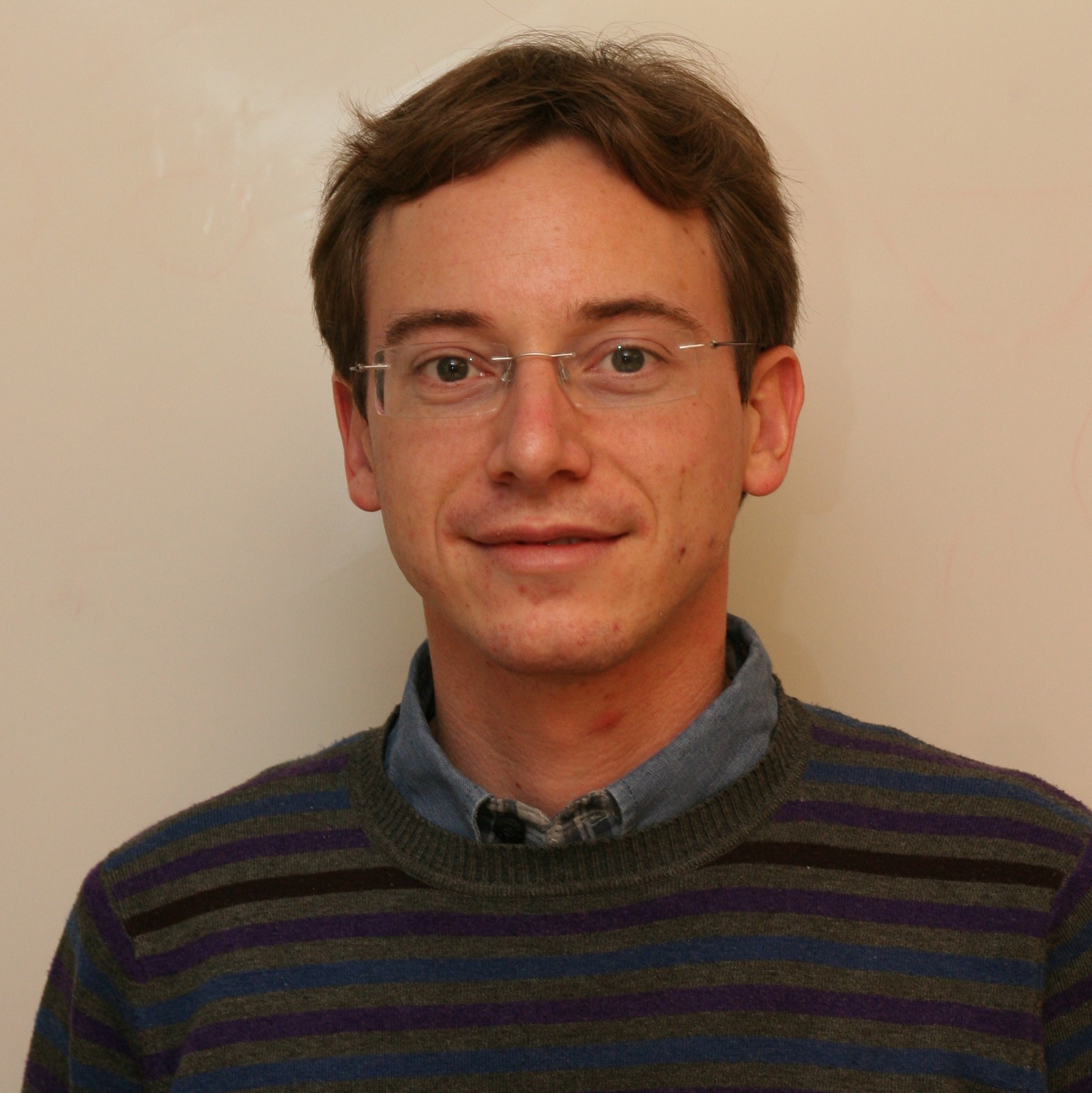
Giacinto Piacquadio - SLAC
Biography:
Abstract: After the exciting discovery of a new Higgs boson-like resonance, based on the full Run-I data the LHC experiments ATLAS and CMS are starting to measure the properties of the newly discovered particle: mass, couplings and spin. I will discuss some of the most recent progress, highlighting differences between the two experiments and present limitations, and towards the end put some emphasis on the more challenging fermionic decay channels: Higgs $\to b\bar{b}$ and Higgs $\to \tau\tau$.

Peter Kammel - University of Washington
Biography:
Abstract: At present we are at the confluence of two exciting developments in the field of muon capture. For the first time, experiments on hydrogen and the lightest nuclei are approaching sub-percent precision based on the novel active target technique developed by our collaboration, surpassing the precision of earlier data by about an order of magnitude. At the same time, effective field theories have been systematically constructed to calculate electro-weak observables for the nucleon and basic few-body systems from first principles. The MuCap experiment clarifies a long-standing puzzle about the pseudoscalar coupling of the proton and provides a basic test of QCD symmetries. In the case of deuterium, the MuSun experiment will allow a comprehensive test of the theoretical description of weak few-body reactions and will determine a low energy constant, which is critical for the calculation of related astrophysics reactions of fundamental interest.

Youngjoon Kwon - Yonsei University
Biography: Professor Kwon earned his B.S. from Seoul National University in 1986, and his Ph.D. from Stanford University in 1993, working at SLAC on the LASS and SLD experiments. Following an RA at the University of Rochester on the CLEO experiment, to took a faculty position at Yonsei University, where he is now Underwood Distinguished Professor. He has also spent time as a visiting scientist at KEK and a visiting Professor at Princeton University. He has been active in the Belle collaboration since 1996, served as CKM physics group convener for several years, and is currently Physics Analysis Coordinator. He has also been a member of the PDG since 2002.
Abstract: Leptonic and semileptonic decays of B mesons have provided crucial knowledge about weak interactions in the heavy-flavor system. In particular, the (semi)leptonic final states containing a tau lepton have been of great interest for their potential as probes of new physics beyond the Standard Model. In this talk we present recent result on (semi)leptonic B decays from the Belle experiment. Belle has collected more than 770 million B meson pairs from energy-asymmetric e+e- collisions at the KEKB collider. We will focus on B+ -> tau+ nu and B -> D(*) tau+ nu decays, while other related subject may also be covered.
Andrei Kounine - MIT
Biography:
Abstract: Alpha Magnetic Spectrometer (AMS-02) is a general purpose high energy particle detector which was successfully deployed on the International Space Station on May 19, 2011. It conducts a unique long duration mission of fundamental physics research in space. To date the detector collected over 32 billion cosmic ray events. Among the physics objectives of AMS are a search for understanding of Dark Matter, Antimatter, the origin of cosmic rays and the exploration of new physics phenomena not possible to study with ground based experiments. First AMS physics results will be presented.

Kanishka Rao - UC Irvine
Biography: Graduate student at UC, Irvine and member of the CDF experiment at Tevatron and the ATLAS experiment at the LHC. My work has primarily been in searches for new physics in the top-quark, exotics and Higgs sectors.
Abstract: We present searches for new physics at the CDF detector at the Tevatron. Recently observed anomalous forward-backward asymmetry at CDF is still at odds with the Standard Model, we present a search for a new particle resonance that may explain such an asymmetry. We also present a search for a new vector boson, a chromophilic Z', that decays exclusively to colored particles. Finally, we present possible new physics extensions to the recently discovered Higgs boson-like particle at the LHC. We present a search for a new physics scenario with two Higgs doublets at CDF.

Alan Barr - Oxford
Biography: Alan Barr started his high-energy physics career soldering cables for a CMS silicon beam test as a CERN summer student. He rapidly changed teams to ATLAS, where much of his research was in the development, construction and commissioning of that experiment’s semiconductor tracker. He has published a variety of papers on LHC phenomenology, particularly in examining prospects for searching for and understanding supersymmetric models at the LHC. More recently he led the ATLAS experiment’s SUSY Etmiss group during the early LHC SUSY searches.
Abstract: In LHC analyses, as in the rest of life, we are inevitably faced with the problem of how to deal with less than perfect knowledge. Our experimental searches force us to deal with uncertainty from e.g. the PDFs in the initial state, imperfect experimental reconstruction, and from undetected particles. A variety of techniques have been developed for dealing with uncertain and incomplete information. In this seminar we will examine some more (and less) motivated methods that have been developed for dealing with imperfect knowledge, with illustrative highlights from recent ATLAS SUSY and Higgs analyses.
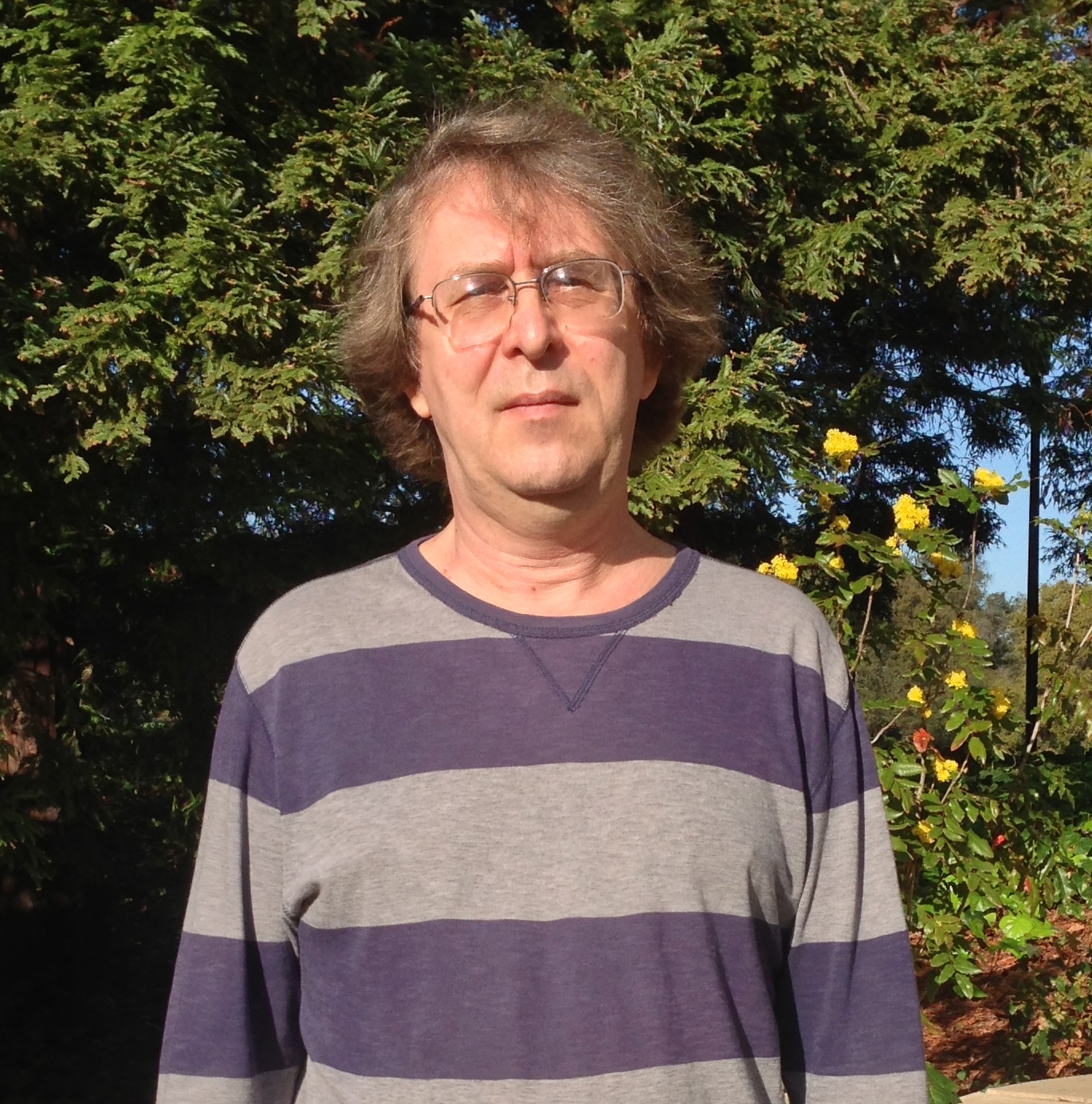
Vladimir Druzhinin - BINP
Biography:
Abstract: Study of the e+e- annihilation into the proton-antiproton pair began 40 years ago. However, the first accurate measurement of the e+e- --> p anti-p cross section in a wide energy region was performed only in 2005 by the BABAR detector using the initial-state radiation method. This measurement was based on about half of data collected in the BABAR experiment. In this talk, I will present the final BABAR analysis of e+e- --> p anti-p based on the full data sample. The e+e- --> p anti-p cross section and the proton effective electromagnetic form factor have been measured from threshold up to 4.5 GeV. Below 3 GeV the ratio of the electric and magnetic form factors has been extracted from the analysis of the proton angular distribution. The charge asymmetry in the angular distribution has been also studied. The BABAR results are compared with existing data from e+e- and p anti-p annihilation experiments. Future measurements of the proton electromagnetic form factors will be briefly discussed.
Francis Halzen - University of Wisconsin, Madison
Biography: I am a theoretician studying problems at the interface of particle physics, astrophysics and cosmology. Since 1987, I have been working on the AMANDA experiment, a first-generation neutrino telescope at the South Pole. AMANDA observations represent a proof of concept for IceCube, a kilometer-scale observatory now completed and taking data.
Abstract: Construction and commissioning of the cubic-kilometer IceCube neutrino detector and its low energy extension DeepCore have been completed. The instrument detects neutrinos over a wide energy range: from 10 GeV atmospheric neutrinos to 1010 GeV cosmogenic neutrinos. We will discuss initial results based on a subsample of the more than 300,000 neutrino events recorded during construction. We will emphasize the measurement of the atmospheric neutrino spectrum, the search for the still enigmatic sources of the Galactic and extragalactic cosmic rays, and for the particle nature of dark matter. We will also discuss the first observation of PeV-energy neutrinos.
Sarah Demers - Yale University
Biography:
Abstract: Tau Polarization, which provides access to the degree of parity violation in decays to taus, can be a powerful discriminator in searches for physics beyond the standard model. It can also provide information about the the spin/CP of particles that decay to taus. I will present the results of the first measurement of tau polarization at a hadron collider and discuss the next steps in a physics program built on accessing tau polarization at ATLAS.
Evgeni Solodov - BINP
Biography: Professor Solodov is attached to Novosibirsk State University and the Budker Institute for Nuclear Physics. He has long been an integral part of the e+e- collider program at BINP, participating in the CMD, CMD-2 and CMD-3 experiments at the VEPP-2M and VEPP2000 colliders. In addition, he was involved with the early detector/technology exchanges between BINP and SLAC, and has been a member of the SLD, g-2 and BaBar collaborations.
Abstract: Two e+e- machines, VEPP-4M and VEPP2000 are operating at the Budker Institute of Nuclear Physics in Novosibirsk, Russia. The latest results on psi mesons from the KEDR detector VEPP-4M will be reported. Two detectors, SND and CMD3, are currently taking data at the VEPP2000 collider. The round beam approach allows a significant increase in machine luminosity at c.m. energies up to 2 GeV. The data collected up to now in the 1-2 GeV energy range are comparable to, or better than, those obtained by B-factories via ISR. Preliminary results on a number of multi-hadron final states from these two detectors will be reported. At the moment, VEPP2000 is scanning the region below 1 GeV to get a new precision measurement of the e+e- -> pi+pi- cross section.
Janet Conrad - MIT
Biography: Professor Conrad earned her B.A. from Swarthmore College, her M.Sc. from Oxford University and her Ph.D., in 1993, from Harvard University. She was a postdoctoral researcher and then faculty with Columbia University. She then moved to the Massachusetts Institute of Technology. She has worked in the field of neutrino studies for 20 years, and was co-spokesperson of the MiniBooNE experiment. She is now participating on Double Chooz and MicroBooNE and is co-spokesperson of the DAEdALUS program.
Abstract: Neutrino physics is entering the precision era. To move forward, we must develop new, powerful sources for neutrinos that have well-understood fluxes. Sources that use decay-at-rest of isotopes, pions and muons are ideal because the particle content and the energy distribution of the neutrinos are well understood. I will explain why cyclotrons are ideal drivers for these sources, and discuss progress in producing machines that deliver ~1 MW of proton beam power and beyond.
Janet Conrad - MIT
Biography: Professor Conrad earned her B.A. from Swarthmore College, her M.Sc. from Oxford University and her Ph.D., in 1993, from Harvard University. She was a postdoctoral researcher and then faculty with Columbia University. She then moved to the Massachusetts Institute of Technology. She has worked in the field of neutrino studies for 20 years, and was co-spokesperson of the MiniBooNE experiment. She is now participating on Double Chooz and MicroBooNE and is co-spokesperson of the DAEdALUS program.
Abstract: Compelling evidence gathered over the last decade indicates that neutrinos have nonzero masses and that leptons mix. But these exciting developments may be just the beginning. There are now many paths that neutrino physicists can follow. In this talk, I will focus on searches for new physics using neutrinos with energies in the MeV to GeV range. I will highlight the development of new tools - new beams and new detectors – that are helping us move forward, and I will consider where the field might find itself at the end of the next decade.

Per Hansson - SLAC
Biography: Per Hansson Adrian earned his Ph.D. from the Royal Institute of Technology, KTH, in Stockholm, Sweden in 2009, working on the D0 and ATLAS experiments. He joined the SLAC ATLAS group as a Research Associate to work on qualifying 3D silicon pixel sensors in test beams for the ATLAS IBL project. He has also been using simplified models in searches for Supersymmetry with heavy flavor final states at ATLAS, and was convenor of their b-jet trigger group. Since 2012, He has been a member of the Heavy Photon Search experiment at Jefferson Lab, which is his current focus. He has been involved in most aspects of the construction and commissioning of the silicon tracker, built at SLAC, for the HPS test and in the development towards a new detector for the next generation of the experiment.
Abstract: Interest in new physics models including so-called hidden sectors has increased in recent years as a result of anomalies from astrophysical observations. The Heavy Photon Search (HPS) experiment proposed at Jefferson Lab will look for a mediator of a new force, a GeV-scale massive U(1) vector boson, the Heavy Photon, which acquires a weak coupling to electrically charged matter through kinetic mixing. The HPS detector, a large acceptance forward spectrometer based on a dipole magnet, consists of a silicon tracker-vertexer, a lead-tungstate electromagnetic calorimeter, and a muon detector. HPS will search for the e+e- or mu+mu- decay of the Heavy Photon produced in the interaction of high energy electrons with a high-Z target, possibly with a displaced decay vertex. As a first stage, a test apparatus was designed, built and operated in the spring of 2012. The seminar will cover the proposed experiment and results from the test run.
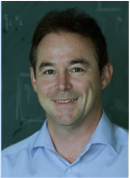
Matthias Neubert - University of Mainz
Biography: Professor Neubert earned his Ph.D. in theoretical physics in 1990 from the University of Heidelberg. After posdocs at Heidelberg and SLAC, he spent five years on the CERN staff, and has been on the faculty at Heidelberg, Cornell and the Johannes Gutenburg University in Mainz. He is currently director of the Mainz Institute for Theoretical Physics. His research interests include QCD and collider physics, flavor physics and CP violation, effective field theories and physics beyond the standard model.
Abstract: The long-anticipated discovery of a Higgs-like boson at the CERN Large Hadron Collider in July 2012 has been a milestone for elementary particle physics. Yet, searches for new particles beyond those contained in the Standard Model have so far not led to new insights. Whatever Nature has prepared for us to discover, she hides it very well. Indirect searches for new physics, combining precision measurements at high luminosities with accurate theoretical calculations, therefore remain of crucial importance. I will discuss several examples of such searches, including Higgs physics, rare flavor-changing processes, electroweak precision tests, and searches for new interactions.
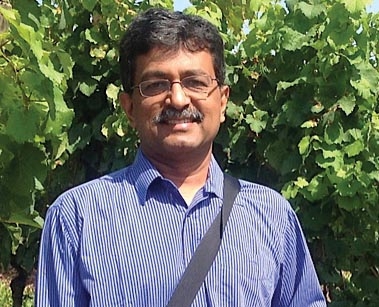
Krishna Kumar - University of Massachusetts
Biography: Professor Kumar earned his Ph.D. in 1990 from Syracuse University, then took a postdoc at Harvard on the L3 experiment. He moved on to faculty positions at Princeton and UMass, where he has worked at the boundary of nuclear and particle physics, and been involved with many low-energy experiments. Particular interests include: beyond the Standard Model searches; tests of fundamental symmetries & conservation laws; neutral weak interactions; weak structure of hadrons; proton spin structure; and precision tests of low energy QCD.
Abstract: Electrons, Muons and Neutrinos have played, and will continue to play, a central role in particle physics discoveries. Both experimentally and theoretically, leptonic interactions facilitate access to some of the rarest processes and tests of Nature's most enduring symmetries. New initiatives in this domain form a critical component of Physics at the Intensity Frontier, addressing puzzles about the highest energy scales and the earliest moments in the evolution of the universe. In this talk, I will describe three separate initiatives that search for new physics via symmetry violation. The EXO-200 experiment is testing lepton number conservation by searching for neutrinoless double-beta decay of Xe-136. The Mu2e experiment is being built to test charged lepton flavor conservation by searching for neutrinoless conversion of muons to electrons in the field a nucleus. The MOLLER experiment has been proposed to search for tiny deviations in the ultra-precise prediction for the amount of parity nonconservation in electron-electron scattering.
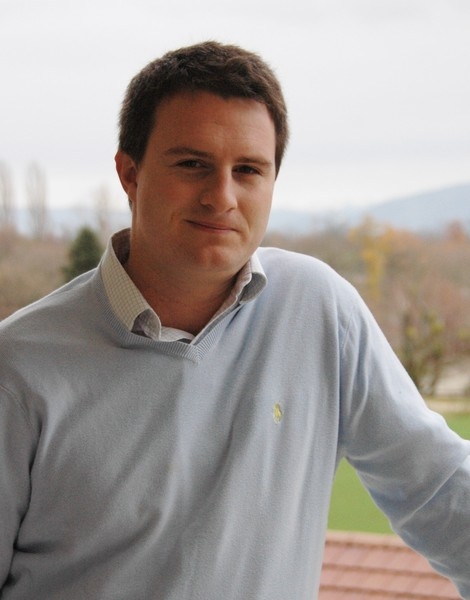
Chris Rogan - Caltech
Biography: Mr. Rogan received his undergraduate degree from Princeton University in 2006, where he started working with the CMS experimental group. He has continued working on CMS ever since, continuing as a graduate student at Caltech, and expects to receive a Ph.D. this month. His research interests include precision calorimetry, measurements of the spin and quantum numbers of newly discovered particles, such as the Higgs-like boson recently found at CMS and ATLAS, and searches for SUSY and other BSM phenomenon.
Abstract: At the LHC, many new physics signatures feature pair-production of massive particles with subsequent direct or cascading decays to weakly-interacting particles, such as SUSY scenarios with conserved R-parity or H -> WW -> (lnu)(lnu), often motivated by models of new physics which attempt to mitigate the hierarchy problem in the Standard Model. We introduce a set of dimensionless kinematic variables that can assist in the early discovery of processes of this type in conjunction with a set of variables with mass dimension that will expedite the characterization of these processes, called the razor variables. We will discuss the derivation of these variables, working from examples motivated by the signal processes we are searching for. The phenomenology of the these variables will be described for both signal and background event topologies. Additionally, we will describe the design of analyses utilizing these variables, in particular focusing on the CMS SUSY searches in the all-hadronic, single lepton and di-lepton final states, applied to the 2010-11 datasets at 7 TeV. We will briefly discuss possibilities for new, exclusive searches for new physics for the LHC based on adaptations of these variables.
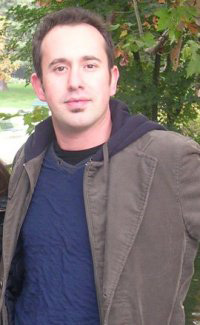
David Lopes-Pegna - Princeton University
Biography: Dr. Lopes-Pegna earned his PhD from the University of Pavia, Italy, in 2005, working on the FOCUS experiment. He then took a postdoc at LBNL, working on the BaBar experiment, where he convened the tracking and semi-leptonic physics working grouns. He has been on the research staff at Princeton since 2007, continuing his work on BaBar and also joining the CMS experiment, which is his current focus. He is convener of the inclusive B and Jet substructure groups, and works on MET+jet trigger development, B production, and is leading the Higgs -> b-bbar analysis effort.
Abstract: The recent observation of a new boson at 126 GeV opens a new phase in the LHC experiments, in which the nature of this state (Standard Model-like Higgs boson or not) will have to be carefully studied and determined. The H->b-bbar channel plays a fundamental role in this study, allowing to test the boson properties for decays into fermions. I'll present the most recent results from CMS on the Higgs boson search in the b-bbar channel, concluding with some remarks on the future of this search in the LHC runs in 2014 and beyond.
Patrick Huber - Virginia Tech
Biography: Professor Huber obtained his degree in theoretical physics from the Technical University in Munich, Germany in 2003. Since then he has held appointments at the University of Wisconsin, Madison, and as a theory fellow at CERN, and he joined Virginia Tech in 2008. He has won a prestigious Otto-Hahn medal from the German Max-Planck society and a DOE Early Career Research Award in 2010. He is co-founder of the Center for Neutrino Physics at Virginia Tech and one of the lead developers of the GLoBES software package which has become the de facto standard in the field of long-baseline neutrino oscillations.
Abstract: In the past 18 month the notion of a large value of theta13 evolved from fiction to fact. In this talk I will review the impact large theta13 will have on future neutrino oscillation experiments at long and short baselines, specifically as far as the determination of the mass hierarchy is concerned. I also will provide the global context for a potential US program.
Kai Yi - University of Iowa
Biography: Dr. Yi earned his Ph.D. from Johns Hopkins University in 2004, working on the CDF experiment. He came to SLAC as a postdoc on the BaBar experiment, then moved to the University of Iowa, where he is now a research scientist working on CDF and CMS.
J/psi phi K+ decays at 7 TeV -->Abstract: We report the observation of two structures in the J/psi-phi mass spectrum of exclusive B+ -> J/psi phi K+ decays produced in pp collisions at sqrt(s) = 7 TeV using 5.2 fb-1 of integrated luminosity collected with the CMS detector at the Large Hadron Collider. Interpreting the two structures as J/psi-phi resonances with S-wave relativistic Breit-Wigner lineshapes over a three-body phase-space non-resonant component, we obtain a significance exceeding 5-sigma for the first structure. The fitted mass of the first structure is m = 4148.2 +/- 2.0(stat) +/- 4.6(syst) MeV. This observation is consistent with a previous evidence for a narrow structure near J/psi-phi threshold by the CDF Collaboration. The fitted mass of the second structure is m = 4316.7 +/- 3.0(stat) +/- 7.3(syst) MeV.
Leo Stodolsky - MPI-Munich
Biography: Dr Stodolsky earned his Ph.D. from the University of Chicago, working on a model of Delta baryon production, with J.J. Sakurai as advisor. He spent several years at SLAC in late 60's, and moved to the Max-Planck Institute in 1973 as Director of the theory department. He is now Director Emeritus, and remains active in theoretical and experimental cosmology and particle astrophysics, with particular interest in low temperature detectors, high energy gauge theories and decoherence in quantum mechanics.
Abstract: Results from the last run of the CRESST experiment, with 730 kg-days, are discussed. The question of verifying a positive signal in general for such low background experiments is examined. A comparison with different target materials can help to distinguish a true signal from unsuspected backgrounds.
Sridhara Dasu - University of Wisconsin
Biography: Professor Dasu earned his Ph.D. in 1988 from the University of Rochester, working on the E141 Deep Inelastic Scattering experiment at SLAC. He took a postdoc at SLAC to continue won E140 and E141, as well as joining the SLD experiment. From there he moved to the University of Wisconsin-Madison, where he has worked on the SDC, ZEUS and BaBar experiments. He has been a member of the CMS experiment since its inception and was responsible for several aspects of the experiment. He helped design the level-1 and high level trigger systems, operates a Tier-2 computing center in Madison, and is currently co-convener of the CMS Higgs to Taus analysis subgroup.
Abstract: A search for Higgs bosons decaying to a pair of taus is presented using pp collision at both 7 and 8 TeV energy with the CMS experiment at LHC. This search is a major test whether the newly discovered boson couples to taus as predicted by Standard Model, at the appropriate level. Several production modes of the Higgs (GluGlu, VBF and associated with W/Z boson ) are covered using final state categories. The search, with b-tagging included, is also interpreted in a search for neutral Higgs bosons in the MSSM parameter space.
Gabriel Orebi-Gann - UC-Berkeley and LBNL
Biography: Professor Orebi-Gann attended the University of Cambridge in the UK from 2000 to 2004, where she received her BA and MSci in Natural Sciences. She went on to the University of Oxford, and was awarded her DPhil in Particle and Nuclear Physics in 2008. Her post-doctoral research was performed at the University of Pennsylvania, in Professor Klein's research group, working on SNO and its successor, the SNO+ experiment. Gabriel joined the U.C. Berkeley faculty in 2012.
Abstract: Neutrinos are one of the most fascinating particles that occur in nature: hundreds of millions of times smaller than the proton, the neutrino was once thought to be massless and to travel at the speed of light. Huge strides have been made in our understanding of neutrinos in past decades, with the resolution of the solar neutrino problem providing clear evidence of neutrino oscillation and, thus, a non-zero neutrino mass. This has allowed us to move beyond the basic questions to a precision era, in which we can study further properties of these fundamental particles. This talk will introduce the SNO+ experiment: a multi-purpose neutrino experiment with a broad experimental program and wide physics reach. SNO+ will search for the answer to the very nature of the neutrino: is it unique among fermions as being its own antiparticle? Can we place limits on the absolute mass scale? SNO+ will also follow on from the extremely successful SNO experiment with an extensive solar neutrino program, in which we can use the Sun to study neutrinos more closely, and neutrinos to study the Sun.
Christina Mesropian - Rockefeller University
Biography:
Abstract: The CDF experiment at the Fermilab Tevatron has produced a wealth of QCD physics results. While achieving an unprecedented level of precision for many QCD observables, the CDF collaboration also developed a very extensive program of soft QCD studies. Soft high energy interactions are very important in pp collisions. These types of events are dominant by many orders of magnitude while significant part of them are of a diffractive origin. The CDF collaboration contributed significantly to the understanding of the diffractive processes by studying a wide variety of observables at different center-of-mass energies. These results and new methodology developed at CDF provide an important blueprint for similar LHC analyses, while constraining phenomenological models describing these processes. This presentation will review the most relevant soft QCD analyses at CDF and discuss what new information might be still gained from the Tevatron data set.
Richard Partridge - SLAC
Biography:
Abstract: Cosmological measurements indicate that the ordinary matter encompassed within the Standard Model of particle physics can account for only ~1/6 of the matter in the universe, providing direct evidence for new physics beyond the Standard Model. A leading candidate for this dark matter is weakly interacting massive particles, which offers the possibility of directly observing dark matter interactions in terrestrial detectors. The Cryogenic Dark Matter Search (CDMS) uses Ge crystals cooled to ~50 mK to measure the athermal phonons expected from dark matter interacting with the Ge nucleus. Simultaneous measurement of the associated ionization signal allows robust rejection of backgrounds from ionizing radiation. The status and results for CDMS experiments at the Soudan Underground Laboratory (CDMS-II and SuperCDMS Soudan), as well as efforts to build a new 200 kg experiment at SNOLAB (SuperCDMS SNOLAB), will be presented.
Zarko Pavlovic - LANL
Biography: Dr. Pavlovic earned his B.S. in Physics in 2003 from the University of Zagreb, Croatia, and went on to earn his Ph.D. in 2008 at The University of Texas on the MINOS experiment. He moved to a postdoc at the Los Alamos National Laboratory, where he is now on the research staff. He is active in the MiniBooNE and MicroBooNE experiments, involved in combined oscillation analyses and convening the Beam Group. He is also Reconstruction group co-convener on the MINOS+ experiment.
Abstract: The majority of experimental data involving neutrino oscillations can be explained by oscillations between the 3 Standard Model neutrinos. However, over last few decades several anomalies have been observed that call for new physics. The LSND experiment observed an excess of electron anti-neutrinos in a muon anti-neutrino beam. The MiniBooNE experiment observed anomalous excesses with both neutrino and anti-neutrino data. The Gallium and reactor anomalies point to deficit of electron neutrino and anti-neutrino events respectively. Intriguing explanation of these anomalies is the existence of light sterile neutrinos. The talk will review the latest results from MiniBooNE and discuss the future outlook.

Kyungeun Lim - Columbia University
Biography: Kyungeun did her master's research at Ewha university in Korea, on the XMASS experiment in Kamioka, Japan. She started her Ph.D study at Columbia in 2006 and joined XENON in the summer of 2007. Most of her time from late 2007 to early 2009 was spent at the Laboratori Nazionali at Gran Sasso in Italy, during the detector construction and commissioning phase of XENON100. Since 2009, she mostly worked at Nevis Lab in New York, focusing on the XENON100 data analysis and measurements of signal response of liquid xenon to low energy particles. She plans to defend her PhD. dissertation in November 2012.
Abstract: XENON100 is a dual-phase (liquid-gas) time projection chamber (TPC) containing a total of 161 kg of LXe with a 62 kg WIMP target mass, built with radiopure materials to achieve an ultra-low electromagnetic background and operated at the Laboratori Nazionali del Gran Sasso in Italy. Data from the XENON100 experiment have resulted in the most stringent limits on the spin-independent elastic WIMP-nucleon cross sections for WIMP masses above 8 GeV/c^2. I will present the experiment and its latest dark matter search results. I will also discuss a dedicated test facility built and operated at Columbia University to measure with high precision the scintillation response of LXe to low energy electron and nuclear recoils of interest to dark matter direct detection experiments like XENON.

Fernando Martinez-Vidal - Universitat de Valencia
Biography: Professor Martinez-Vidal earned his Ph.D. from the University of Valencia in 1997, working on the DELPHI experiment. After a CERN fellowship, he moved on to postdoctoral work at CNRS and INFN-Pisa on the BaBar experiment. He has focused mainly on B and D meson mixing, and CP-, T- and CPT-violation, and has served as convenor of several working groups. He is also becoming involved with the LHCb experiment.
Abstract: The mechanism of CP violation in weak interactions, as arising from the single physical phase in the three-generation CKM matrix, has been validated by more than a decade of intense experimental work, particularly with studies of B mesons at B factories. This success of the three-generation theory was recognized by the award of a share of the 2008 Nobel Prize in physics to Kobayashi and Maskawa. Since the Standard Model theory is CPT invariant, it predicts that the weak interaction is also time irreversible. However, probing directly the predicted time asymmetry, or weak arrow of time, without using an observable that also violates CP, has been proven difficult. In this seminar we shall discuss how the BaBar experiment at SLAC has conducted a new analysis of the data already used to measure CP violation, to observe for the first time the weak arrow of time through the exchange of initial and final states in transitions that can only be connected by a T-symmetry transformation.
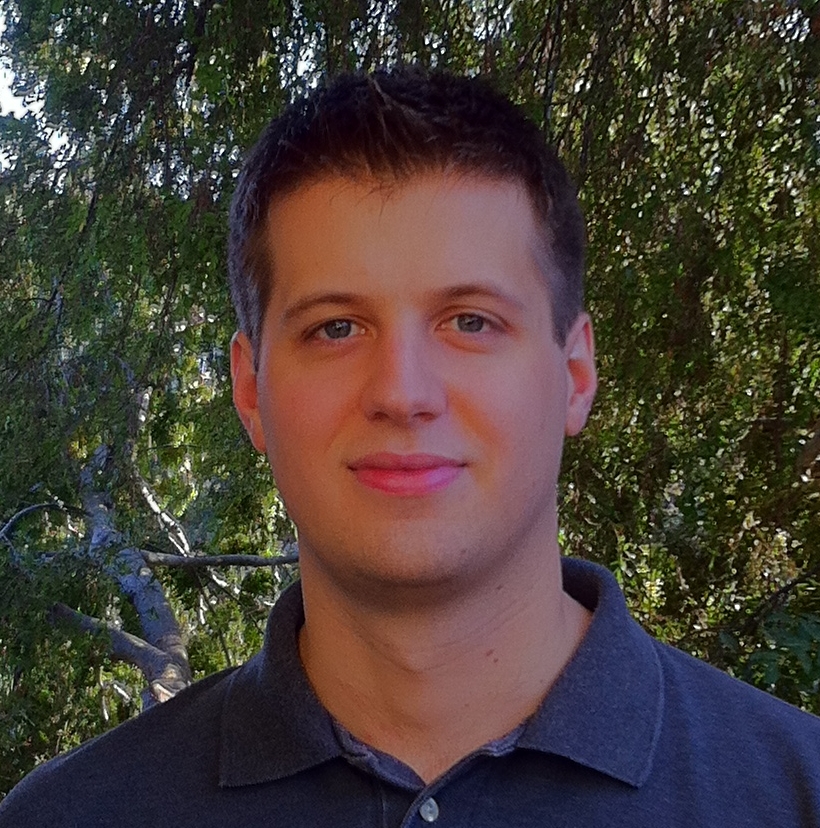
Bart Butler - SLAC
Biography: Mr. Butler received his undergraduate degree from Dartmouth College in Physics and Chemistry in June, 2006, and began work on BaBar data analysis in David MacFarlane's group at SLAC a month later. He then joined the SLAC ATLAS group in January, 2007, and since then has spent 3 years in residence at CERN, working on the ATLAS pixel detector, track jets and calorimeter jets, supersymmetry searches, and software development. He hopes to graduate soon.
Abstract: From the hierarchy problem to gauge unification to dark matter, supersymmetry provides elegant solutions to many of today's pressing theoretical problems. A natural supersymmetric solution to the hierarchy problem strongly implies light third-generation scalar quarks, which makes analyses targeting such final states among the most well-motivated of new physics searches. This seminar will focus on the most recent ATLAS searches for scalar bottom production and gluino-mediated scalar top and bottom production in hadronic final states with b-tagged jets and missing transverse momentum. The advantages of the "simplified models" approach to designing broadly sensitive searches will also be discussed.
Pascal Nef - ETH Zurich
Biography: Mr. Nef is a Ph.D. student in the CMS group of the Swiss Federal Institute of Technology (ETH) Zurich. His research focus is ultimately on the search for physics beyond the standard model of particle physics. He has studied the discovery potential of top-partners in composite Higgs models and conducted a novel search for supersymmetry in hadronic final states. In this search, the kinematic variable MT2 is used to discriminate a potential signal from the standard model backgrounds.
Abstract: A search for supersymmetry or other new physics resulting in similar final states is presented using a data sample of 4.73 inverse femtobarns collected at sqrt(s)=7 TeV with the CMS detector. Fully hadronic final states are selected based on the variable MT2, an extension of the transverse mass in events with two invisible particles. Two complementary studies are performed. The first targets the region of parameter space with medium to high squark and gluino masses, in which the signal can be separated from the standard model backgrounds by a tight requirement on MT2. The second is optimized to be sensitive to events with a light gluino and heavy squarks. In this case, the MT2 requirement is relaxed, but a higher jet multiplicity and at least one b-tagged jet are required. No significant excess of events over the standard model expectations is observed. Exclusion limits are derived for the parameter space of the constrained minimal supersymmetric extension of the standard model, as well as on a variety of simplified model spectra.
Homer Wolfe - The Ohio State University
Biography: Dr. Wolfe performed his doctoral research on strong coupling and parton density measurements with the ZEUS experiment at HERA, and graduated in 2008 with a degree from the University of Wisconsin-Madison. He is currently a postdoc at Ohio State working on the CDF experiment at the Tevatron, where he has served as Deputy Convener of the Higgs boson working group and currently serves as the co-convener of the Top Quark and Exotics working group. He is also active in the CMS experiment at the LHC, as Level 1 Trigger Software Coordinator, focusing on near-term upgrade development.
Abstract: The CDF experiment at the Tevatron has a rich portfolio of Higgs boson analyses, some of which continue to provide competitive and complimentary information to the LHC experiments. While the new boson discovered at the LHC is observed to decay to photons, W bosons, and Z bosons, the dominant predicted decay mode of the standard model Higgs boson to bottom quarks has yet to be observed or excluded. The searches by the CDF and D0 collaborations currently lead in expected sensitivity to a standard model Higgs boson decaying to bottom quarks, and show evidence for this process. The CDF collaboration has also performed searches for Higgs bosons from supersymmetric models. This presentation will review the most relevant Higgs boson analyses at CDF, and discuss what new information might still be gained from the Tevatron data set.
Nicolas Morange - Ecole Polytechnique
Biography: Dr Morange obtained his Ph.D. in 2012 from the French Ecole Polytechnique. After completing a master's degree in theoretical physics at the Ecole Normale Superieure in 2009, he turned to experimental particle physics and worked on the ATLAS experiment. His research subjects were the Z+b measurement, and the search for the Higgs boson in the 4 leptons channel.
Abstract: The 4 leptons channel plays a significant role in the recent discovery of a new particle in the search for the standard model Higgs boson by the ATLAS experiment. Before presenting the search for the Higgs into 4 leptons with 2011 and 2012 data in itself, we cover some of the studies needed in ATLAS to achieve this result. They range from improvements in electron reconstruction, to the measurement of b-jets produced in association with Z bosons.
Arely Cortes Gonzalez - University of Illinois
Biography: Dr. Arely Cortes-Gonzalez earned her BS in physics in 2006 from the Universita Tecnologico de Monterrey, Mexico, and her Ph.D. in 2012 from the University of Illinois, Urbana-Champaign. A member of the ATLAS collaboration, she worked on the offline muon track monitoring, and the measurement of the t-tbar cross section in the dileptonic channel, introducing a "track-lepton" selection which contributed to an increased signal efficiency. She applied this to her thesis analysis, which she will describe in this talk.
Abstract: The top quark, the heaviest elementary particle known, provides an interesting probe of the Standard Model (SM). Deviations from the decay and production predictions from the SM give a model-independent test for physics beyond the SM. I present a search for flavor changing neutral current (FCNC) processes in top-quark decays by the ATLAS Collaboration. Data collected from pp collisions at the LHC with a center-of-mass energy of 7 TeV during 2011, corresponding to an integrated luminosity of 2.1 fb^{-1} were used. A search was performed for top-quark pair-production events, with one top quark decaying through the t->Zq FCNC (q=u,c) channel and the other through the SM dominant mode t->Wb. Only decays of the Z-boson to charged leptons and leptonic W-boson decays were considered as signal. Consequently, the final-state topology is characterized by the presence of three isolated charged leptons, at least two jets and missing transverse momentum from the undetected neutrino. No evidence for an FCNC signal was found. An upper limit on the t->Zq branching ratio of BR(t->Zq)<0.73% is set at the 95% confidence level.
Dominick Olivito - University of Pennsylvania
Biography:
Abstract: An inclusive search for anomalous production of two prompt, isolated leptons with the same electric charge will be presented. The search is performed in a data sample corresponding to 4.7 fb^-1 of integrated luminosity collected in 2011 at sqrt(s)=7 TeV by the ATLAS detector at the LHC. Pairs of high-pT leptons (ee and mumu) are selected and the dilepton invariant mass distribution is examined for any deviation from the Standard Model background expectation. No excess is found and upper limits on the production of like-sign lepton pairs due to contributions from physics beyond the Standard Model are placed as a function of the dilepton mass within a fiducial region close to the experimental selection cuts. The 95% confidence level upper limits on the cross section of anomalous dilepton production range between 1.7 fb and 45.7 fb depending on the dilepton mass and flavor combination.

-
Biography:
Abstract: Using the full Upsilon(5S) data sample from the Belle experiment, we present measurements of the branching fractions: B(Bs -> Ds Dsbar ) = (0.58+-0.10+-0.13)%, B(Bs -> Ds*Dsbar ) = (1.8 +-0.2 +-0.4 )%, and B(Bs -> Ds*Dsbar*) = (2.0 +-0.3 +-0.5 )%; the sum is B(Bs -> Ds(*)Ds(*))=(4.3 +-0.4 +-1.0)%. Assuming Bs -> Ds(*)Ds(*) saturates decays to CP-even final states, the branching fraction constrains the ratio DeltaGamma_s/cos(phi_s), where DeltaGamma_s is the difference in widths between the two Bs-Bsbar mass eigenstates, and phi_s is the CP-violating phase in Bs-Bsbar mixing. Assuming phi_s=0, our result implies DeltaGamma_s = 0.090+-0.009+-0.022 We discuss the uncertainties in the relation between DeltaGamma_s and the branching fraction of Bs -> Ds(*)Ds(*) and other methods to measure DeltaGamma_s. We also report the longitudinal polarization fraction of Bs -> Ds*Ds* to be 0.11 +0.30-0.28 +0.04-0.05.
Abi Soffer - Tel Aviv Univeristy and SLAC
Biography:
Abstract: Four years after the end of data taking, BaBar is still producing 30 publications per year, with about a third of these being new measurements. The talk will focus on a selection of recent results in a variety of physics topics.
Kurtis Nishimura - University of Hawaii
Biography: Dr. Nishimura earned a master's degree in physics from San Francisco State, on low-Z materials for radiotherapy imaging. He transitioned to particle physics at the University of Hawaii, where he earned his PhD in 2010 on analysis of data from the Belle experiment. During the latter half of his doctoral study, he became involved with the UH Instrumentation Development Laboratory, where he now works as a postdoc performing R&D on electronics systems that support of a variety of experiments, including Belle II.
Abstract: While experiments at the Large Hadron Collider continue to perform direct searches for physics beyond the Standard Model, continuing measurements in flavor physics, for example at the Belle and BaBar experiments, provide a complementary avenue to search for new phenomena. I will describe one such measurement, a first observation of the inclusive decay B -> X_s eta with the Belle data set. This and other unresolved "flavor puzzles" motivate a new generation of experiments and accelerators, known as super B factories. The KEKB collider in Tsukuba, Japan is now being upgraded to the SuperKEKB collider, allowing the upgraded Belle detector, known as Belle II, to collect 50 times more data than its predecessor. I will briefly describe the Belle II project, and focus on development of the primary charged particle identification system, the imaging Time-Of-Propagation (iTOP) detector. This detector utilizes custom gigasample-per-second waveform digitizing electronics developed at the University of Hawaii.
Ken Herner - University of Michigan
Biography: Dr. Herner earned his PhD in 2008 from the SUNY Stony Brook. He is currently a postdoc at the University of Michigan, working mostly on the D0 experiment at Fermilab.
Abstract: We report results from Higgs boson searches with the full Run II dataset collected with the D0 detector at the Fermilab Tevatron collider. We will discuss the D0 search strategies in detail, the complementarity with the Higgs program at the Large Hadron Collider, as well as the combination of individual D0 searches and those across both Tevatron experiments. We will conclude with the feasibility of future Higgs measurements in light of the LHC discovery.
Andrei Gritsan - Johns Hopkins University
Biography: Professor Gritsan earned his Ph.D. from the University of Colorado, with the observation of the first gluonic penguin decays (B -> eta'K and related modes) at CLEO. He worked on BaBar as a postdoctoral fellow at LBNL and then as a faculty member at Johns Hopkins, concentrating on B decays to two vector mesons or a vector and tensor meson, including the extraction of the CKM angle alpha and the study of the "polarization puzzle". He joined CMS in 2005, and has worked on Higgs, exotic and electroweak physics. He is a convener of the CMS Higgs->ZZ working group and a developer of the MELA (matrix element likelihood analysis) project used both for background suppression and spin/parity measurements in Higgs decays to two vectors.
Abstract: We present results in the search for the standard model Higgs boson from the CMS experiment in proton-proton collisions at the LHC. An excess of events above the expected background is observed with a significance of five standard deviations, indicating production of a new boson. The excess is strongest in the ZZ(*) and gamma-gamma channels, and the full result includes WW(*), b-bbar, and tau+tau- final states as well. Prospects for testing properties of this new boson are discussed.
Jianming Qian - University of Michigan
Biography: Professor Qian earned his B.S. in 1985 from the University of Science & Technology of China, and his Ph.D. from MIT in 1991, with a thesis on the Z^0 line shape using Z->mu+mu- decays at L3. He continued working on the L3 experiment as a postdoc with the University of Michigan, then joined the Michigan faculty and the DZERO experiment at Fermilab in 1993. He served as the Physics Coordinator of the DZERO experiment and was elected a fellow of the American Physical Society. In the last 5 years, he has been working on the ATLAS experiment, mainly on Higgs searches, and is currently convening the ATLAS H->WW search group.
Abstract: In the search for the Standard Model Higgs boson, the ATLAS experiment has observed a narrow resonance with a mass at ~126.5 GeV/c^2. Individual search results in the channels H->gamma gamma, H->ZZ*->4l and H->WW*->lvlv will be presented. The observation is consistent with the production and decay of the Standard Model Higgs boson.
Jens Dopke - CERN
Biography: I have studied particle physics at the University of Wuppertal, where I acquired both my diploma with works on the Pixel Detector Data transmission system, as well as my PhD with commisioning of that system and design of the the Insertable B-Layer (IBL) readout system. After my PhD I started a fellowship at CERN, focussed on the new Service Quarter Panel project for the ATLAS Pixel Detector, which aims to replace on-detector electronics on a timescale as short as 2013. My major tasks within this project are system tests, which will soon also include the IBL.
Abstract: After recent announcement of the Higgs discovery, the ATLAS experiment is facing new challenges in measuring its properties in the years to come. Keeping up and increasing performance will depend in major parts on the performance of the tracking system. The talk will outline the installation and commissioning of the innermost tracking detector, the ATLAS Pixel Detector, with particular emphasis on operation. First upgrades in preparation will be presented, the ATLAS Insertable B-Layer (IBL) and the new Service Quarter Panel project, both of which are starting final component tests at CERN. Advantages as well as problems shall be highlighted here. The presentation will conclude on what future detector upgrades should take into consideration at the design stage.
Isabella Garzia - Universita di Ferrara and SLAC
Biography: Dr. Garzia earned her PhD in March from Ferrara University, with a measurement of Collins asymmetries for charged pion pairs in light-flavor hadronic events at BaBar. She has spent the past 6 months on a fellowship at SLAC completing a much improved measurement, presented today. In August, she will start A postdoc at Ferrara University, with the goal of extending these studies, as well as pursuing other experiments.
Abstract: The polarized fragmentation function, or Collins function, measures how the orientation of the quark spin influences the direction of emission of hadrons in the fragmentation process, and can thus be used as a quark spin analyzer. Furthermore, the Collins function is needed for the extraction of the transversity parton distribution function (PDF) from semi-inclusive deep inelastic scattering data. This PDF describes the quark transverse polarization inside a transversely polarized nucleon, and is the least known leading-twist PDF. Direct information on the Collins function can be obtained from the measurement of azimuthal asymmetries in inclusive processes, such as e^+e^- -> h_1 h_2 X, with the two hadrons belonging to opposite jets. I will present preliminary measurements of Collins asymmetries in the inclusive process e^+e^- -> pi^+- pi^+- X at a center-of-mass energy of 10.6 GeV, using a data sample of 468 fb^(-1) collected by the BaBar experiment. Considering pairs of charged pions produced in opposite hemispheres of hadronic events, I will show asymmetries in the distributions of their azimuthal angles in two distinct reference frames, and discuss their behavior as a function of pion fractional energies, pion transverse momenta, and polar angle of the analysis axes.
Giulia Casarosa - INFN-Pisa and SLAC
Biography:
Abstract: Mixing and CP Violation (CPV) measurements have been of fundamental importance in the construction of the Standard Model as we know it today. The evidence of CPV recently reported by the LHCb and the CDF Collaborations has renewed interest in the charm sector as a place to look for New Physics effects. After a brief historical overview on selected mixing and CPV measurements, I will review the mixing and CPV formalism in the neutral D mesons system, compared to the K and B systems cases. I will then discuss the present experimental status, reporting the latest results from Babar and other experiments. In particular I will describe in more detail the latest mixing and indirect CPV analysis from BaBar that yields the most precise measurement of the mixing parameter yCP with a significance of 3.3 sigma.
Nicoletta Garelli - CERN
Biography: Nicoletta grew up in a small Italian town surrounded by the Alps and studied Physics at the University of Genoa. During the third year of her studies she came to CERN as a Summer Student and she was fascinated by the construction of the ATLAS detector and the multicultural environment of CERN. Thus, she decided to do her PhD within the ATLAS experiment. In particular she joined the pixel detector group, being heavily involved in the testing, calibration and commissioning of the smallest ATLAS sub-detector which however provides ~90% of the total read-out channels. After her PhD, she moved to the ATLAS trigger and data acquisition group as a CERN Fellow, working on the development and operation of the data acquisition system and contributing to the ATLAS operations since the first LHC collisions. Recently she started focusing on the challenges for the future data acquisition of ATLAS.
Abstract: ATLAS is one of the particle detectors operating at the Large Hadron Collider (LHC). At the forefront of ATLAS operations is the complex and highly distributed Trigger and Data Acquisition system, referred to as TDAQ, which gathers and selects particle collision data at unprecedented energy and rates. The architecture of the TDAQ system, in particular the data conveyance from detector read-out to mass storage, and the operational performance during the last years will be presented. Special emphasis is given to the challenge of meeting the ATLAS operational needs, as driven by the steady increase of the LHC instantaneous luminosity, the changing trigger and physics program. In particular I will underline how the TDAQ system had to evolve beyond the original design specifications to allow for successful data taking, contributing to the recently announced discovery. Finally, I will discuss the further evolution of the TDAQ system. The experience gained in operating the current system showed that key aspects of the new design have to be flexibility and scalability, to build a long-lasting data acquisition system through the years of the LHC operations at nominal and beyond conditions.
Cristiano Galbiati - Princeton University
Biography: Professor Galbiati earned his PhD from the University of Milano, Italy, in 1999, working on the Borexino neutrino experiment at Gran Sasso. He spent a year in the Italian Navy before taking a postdoc at Princeton, where he has been ever since. In addition to continuing work with the Borexino collaboration, he has pursued the direct detection of dark matter with the WARP, MAX and Darkside collaborations. He will describe the Darkside detector at LNGS
Abstract: There is a wide range of astronomical evidence that the visible stars and gas in all galaxies, including our own, are immersed in a much larger cloud of non-luminous matter, typically an order of magnitude greater in total mass. The existence of this “dark matter” is consistent with evidence from large-scale galaxy surveys and microwave background measurements, indicating that the majority of matter in the universe is non-baryonic. The nature of this non-baryonic component is still totally unknown, and the resolution of the “dark matter puzzle” is of fundamental importance to cosmology, astrophysics, and elementary particle physics. Three major lines of research are directing their efforts at detection of dark matter: the accelerator-based program at the LHC, indirect searches with satellite-born detectors and direct searches with detectors operated in deep underground laboratories. The time is ripe for a discovery, and the new generation of direct searches promises to probe the most interesting region of parameters for the dark matter candidates. I will review and describe the DarkSide underground argon detector at LNGS.
Manuel Franco-Sevilla - SLAC
Biography: Dr Franco-Sevilla grew up in Ponferrada, a small town in Northern Spain. He went to Madrid to study electro-mechanical engineering at the Universidad Pontificia Comillas, but soon discovered a preference for fundamental science and math, so he began simultaneous studies of physics at the Universidad Complutense de Madrid. This was quite intense, but he completed his engineering degree in 2004, with a National award for the third best academic record. After one more year of physics, but without a degree, he came to Stanford to pursue a PhD in Applied Physics. After rotations in materials science and ATLAS, he chose to work on the BaBar experiment with Professor Vera Luth. He defended his thesis on July 9th.
Abstract: Based on the full BaBar data sample, we report improved measurements of the ratios R(D(*)) = B(B -> D(*) Tau Nu)/B(B -> D(*) l Nu), where l is either e or mu. These ratios are sensitive to new physics contributions in the form of a charged Higgs boson. We measure R(D) = 0.440 +- 0.058 +- 0.042 and R(D*) = 0.332 +- 0.024 +- 0.018, which exceed the Standard Model expectations by 2.0 sigma and 2.7 sigma, respectively. Taken together, our results disagree with these expectations at the 3.4 sigma level. This excess cannot be explained by a charged Higgs boson in the type II two-Higgs-doublet model. We also report the observation of the decay B -> D Tau Nu, with a significance of 6.8 sigma.
Alexey Lyashenko - Yale
Biography:
Abstract: The Large Underground Xenon (LUX) experiment is a dual phase xenon time projection chamber designed for direct detection of Weakly Interacting Massive Particles (WIMPs). The overall liquid xenon mass is 350 kg (100 kg fiducial). The active region of the detector is monitored by 122 photomultiplier tubes (PMTs). Internal backgrounds are reduced through the use of low activity PMTs and careful materials screening, while external backgrounds are reduced by immersing the detector in a water tank. The detector was operated at the Sanford Surface Laboratory at Homestake from November 2011 to February 2012. As of today it is being deployed at a depth of 4850 feet in the Homestake mine; underground data taking will be started in late 2012. The projected sensitivity to 100 GeV WIMPs corresponds to a WIMP - nucleon cross section of 7x10^-46 cm^2. We report on the current status of the LUX detector and plans for its future operation.
Steven Herrin - SLAC
Biography: Steve Herrin obtained his B.S. in physics from Rice University in 2007. There, he was awarded the Heaps Prize for excellence in research, based on data analysis performed for the D0 experiment over several years, including an REU at the University of Washington. He is now a Ph.D. candidate at Stanford University, where he works on the EXO-200 experiment.
Abstract: Observation of neutrinoless double beta decay would provide evidence for the Majorana nature of the neutrino and allow measurement of the absolute neutrino mass scale. EXO-200 is currently running, looking for this process in liquid xenon enriched in isotope 136. I will present the latest results from 32.5 kg yr of exposure, yielding a limit on the half life for neutrinoless double beta decay of greater than 1.6x10^25 years (90% CL).
Louis Lyons - Oxford
Biography:
Abstract: Some of the statistical issues that arise in searches for new phenomena are discussed. These include trying to distinguish discoveries from statistical fluctuations; the meaning of exclusion of new phenomena; the 'Look Elsewhere Effect'; how significant should a discovery be?; etc. This talk is an introduction to the Conference at SLAC on "Progress on Statistical Issues in Searches", on June 4th to 6th (see http://www-conf.slac.stanford.edu/statisticalissues2012/ ). It should be of interest to participants in the Conference, and to anyone involved in searches for novel effects.
Giacinto Piacquadio -
Biography:
Abstract: If the present hints for the existence of a low mass Higgs boson-like resonance will be confirmed, a detailed measurement of the Higgs sector will be needed to confirm the Standard Model predictions. The measurement of Higgs boson decays to b-quarks, which is most promising in the associated production with a vector boson, is expected to play a crucial role in this. I will describe the progress made in recent years in improving the expected analysis sensitivity, the latest measurement performed with the full 2011 dataset and the prospects for a more precise measurement after a first detector upgrade to cope with the increased challenges from a higher luminosity running phase of LHC.
Cheng-Ju Stephen Lin - Lawrence Berkeley Lab
Biography:
Abstract:
Jahred Adelman -
Biography:
Abstract: Just after the end of the LHC's 2011 pp run, ATLAS is performing a wide range of searches for new physics beyond the Standard Model. I'll discuss a select few of the most exciting results from the ATLAS exotics group, particularly several signature-based searches in topologies that are rare in the Standard Model. The talk will end with some prospects for analysis of the full 2011 dataset and the 2012 pp run as well as longer-term plans for finding new physics at the LHC.
Douglas Cowen - Penn State
Biography:
Abstract:
Fred Harris - University of Hawaii
Biography:
Abstract:
David Coward - SLAC - retired
Biography:
Abstract: