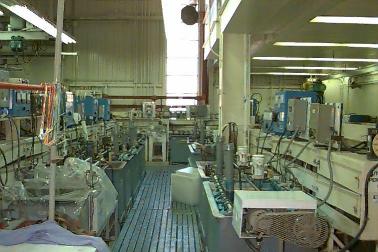
Metal Finishing Shop
Click to see a listing of the MFD Metal Finishing Shop's cleaning and plating process specifications. Correct metal finishing procedures and practices are critical to the proper performance of a metal under specified conditions. High quality metal finishes are one of the major objectives of the MFD Metal Finishing Shop. There are many reasons why cleaning and plating quality have become a major concern of most industries. Cleaned parts and plated deposits are specified for a variety of technical reasons and it is essential that these perform entirely as expected. To prevent cleaning- and plating-related defects, the Metal Finishing Shop has string cleaning and plating specifications and tests which have been developed over 30 years. With a complete in-house chemical laboratory, all process variables are controlled within their critical limits using different analytical instruments and techniques such as ion chromatography and atomic absorption. Each and every part from start to finish is processed in a precise manner by qualified employees. The shop's supervisors are college-trained chemists and the metal finishing staff are experienced and highly trained. The shop strives for a quick turnover time for normal work, and responds to emergency and rush jobs. Plating Shop Honors
|
![]() |
| Frank Carney and Deirdre Digrande (both of the Menlo Park Environment Commission) present the award to Ali Farvid. |
Stanford University operates SLAC for the US Department of Energy. Located on Sand Hill Road in Menlo Park, it is a world-class basic research laboratory used by more than 3,000 scientists from around the world. To support its research mission, the Lab has a variety of highly advanced fabrication techniques, some of which utilize solvents to clean metal parts. While SLAC at all times operated within the emissions limits specified by both local and federal regulations, the machining process nonetheless resulted in the emission of several thousand pounds of chlorinated solvent per year into the atmosphere.
The phasing out of certain solvents mandated by the 1990 Clean Air Act led SLAC to develop an alternative to solvent cleaning.
![]() |
| Frank Carney, Deirdre Digrande, Ali Farvid, Butch Byers (SLAC Air Quality Manager), Greg Loew (SLAC Deputy Associate Director) |
“This was a pioneering effort since the alternative degreaser we chose had not previously been used in the State of California and it was a considerable investment for the Lab,” said SLAC Director Jonathan Dorfan. The amount of chlorinated solvent air emissions dropped to near zero in the year 2000, from a level of 2,000 pounds in 1999.
Representing SLAC at the award ceremony were Butch Byers from the Environment, Safety, and Health Division and Ali Farvid from the Mechanical Fabrication Department. “I’m delighted that the efforts of our high trained and dedicated staff members are being recognized by the community,” said Dorfan. “Butch is our air quality program manager and Ali is the head of our plating shop. They are just two of the many talented people here at SLAC who have helped in this project.”


1998 DOE/OAK Pollution Prevention Award