

| Seminar Date: | Tuesday, May 14, 2013 |
| Time: | 12:30 PM - 1:30 PM |
| Location: | KIPAC Auditorium |
| Abstract: | Within the Standard Model (SM), despite the ascertainment of the neutrino oscillations, the flavor of charged leptons is conserved in very good approximation, and therefore charged Lepton Flavor Violation (cLFV) is expected to be unobservable. On the other hand, most New Physics models predict cLFV rate within the experimental reach, and therefore processes like the $\mu \to e \gamma$ decay are a standard probe for physics beyond the SM. The MEG experiment, at the Paul Scherrer Institute (Switzerland), searches for the $\mu \to e \gamma$ decay, down to a Branching Ration of a few $10^{-13}$, exploiting the most intense continuous muon beam in the world. I will present the most recent results from MEG, and the plan for an upgrade of the experiment, aiming at an improvement of the sensitivity by one order of magnitude within this decade. Finally I'll describe shortly other cLFV projects comparing their expected sensitivities with the MEG achievements. |
| Speaker: | Giancarlo Piredda - INFN
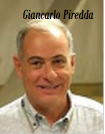 Got the Laurea in Physics at Rome University (1970). I worked on experiments at CERN first to clarify the strange meson spectroscopy situation and then to investigate the newly discovered charmed mesons properties with the a small rapid cycling bubble chamber associated to the European Hybrid Spectrometer. I moved to Neutrino Physics collaborating to the CERN program at SPS neutrino beam with the CHARM II and CHORUS experiments. I joined in the the BaBar experiment at Slac having the opportunity to spend three semesters in this beautiful place and finally I started the $\mu \to e \gamma$ search with the MEG experiment.
|