

| Seminar Date: | Monday, July 16, 2012 |
| Time: | 12:30 PM - 1:30 PM |
| Location: | KIPAC Auditorium |
| Abstract: | ATLAS is one of the particle detectors operating at the Large Hadron Collider (LHC). At the forefront of ATLAS operations is the complex and highly distributed Trigger and Data Acquisition system, referred to as TDAQ, which gathers and selects particle collision data at unprecedented energy and rates. The architecture of the TDAQ system, in particular the data conveyance from detector read-out to mass storage, and the operational performance during the last years will be presented. Special emphasis is given to the challenge of meeting the ATLAS operational needs, as driven by the steady increase of the LHC instantaneous luminosity, the changing trigger and physics program. In particular I will underline how the TDAQ system had to evolve beyond the original design specifications to allow for successful data taking, contributing to the recently announced discovery. Finally, I will discuss the further evolution of the TDAQ system. The experience gained in operating the current system showed that key aspects of the new design have to be flexibility and scalability, to build a long-lasting data acquisition system through the years of the LHC operations at nominal and beyond conditions. |
| Speaker: | Nicoletta Garelli - CERN
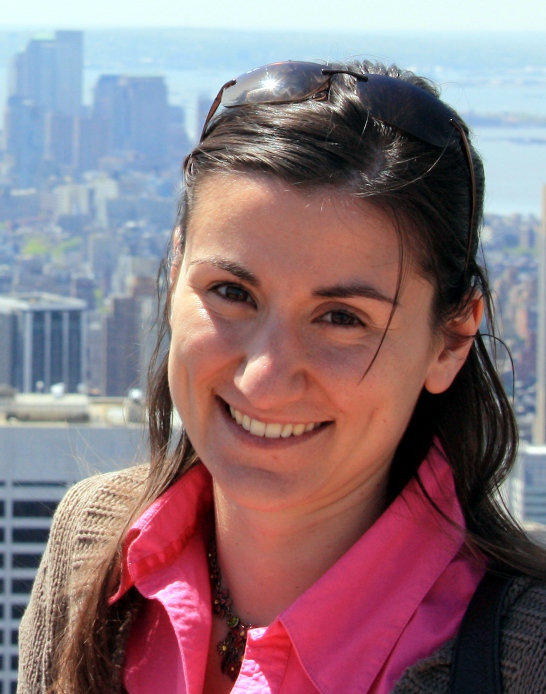 Nicoletta grew up in a small Italian town surrounded by the Alps and studied Physics at the University of Genoa. During the third year of her studies she came to CERN as a Summer Student and she was fascinated by the construction of the ATLAS detector and the multicultural environment of CERN. Thus, she decided to do her PhD within the ATLAS experiment. In particular she joined the pixel detector group, being heavily involved in the testing, calibration and commissioning of the smallest ATLAS sub-detector which however provides ~90% of the total read-out channels.
After her PhD, she moved to the ATLAS trigger and data acquisition group as a CERN Fellow, working on the development and operation of the data acquisition system and contributing to the ATLAS operations since the first LHC collisions. Recently she started focusing on the challenges for the future data acquisition of ATLAS.
|