


Speakers
 |
Eugene Chow - PARC - A Xerox Company Dr. Eugene Chow is a principal scientist and manager of the microsystems research group in the electronic materials and devices laboratory at PARC (a Xerox Company). The group leverages microsystems technology for applications in printing for manufacturing, electronics and biomedicine. Recent projects include micro-assembly for device integration, microsprings for electronics packaging and test, and microjets for drug delivery. He leads research projects at PARC with support from Xerox, other companies and the government, and has over 100 patents. He earned a B.S. from U.C. Berkeley in engineering physics, and did his graduate work at Stanford University (M.S. engineering management, M.S. and Ph.D. in electrical engineering). |
 |
Claudiu genes - Max Planck Institute for the Science of Light, Erlangen |
 |
Serena Eley - Los Alamos National Lab Serena Eley is a postdoctoral researcher in the Condensed Matter and Magnet Science department at Los Alamos National Laboratory (LANL). At LANL, her research on thermally activated vortex motion (creep) in superconductors with different defect landscapes contributed to the discovery of a universal relationship for a lower bound on creep rates. She earned her B.S. in physics at the California Institute of Technology and her Ph.D. in physics at the University of Illinois. Her dissertation work, for which she received the John Bardeen Award, focused on proximity effects and vortex dynamics in nanostructured superconductors, revealing behavior that deviated strongly from conventional proximity effect theories. Prior to graduate school and as a Henry Luce Scholar, she gained experience performing high-pressure synthesis of superconductors at the International Superconductivity Technology Center in Tokyo, Japan. She has also worked at Sandia National Laboratory on Si-based devices composed of quantum dot nanostructures and shallow donors for spin quantum bits. Her current research interests include superconducting device physics and mitigating materials related issues that limit device operation. |
 |
Timothy Horn - North Carolina State University Dr. Timothy J. Horn: Timothy Horn is a Research Assistant Professor in the Fitts Department of Industrial and Systems Engineering at NCSU. He is also the Director of Research for NCSU’s Center of Additive Manufacturing and Logistics (CAMAL) at NCSU. CAMAL is one of the leading international centers for metal additive manufacturing, and under Dr. Horn’s direction has developed new AM systems and applications pertaining to Electron Beam Melting (EBM) and Laser Melting. In particular, CAMAL has significantly modified its hardware and control systems to facilitate new materials, alloy development, enhanced instrumentation, process monitoring and control. Dr. Horn and his team have developed process parameters for the additive manufacturing of many materials and alloy systems, including Titanium Alloys, Aluminum Alloys (e.g. 6061, 7075, 2024), GrCOP84, OFE Cu, Titanium Aluminide, Nickel Superalloys (e.g. 718, 625, waspalloy, M247, etc.), RRR Niobium and Niobium alloy C103, several bulk metallic glasses (Fe and Zr based), and rare earth magnetic materials such as FeNdB. |
 |
Serena Eley - Los Alamos National Lab Serena Eley is a postdoctoral researcher in the Condensed Matter and Magnet Science department at Los Alamos National Laboratory (LANL). At LANL, her research on thermally activated vortex motion (creep) in superconductors with different defect landscapes contributed to the discovery of a universal relationship for a lower bound on creep rates. She earned her B.S. in physics at the California Institute of Technology and her Ph.D. in physics at the University of Illinois. Her dissertation work, for which she received the John Bardeen Award, focused on proximity effects and vortex dynamics in nanostructured superconductors, revealing behavior that deviated strongly from conventional proximity effect theories. Prior to graduate school and as a Henry Luce Scholar, she gained experience performing high-pressure synthesis of superconductors at the International Superconductivity Technology Center in Tokyo, Japan. She has also worked at Sandia National Laboratory on Si-based devices composed of quantum dot nanostructures and shallow donors for spin quantum bits. Her current research interests include superconducting device physics and mitigating materials related issues that limit device operation. |
 |
Fiorenze Micheli - Stanford Univeristy, Woods Institute Dr Fiorenza Micheli is a marine ecologist and conservation biologist conducting research and teaching at the Hopkins Marine Station of Stanford University, in Monterey, California, USA, where she is the David and Lucile Packard Professor of Marine Science. Micheli’s research focuses on the processes shaping marine communities and incorporating this understanding in the management and conservation of marine ecosystems. Her current research projects investigate social and ecological drivers of the resilience of small-scale fisheries to climatic impacts in Baja California, Mexico, the ecological and socioeconomic impacts of coastal hypoxia and ocean acidification, the ecology and conservation of sharks, and the function and establishment of Marine Protected Areas. She is a Pew Fellow in Marine Conservation, a fellow of the California Academy of Sciences, and senior fellow at Stanford’s Woods Institute for the Environment. She has recently become the co-director, with Jim Leape, of the Center for Ocean Solutions. |
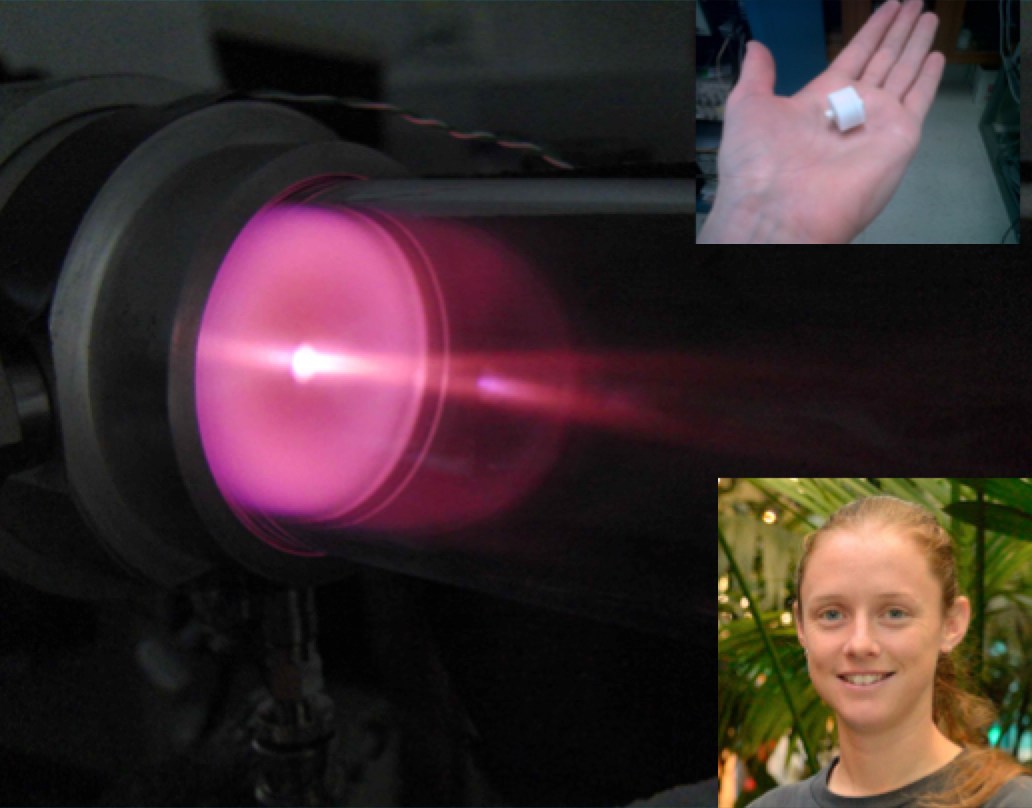 |
Amelia Greig - CalPoly Dr Amelia Greig has degrees in Mechanical and Aerospace Engineering, and Science from the University of Adelaide, where she won the Most Innovative Honours Project award for the design, build and test of Australia’s first atmospheric plasma thruster. She completed her PhD in Physics at the Australian National University using experiments and simulations to validate the design of a new electrothermal plasma micro-thruster, known as ‘Pocket Rocket’, designed for use on CubeSats. Now an assistant professor at Cal Poly, Dr Greig teaches courses in spacecraft propulsion and the space environment, and leads the Aerospace Engineering Department’s micro-propulsion research activities looking into new and novel micro-propulsion systems for small satellites with a focus on CubeSats. |
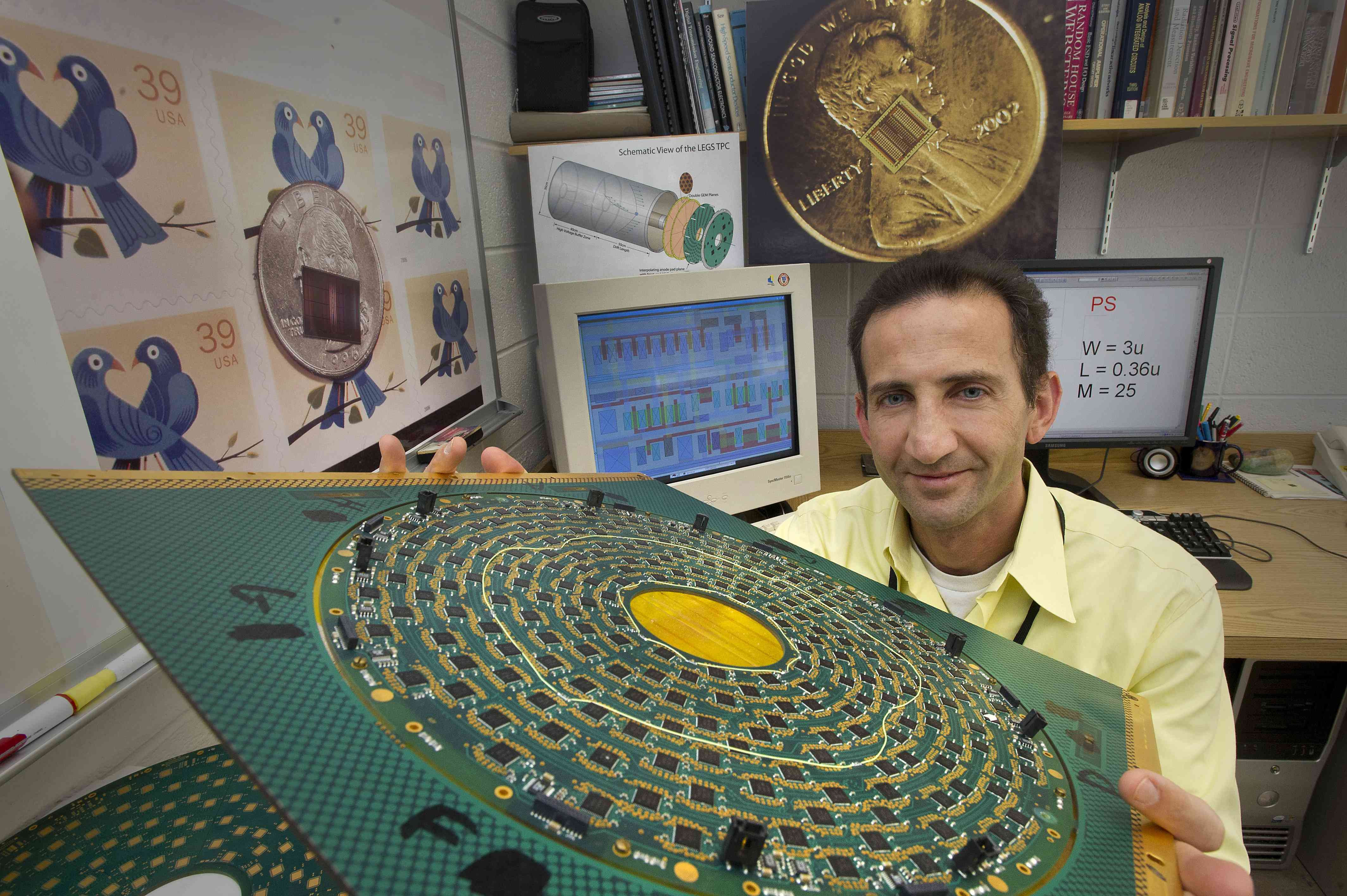 |
Gianluigi De Geronimo - Stony Brook University Gianluigi De Geronimo received his Ph.D. degree in microelectronics from Milan Polytechnic in 1997. Shortly after that he joined the Instrumentation Division of Brookhaven National Laboratory where he specialized in the design of front-end integrated circuits for radiation detectors. He successfully developed several state-of-the-art ASICs implementing innovative circuits and frequently achieving record performance. He collaborates with several institutions and industries and is co-author of over 130 scientific publications and two book chapters. Dr. De Geronimo is also Adjunct Professor with the Department of Electrical and Computer Engineering at Stony Brook where he teaches a course on microelectronics for sensors and mentors several MS and Ph.D. students. Recipient of the 2008 BNL Science and Technology Award, 2009, 2011, and 2014 R&D 100 Awards, 2012 CSIRO Award, 2012 Battelle Inventor of the Year Award, he holds 19 patents and records of invention. He is editor of IEEE Transactions on Nuclear Science and reviewer for various journals and government institutions. |
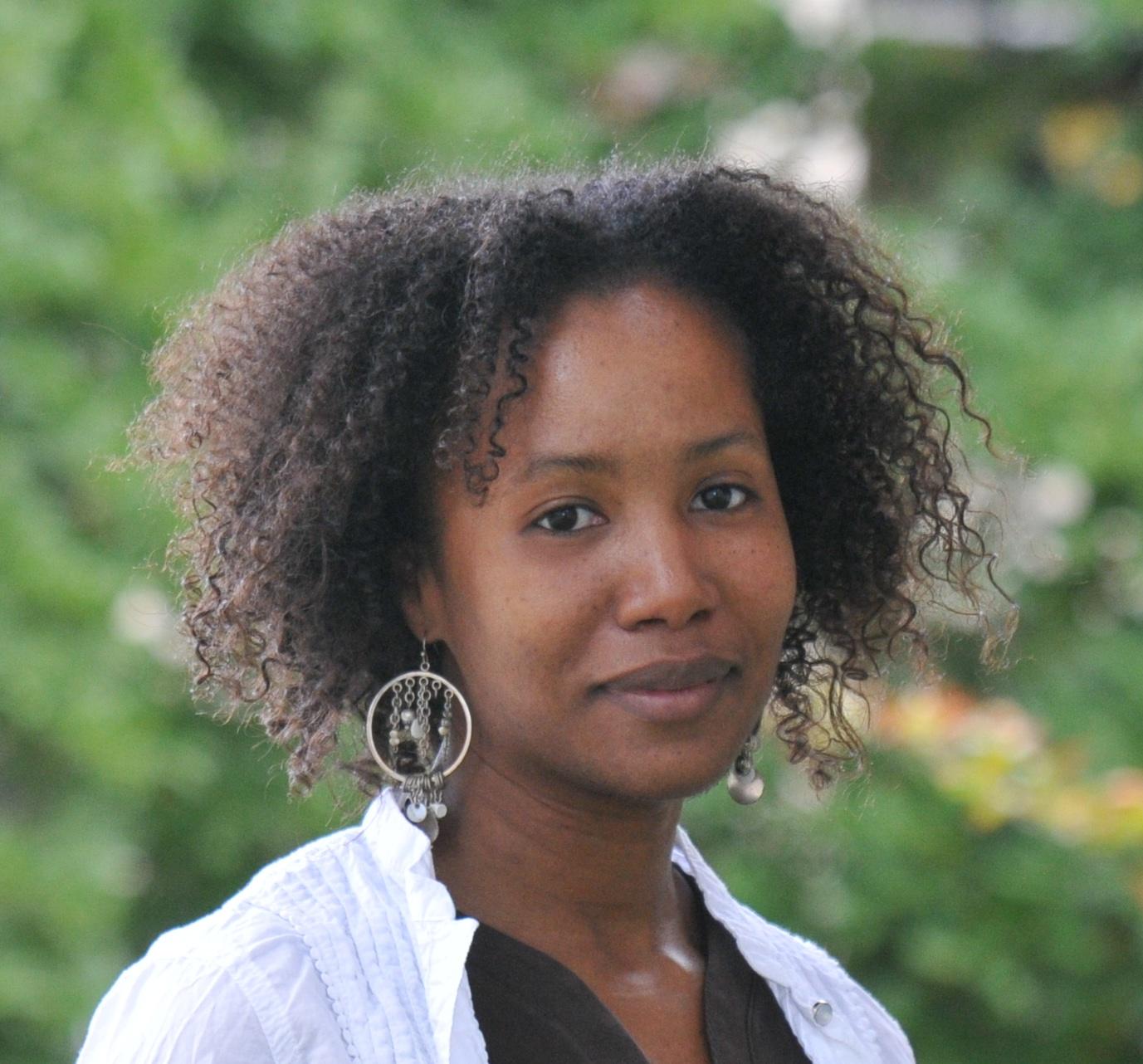 |
Audrey Bowden - Stanford University Audrey K (Ellerbee) Bowden is an Assistant Professor of Electrical Engineering at Stanford University. She received her BSE in EE from Princeton University, her PhD in BME from Duke University and completed her postdoctoral training in Chemistry and Chemical Biology at Harvard University. During her career, Dr. Bowden served as an International Fellow at Ngee Ann Polytechnic in Singapore and as a Legislative Assistant in the United States Senate through the AAAS Science and Technology Policy Fellows Program sponsored by the OSA and SPIE. She is a member of the OSA, a Senior Member of SPIE and is the recipient of numerous awards, including the Air Force Young Investigator Award, the NSF Career Award and the Hellman Faculty Scholars Award. She is a former Associate Editor of IEEE Photonics Journal, a member of numerous professional committees, and her research interests include biomedical optics, microfluidics, and point of care diagnostics. |
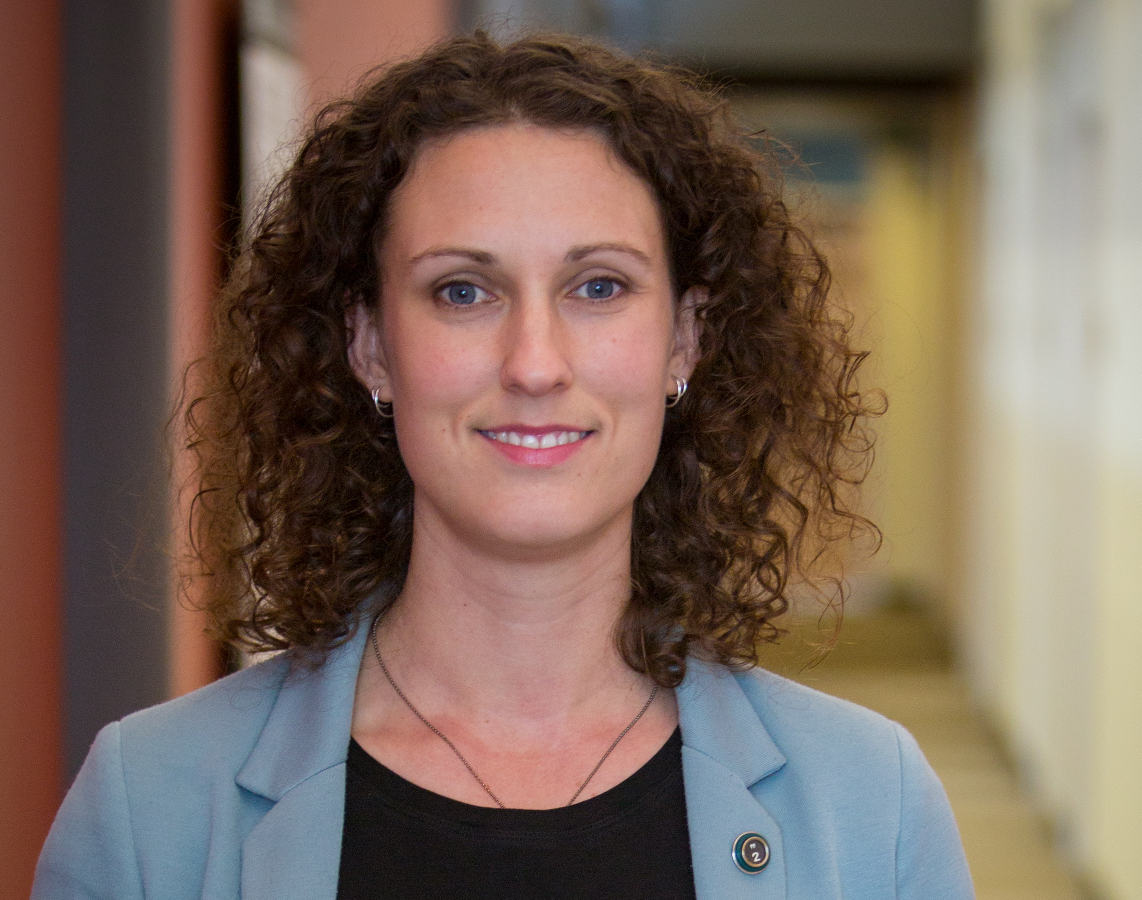 |
Dr. Debbie Bard - NERSC, LBL Debbie Bard is a Big Data Architect at the National Energy Research Scientific Computing Center (NERSC) at Berkeley National Lab. A native of the UK, her career spans research in particle physics, cosmology and computing on both sides of the Atlantic. She obtained her PhD at Edinburgh University, and worked at Imperial College London and SLAC National Accelerator Laboratory before joining the Data and Analytics group at NERSC, where she focuses on data-intensive computing and research. |
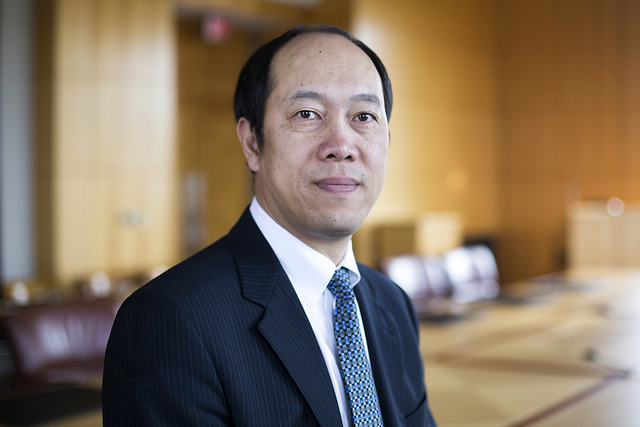 |
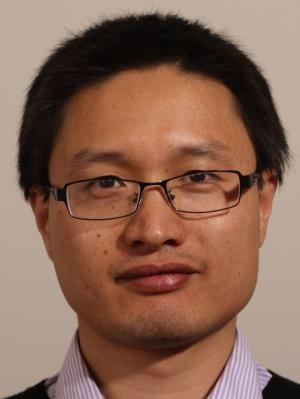
Zhong He - University of Michigan |
 |
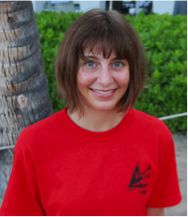
Hongbo Zhu - Institute of High Energy Physics - Beijing Dr. Hongbo Zhu obtained his Bachelor’s degree in nuclear engineering and nuclear technology in 2004 at Tsinghua University in China, and PhD in particle Physics at University of Sheffield in UK. He worked as a postdoc from 2009-2013 at DESY in Germany. In 2013, he joined the Institute of High Energy Physics (IHEP) Beijing and received the 1000 Young Talents fellowship from the Chinese government in 2015. He has been working at the ATLAS experiment since 2005. He contributed to the early development of the back-ward tracking and photon conversion reconstruction algorithms for the offline event reconstruction during his PhD. He was involved in the precision measurements of the top quark pair production and the top mass, and stepped into the silicon detector development for the ATLAS Phase-II at the early stage. After joining IHEP, he started to coordinate the IHEP’s efforts on the ATLAS Phase-II upgrade project and has been actively involved in the initial R&D of the pixel sensor for the proposed Circular Electron Positron Collider (CEPC) project. |
 |
Autumn Bordner - Columbia University |
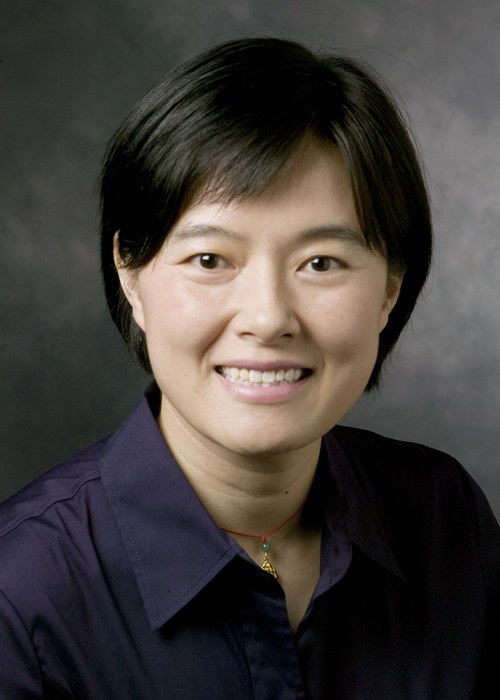 |
Bianxiao Cui - Stanford University Bianxiao Cui is an Assistant Professor of Chemistry at Stanford University. She holds a Ph.D. degree in Physical Chemistry from the University of Chicago under the supervision of Prof. Stuart Rice, working on dynamic heterogeneity and phase transition in colloidal liquid. After completing Ph.D., she worked as a postdoctoral scholar with Prof. Steven Chu on single molecule imaging of nerve growth factor signal transduction in neurons. She joined the faculty of Stanford University, Department of Chemistry in 2008. Her main area of interest is to develop nanoscale tools to study electrophysiology and signal transduction in neurons at normal conditions and in neurodegenerative diseases. In particular, she focuses on developing (1) nano-electrodes to detect action potential propagation in neurons and cardiomyocytes and (2) nanoparticle optical sensors to measure cargo transport in axons. Her recent awards and distinctions include NIH New Innovator Award, NSF CAREER award, NSF Inspire award, Packard Fellowships in Science and Engineering, Hellman Scholar, Searle Scholar Award and Dreyfus New Faculty award. |
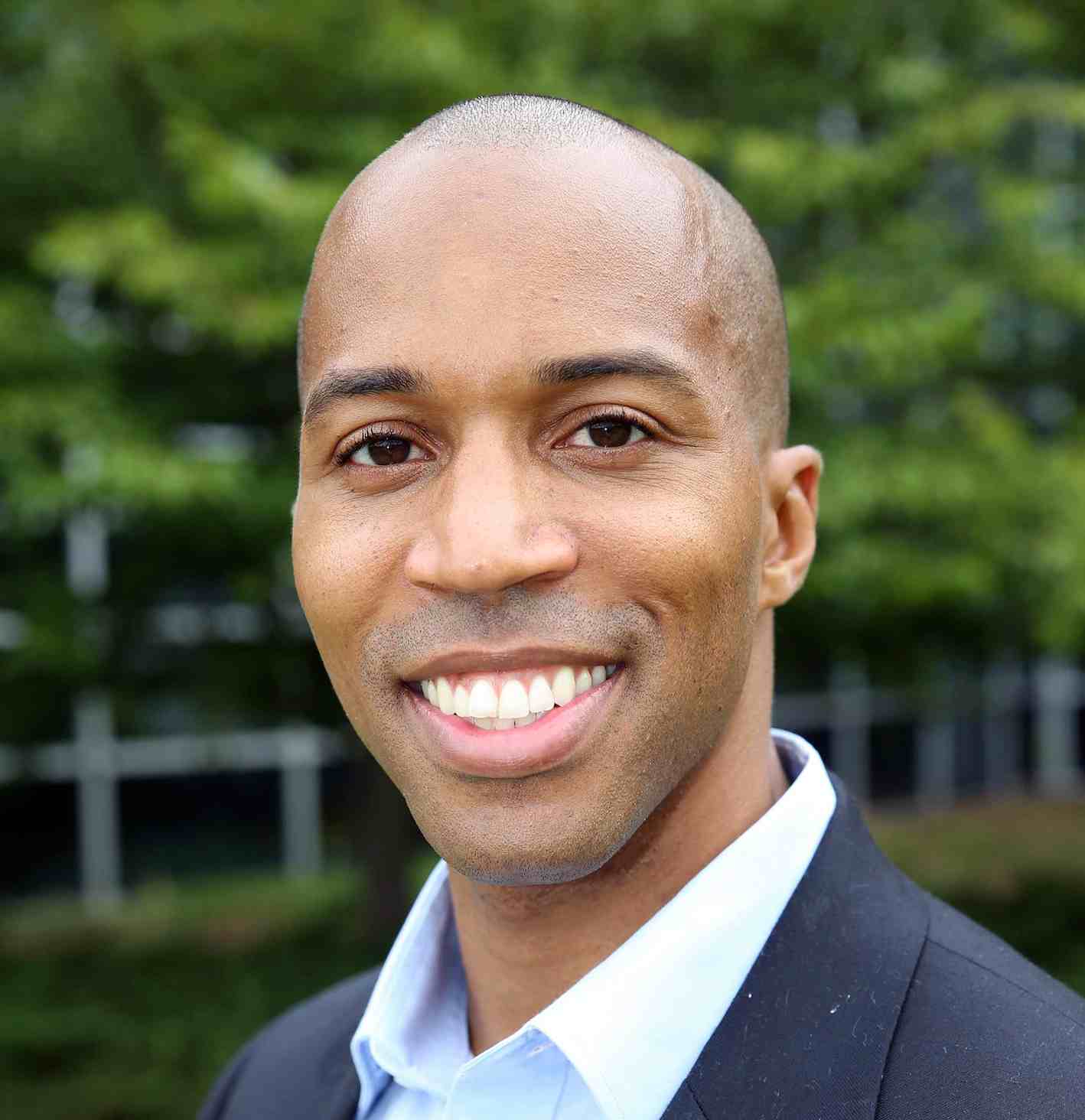 |
Baratunde Cola - Georgia Istitute of Technology Dr. Cola is co-founder and co-director of the Heat Lab (heat.gatech.edu) at Georgia Tech. He is an associate professor in the George W. Woodruff School of Mechanical Engineering and the School of Materials Science and Engineering at the Georgia Institute of Technology. He received his degrees from Vanderbilt University and Purdue University, all in mechanical engineering, and was a starting fullback on the Vanderbilt football team as an undergrad. Dr. Cola has received a number of prestigious early career research awards including the Presidential Early Career Award for Scientist and Engineers (PECASE) in 2012 from President Obama for his work in nanotechnology, energy, and outreach to high school art and science teachers and students; the AAAS Early Career Award for Public Engagement with Science in 2013; and recently the 2015 Bergles-Rohsenow Young Investigator Award in Heat Transfer from the American Society of Mechanical Engineers. In addition to research and teaching, Dr. Cola is the founder of Carbice Nanotechnologies, which sells a leading thermal management solution for chip burn-in and testing. |
 |
PROF. GUY RON - Hebrew Univ. of Jerusalem |
 |
Peter Gorham - University of Hawaii Peter Gorham has been a professor of physics at the University of Hawaii at Manoa since 2001, the same year he collaborated with David Saltzberg to confirm the Askaryan effect at SLAC. Since then his research focus has been in radio detection of high energy particles. This focus has led to the Antarctic Impulsive Transient Antenna (ANITA) experiment, a NASA long-duration balloon payload which has flown in Antarctica for 4 flights since 2005, and which has set some of the best world limits on ultra-high energy neutrino fluxes. In addition, ANITA has made the first measurement of the ultra-high energy cosmic ray spectrum via radio detection. Prof. Gorham lives in Honolulu with his wife and two teenage kids, and enjoys surfing and sailboat racing in his spare time. |
 |
Xiaoshu Chen - University of Minnesota Xiaoshu Chen is a research assistant in Electrical and Computer Engineering at University of Minnesota, Twin Cities. She works in Prof. Sang-Hyun Oh’s Laboratory of Nanostructures and Biosensing to design and fabricate plasmonic nano-optical devices for enhanced light-matter interactions. She has extensive experience in nano/micro devices design and myriad fabrication techniques. Beyond these specifics, she is broadly interested in nano photonics, metamaterials, photovoltaics and optical sensors. |
 |
Sang Jun Lee - Goddard Space GLight Center NASA |
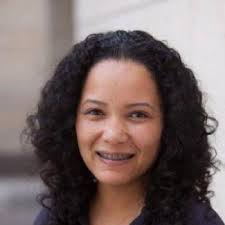 |
Debbie Senesky - Stanford Professor Senesky received the B.S. degree in mechanical engineering from the University of Southern California in 2001. She received the M.S. degree and Ph.D. degree in mechanical engineering from the University of California, Berkeley in 2004 and 2007, respectively. She was a Design Engineer in 2007 for GE Sensing (formerly known as NovaSensor). She was a researcher specialist in 2008 at the Berkeley Sensor and Actuator Center (BSAC) developing silicon carbide (SiC) sensing technology for extreme harsh environments. In 2012, she was appointed to the faculty at Stanford University in the Aeronautics and Astronautics Department. In recognition of her research, she has received the Space Technology Research Opportunities Early Faculty Career Award from the National Aeronautics and Space Administration. |
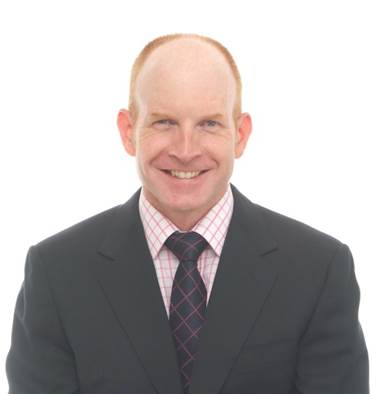 |
Mike Pivovaroff - LLNL Mike Pivovaroff earned a B.A. in physics from UC Berkeley in 1993 and a Ph.D. in physics from MIT in 2000. His dissertation research involved the development of x-ray CCDs for NASA’s Chandra X-ray Observatory and the study of x-ray emission from pulsars. He joined the staff at Lawrence Livermore National Laboratory (LLNL) in 2004, and during the last decade he has supported a broad range of basic science and national security missions. His primary research has been in the development and use of x-ray optics for applications including: astrophysics, axion searches, nuclear medicine, non-proliferation and DOE user facilities like LCLS and NIF. He is currently an Associate Division Leader for Physics and the leader of LLNL’s Space Initiative. |
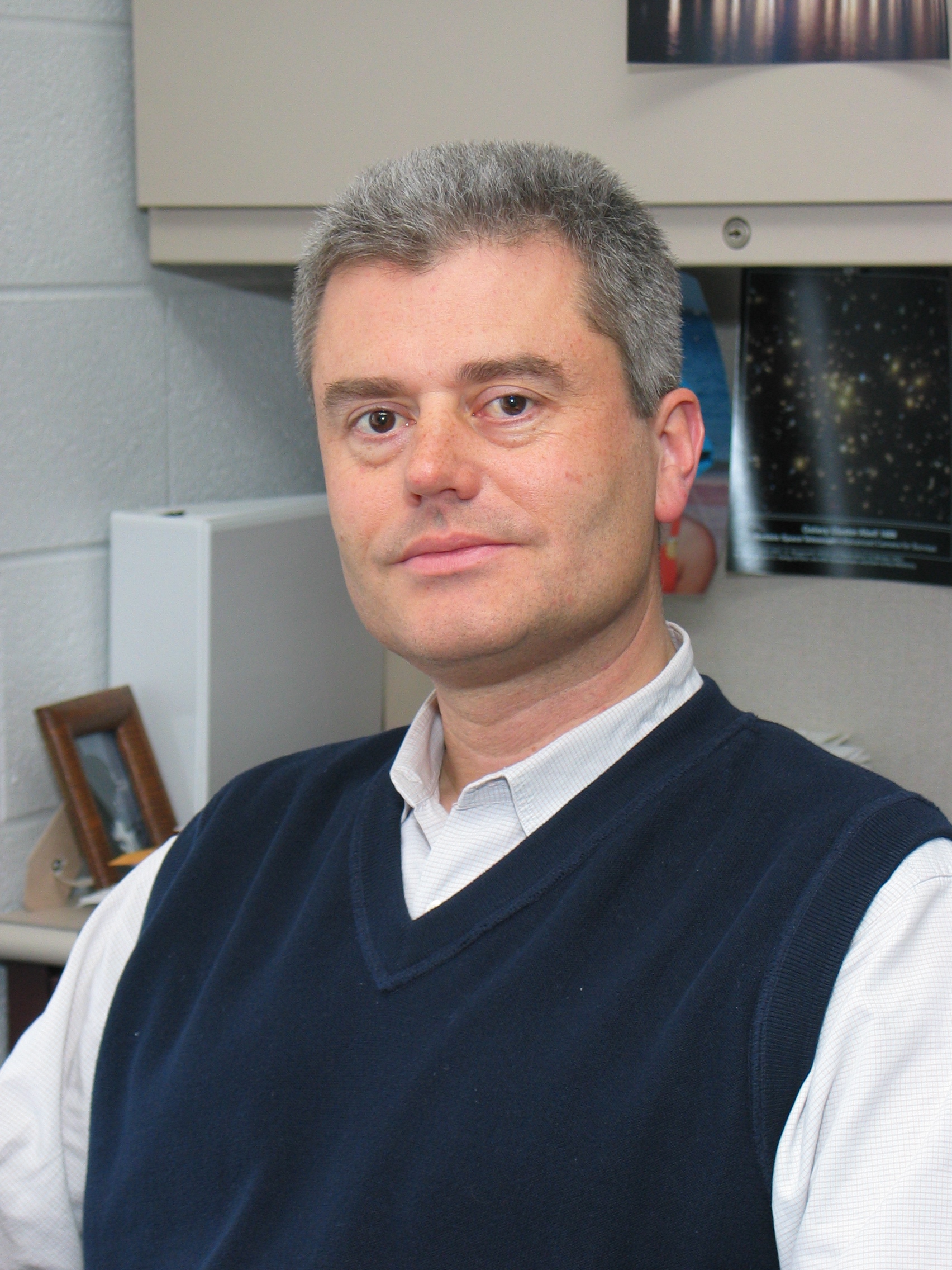 |
Dr. Mark Clampin - NASA Dr Clampin is currently the James Webb Space Telescope (JWST) Observatory Project Scientist at GSFC. Previously, Dr Clampin was ACS Group manager at the Space Telescope Science Institute (STScI), where he supported three Hubble Space Telescope (HST) Servicing Missions. Dr Clampin is a Co-Investigator on the Transiting Exoplanet Survey Satellite (TESS), and was a Co-Investigator for the Advanced camera for Surveys (ACS) science team, where he served as the Detector Scientist. He is currently working on the formation and evolution of planetary systems by means of observations of debris disks and direct imaging of exoplanets such as Fomalhaut-B, and future mission concepts to image and characterize earth analogs. Dr Clampin has also designed ground-based telescope instruments including adaptive optics systems, coronagraphs and detectors. |
 |
Anton Tyazhev - Tomsk State University |
 |
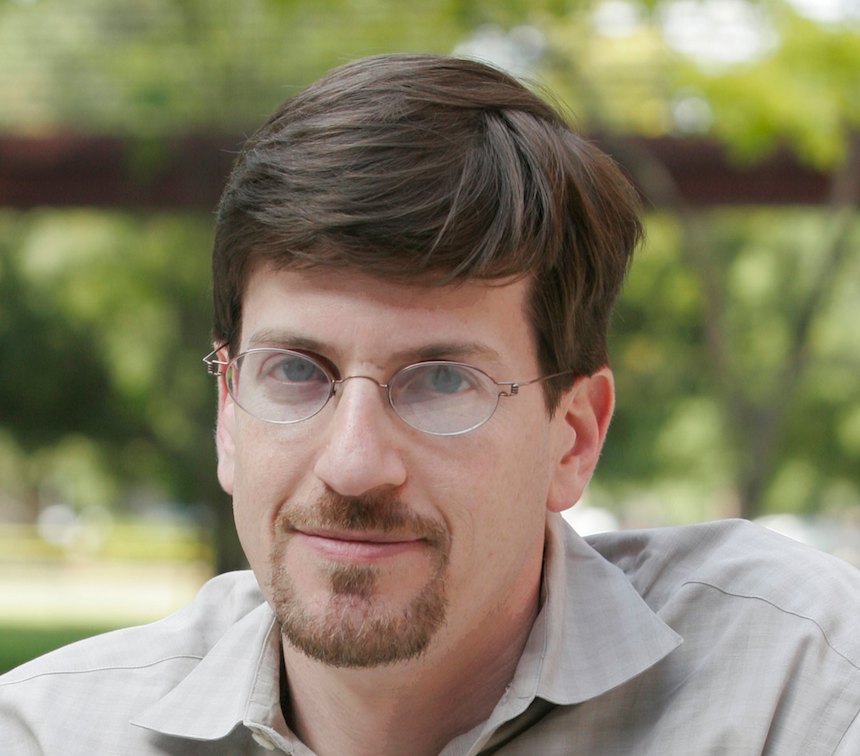
Mitch D'Ewart - SLAC SLAC |
 |
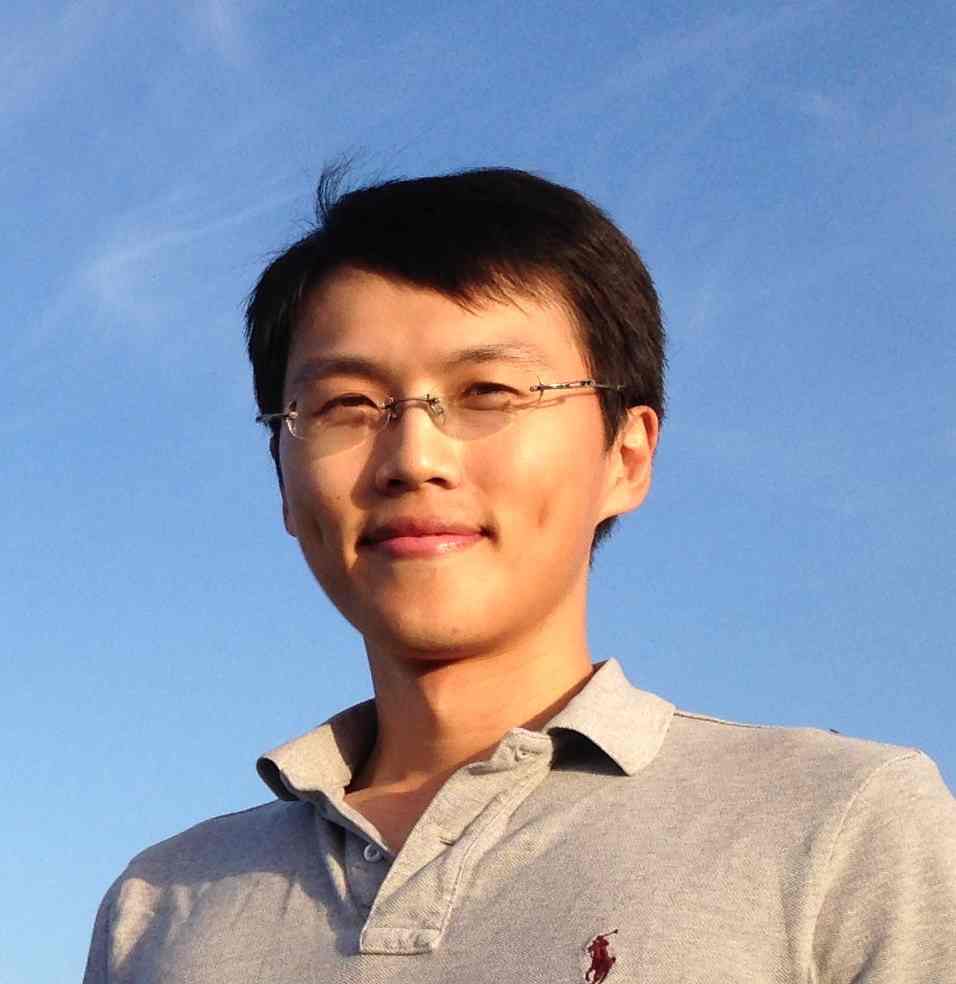
Mark Schnitzer - Stanford University Professor Mark J. Schnitzer is a faculty member in the Biology and the Applied Physics Departments of Stanford University. He is also an Investigator of the Howard Hughes Medical Institute. Dr. Schnitzer's lab innovates and uses novel optical brain imaging technologies in the pursuit of understanding how large ensembles of how cells control behavior. He recently served on the NIH Advisory Committee for the BRAIN Initiative. Over the last 7 years, the Schnitzer lab has invented several technologies, including tiny microscopes that are only 1-3 grams in mass and small enough to be mounted on the head of a freely moving adult mouse. This technology won The Scientist’s Top Innovation of 2013, is now commercially available from Inscopix Inc., and is presently used by about 65 neuroscience labs in the USA, Europe and Asia. Dr. Schnitzer's lab is using micro-optic techniques extensively for research on the fundamental cellular basis for various aspects of cognition and reward processing. He currently serves on the NIH BRAIN Multi-Council Working Group. |
 |
Chu-En Chang - Stanford University School of Medicine, Neurobiology |
 |
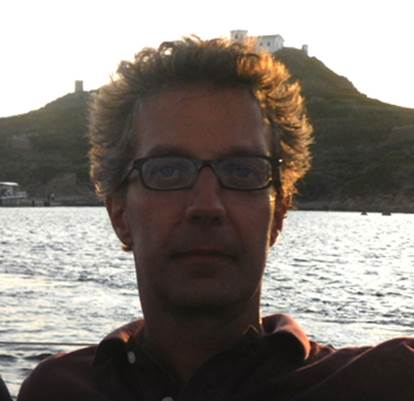
Costel Rotundu - Stanford University Costel R. Rotundu is interested in synthesis and low temperature/high magnetic field/high pressure physical property measurements (X-ray, neutron, transport, thermodynamic and magnetic) of strongly correlated electron systems, with a focus on high temperature superconductors HTSC (cuprate and iron-based) and quantum spin liquids. He is synthesizing his own materials, mostly in crystal form, using primarily flux growth, Bridgman, optical floating zone, and high pressure high temperature piston cylinder and cubic multi anvil cell methods. He completed his Ph.D. in condensed matter physics at University of Florida, with a thesis on heavy fermion superconductors, with half of the research done at National High Magnetic Field Laboratory. After graduation he was concomitant Research Associate at University of Maryland and Visiting Investigator at Carnegie Institution of Washington DC, conducting high pressure diamond anvil cell transport and X-ray measurements on the HTSC cuprate. He continued his research on HTSC on iron-pnictide compounds at Lawrence Berkeley National Laboratory with a focus on synthesis and study of the interplay between superconductivity and magnetism through transport, X-ray and neutron scattering measurements. He joined SIMES/SLAC in September 2014. |
 |
Nicolo Cartiglia - INFN Torino I have been working in experimental high-energy physics since my PhD degree. My work has focused on detector design, construction and commissioning and on data analysis. Currently I am involved in the development of new silicon sensors, the design and construction of the very forward Totem-CMS proton tagger CT-PPS for the CMS experiment at LHC (CERN, Geneva), and in the yellow report on LHC forward physics. |
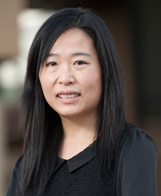 |
Prof. Ada Poon - Stanford University Ada was born and raised in Hong Kong. She received her B.Eng degree from the EEE department at the University of Hong Kong and her Ph.D. degree from the EECS department at the University of California at Berkeley. Upon graduation, she spent one year at Intel as a senior research scientist. Afterwards, she joined SiBeam Inc., architecting millimeter-wave wireless transceivers. After two years in industries, she returned to academic and joined the faculty of the ECE department at the University of Illinois, Urbana-Champaign. Since then, she has changed her research direction from wireless communications to integrated biomedical systems. In 2008, she moved back to California and joined the faculty of the Department of Electrical Engineering at Stanford University. She is a Terman Fellow at Stanford University. She received the Okawa Foundation Research Grant in 2010 and NSF CAREER Award in 2013. |
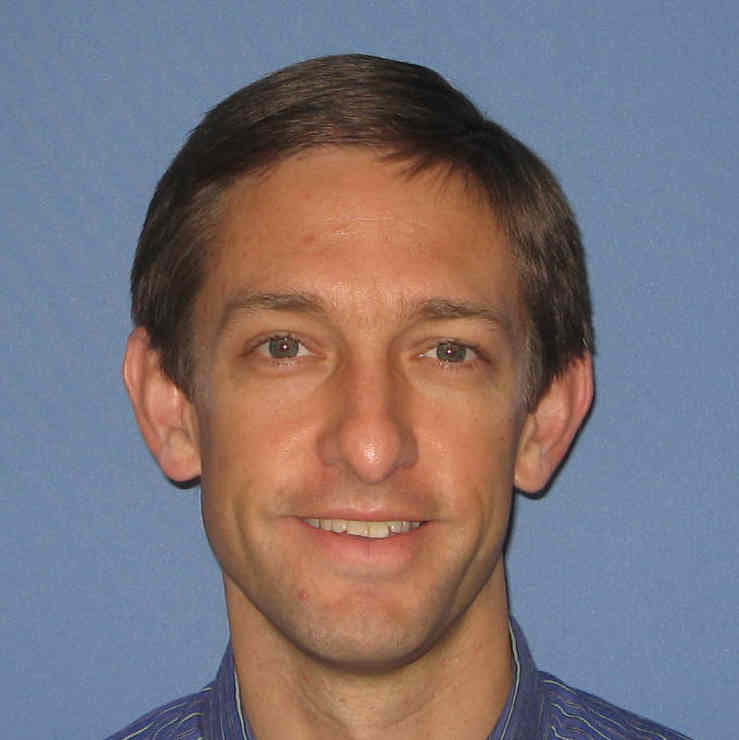 |
Paul Welander - SLAC Biography: Paul B. Welander received his Ph.D. in Physics from the University of Illinois at Urbana-Champaign in 2007. From 2007-2012 he worked as a Staff Member at MIT Lincoln Laboratory in Lexington, MA, where his research involved epitaxial materials and novel fabrication techniques for both superconducting quantum bits and back-illuminated charge-coupled devices and CMOS imagers. In 2012 he joined SLAC as a Staff Scientist in the Accelerator Directorate. His current research focus is the development and characterization of novel superconducting materials for coating future accelerator cavities. |
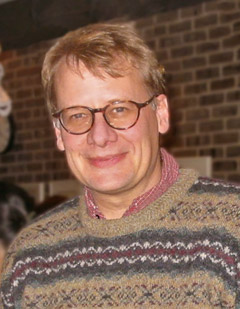 |
Lyman Page - Princeton University Page's primary research is on the analysis and measurement of the cosmic mi- crowave background (CMB) from ground-based, balloon-borne, and satellite plat- forms with HEMT ampli ers, SIS mixers, and bolometers. Detection techniques include direct mapping, time domain beam synthesis, and interferometry. Page has been a PI or Co-I on the FIRS, SASK, MSAM, QMAP, TOCO, and MINT experiments. He is one of the original co-investigators and the Princeton lead on the WMAP satellite which has mapped the anisotropy in the CMB over the entire sky with sub-degree resolution. He is the director of the ACT/ACTPol project in which a dedicated 6 m telescope in Chile with thousands of detectors is mapping the CMB with arcminute resolution, and will soon map in polarization. He is a co-director of the ABS experiment to measure the CMB B-mode polarization. |
 |
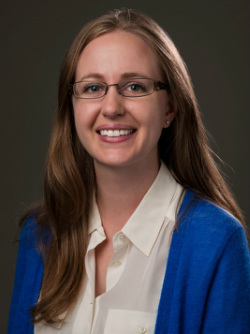
Jason Rhodes - JPL, NASA and Caltech Dr. Jason Rhodes is a cosmologist at NASA’s JPL. He is the US science lead for ESA’s Euclid mission and a member of the WFIRST-AFTA Science Definition Team. His science focus is the use of weak gravitational lensing as a probe of dark matter and dark energy. |
 |
Lisa Giocomo - Stanford University School of Medicine, Neurobiology Lisa M Giocomo worked with Dr. Michael Hasselmo for her graduate studies and received her PhD in Neuroscience from Boston University in 2008. She was then a postdoctoral fellow with Edvard and May-Britt Moser at the Kavli Institute for Systems Neuroscience at the Norwegian University of Science and Technology from 2009-2012. For her postdoctoral studies, she received a Marie Curie Incoming International Fellowship, a Human Frontier Science Program Fellowship and a Research Council of Norway Fellowship. In 2013, she started as an Assistant Professor of Neurobiology at Stanford University School of Medicine. Her lab integrates electrophysiology, behavior, gene manipulations, optogenetics and computational modeling to study how single-cell biophysics and network dynamics interact to mediate spatial memory and navigation. Lisa serves as an advisor as part of the Allen Institute for Brain Science Next Generation Leaders and was named a Gabilan Fellow at Stanford University in 2013. She received the Peter and Patricia Gruber International Research Award in 2012, was named a Sloan Research Fellow in 2013 and received a Klingenstein-Simons Fellowship in 2014. |
 |
Jelena Ninkovic - MPG Halbleiterlabor WORK EXPERIENCE ~ Oct 2013 - onwards Laboratory Head of the Semiconductor Laboratory of the Max Planck Society ~ Jun 2011 - Oct 2013 Independent group leader – development of silicon detectors for High energy physics applications ~ Post-Doc positions Sep 2005 – Jun 2009 Photosensor development Jun 2009 – Jun 2011 Vertex detector for BELLE II ~ Jan. 2002 – Feb. 2005 PhD student at Max-Planck-Institute for Physics, Foehringer Ring 6, 80805 Munich EDUCATION January 2002 – February 2005 Max-Planck-Institute for Physics, Munich, Germany Technical University Munich, Munich, Germany Thesis title: Investigation of CaWO4 Crystals for Simultaneous Phonon-Light Detection in the CRESST Dark Matter Search, in English Research in the field of astroparticle physics. Development and characterization of scintillating cryogenic detectors for direct Dark Matter detection. Development of a method for an active discrimination of neutron background. Operation of the CRESST (Cryogenic Rare Event Search with Superconducting Thermometers) experiment in the Underground laboratory in the Gran Sasso tunnel, Italy. During the doctorate period I was awarded with a fellowship of Max-Planck-Society for foreign students. |
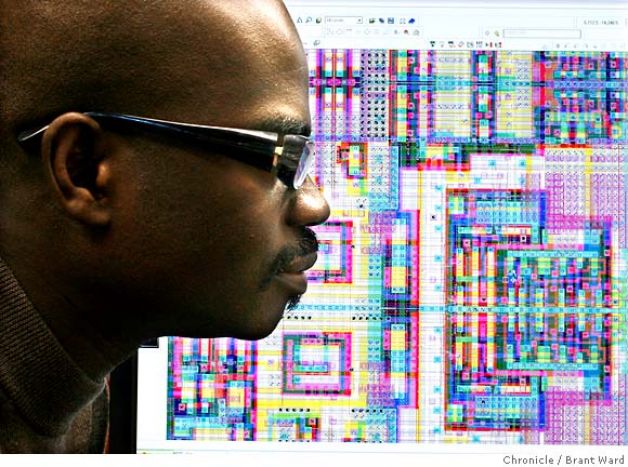 |
Kwabena Boahen - Stanford University Kwabena Boahen is Professor of Bioengineering at Stanford University, where he directs the Brains In Silicon Laboratory. He is a bioengineer who is using silicon integrated circuits to emulate the way neurons compute, linking the seemingly disparate fields of electronics and computer science with neurobiology and medicine. His contributions to the field of neuromorphic engineering include a silicon retina that could be used to give the blind sight and the first system that simulates a million neurons—with billions of synaptic connections—in real-time. His scholarship is widely recognized, with over eighty publications to his name, including a cover story in Scientific American (May 2005). His TED talk, “A computer that works like the brain” (2007), has been viewed half-a-million times. He has received several distinguished honors, including the National Institutes of Health Director’s Pioneer (2006) and Transformative Research (2011) Awards. Esquire Magazine recognized him—along with fifteen other distinguished researchers—in The Brightest: 16 Geniuses That Give us Hope (2010). Professor Boahen’s BS and MSE degrees are in Electrical and Computer Engineering (both earned in 1989 from Johns Hopkins University, Baltimore MD). His PhD degree is in Computation and Neural Systems (earned in 1997 from the California Institute of Technology, Pasadena CA). Before moved to Stanford, he was on the faculty of the University of Pennsylvania, Philadelphia PA (1997 to 2005). |
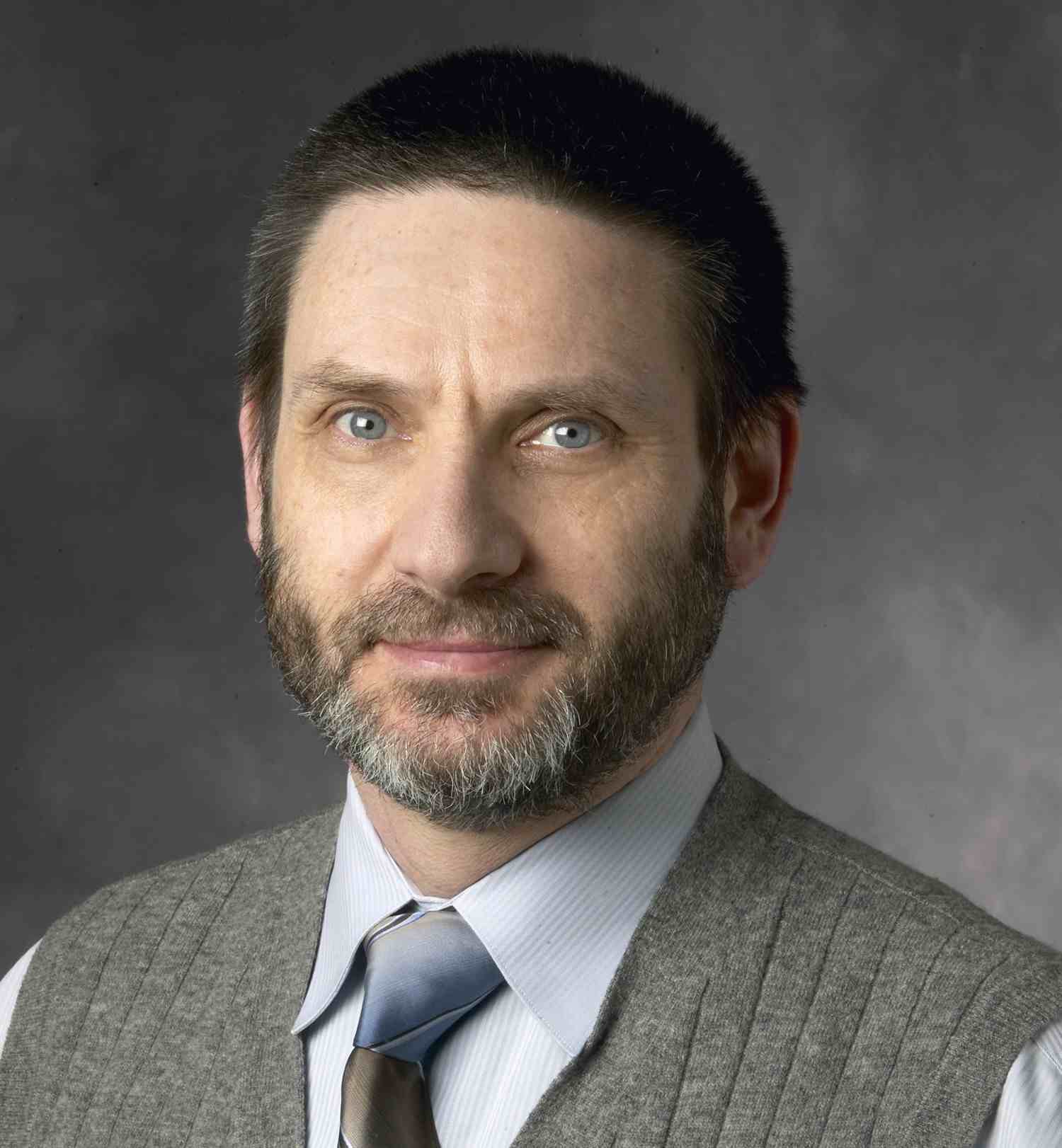 |
Daniel Palanker - Department of Ophthalmology and Hansen Experimental Physics Laboratory Stanford University Daniel Palanker is an Associate Professor in the Department of Ophthalmology and in the Hansen Experimental Physics Laboratory at Stanford University. He received PhD in Applied Physics in 1994 from the Hebrew University of Jerusalem, Israel. Dr. Palanker studies interactions of electric field with biological cells and tissues in a broad range of frequencies: from quasi-static to optical, and develops their diagnostic, therapeutic and prosthetic applications, primarily in ophthalmology. These studies include laser-tissue interactions, tissue response to hyperthermia, non-damaging laser therapy of the retina and trabecular meshwork, and surgery of transparent ocular tissues with ultrafast lasers. Dr. Palanker is also working on electro-neural interfaces, including Retinal Prosthesis, electronic control of vasculature and of the glands. Several of his developments are in clinical practice world-wide: Pulsed Electron Avalanche Knife (PEAK PlasmaBladeTM), Patterned Scanning Laser Photocoagulator (PASCALTM), and OCT-guided Laser System for Cataract Surgery (CatalysTM). |
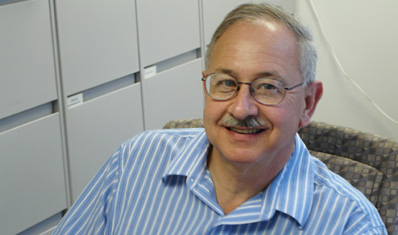 |
Michael Stryker - University of California San Francisco After working on the mechanisms of cortical plasticity in cats and ferrets, Dr. Stryker’s laboratory pioneered the modern use of the mouse visual cortex for the study of cortical function, development and plasticity. He and his students demonstrated rapid activity-dependent cortical plasticity in the mouse in response to monocular visual deprivation during a defined critical period in early life, delineated distinct molecular mechanisms responsible for temporally distinct phases of plasticity and recovery during the critical period, and carried out the first detailed study of visual cortical response properties in mouse V1. Many of the laboratories now working on mouse V1 (e.g., Scanziani, Dan, Adesnik, Carrandini, Janelia group) learned the techniques from visits to his lab, and others learned them from his former students. Stryker and colleagues discovered the mechanisms responsible for the formation of the V1 and superior colliculus azimuth maps and the connections between them. His laboratory made the fundamental discovery of the regulation of V1 cortical state by locomotion and delineated much of the neural circuitry responsible. He has trained graduate students and postdoctoral fellows with great success, 75% of them receiving tenured or tenure-track positions at major research universities or medical schools. |
 |
Juan Estrada - FermiLab TBA |
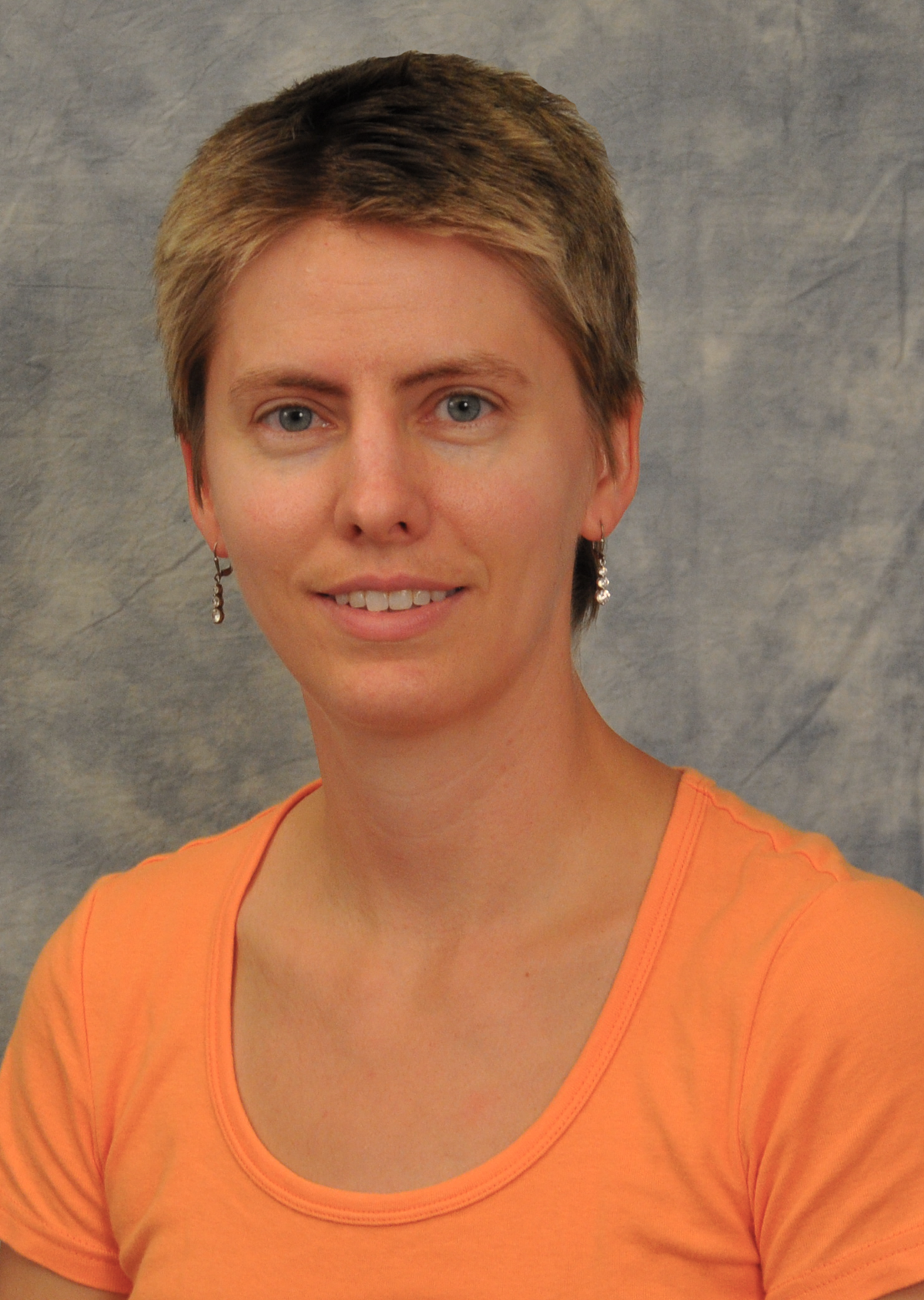 |
Lisa Poyneer - LLNL Lisa Poyneer earned the SB and M.Eng in computer science from MIT, and the BA in history from Oxford as a Rhodes Scholar. She has been a staff member at Lawrence Livermore National Laboratory since 2001. Lisa concurrently completed the PhD in electrical engineering at UC Davis, winning the 2008 Marr prize for the most distinguished doctoral dissertation at the university. Dr. Poyneer specializes in algorithm and technology development for high-performance adaptive optics, including the spatially filtered wavefront sensor and computationally efficient, self-optimizing and predictive control methods. She has led the testing and verification of the adaptive optics system of the Gemini Planet Imager, which uses many of these new techniques and is the world's most powerful astronomical adaptive optics instrument. Dr. Poyneer is currently leading projects on adaptive optics for x-ray light sources and wind-predictive adaptive optics for astronomy. |
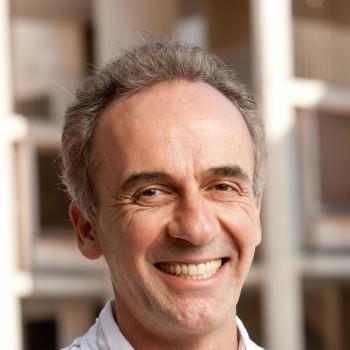 |
E. J. Chichilnisky - Stanford Univeristy Department of Neurosurgery Chichilnisky received a BA in Mathematics from Princeton University and an MS in Mathematics and PhD in Neuroscience from Stanford University. He worked at the Salk Institute for Biological Studies in San Diego for 15 years, and is now a Professor in the Neurosurgery Department and Hansen Experimental Physics Laboratory at Stanford. |
 |
Bruce Macintosh - Stanford University Bruce Macintosh is a professor of Physics at Stanford. He obtained his Ph.D. from UCLA in 1994, working in the infrared instrumentation laboratory. He went to Lawrence Livermore National Labortory as postdoctoral researcher and remained at LLNL as a staff scientist through 2013. Dr. Macintosh is the Principal Investigator for the Gemini Planet Imager, a next-generation adaptive optics coronagraphic spectrograph designed to image and characterize extrasolar planets, now deployed on the Gemini South telescope. |
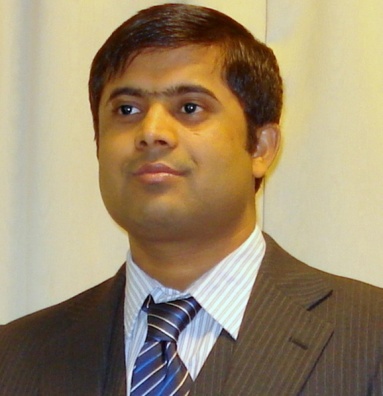 |
Dipak Paramanik - Iowa State University Dr. Paramanik worked extensively at NanoFab clean room facility at NIST, Gaithersburg in the area of fabrication of semiconductor devices. He also worked at clean room facility at National Institute for Material Science, Tsukuba, Japan. Presently he is working at Microelectronic research center at Iowa State University. Dr. Paramanik received PhD from Institute of Physics, India. He has extensive working experience in the area of thin film deposition and semiconductor fabrication including techniques such as: MBE, ALD, PECVD, evaporation, sputtering, lithography, annealing, implantation, RIE, X-ray photoelectron spectroscopy, Electron microscopy. |
 |
Alan Litke - University of California Santa Cruz Alan Litke became intrigued by the question "What happens when matter annihilates anti-matter?" as a result of an exercise on electron-positron annihilation in a course on Quantum Field Theory. This led to a Ph. D. thesis and a series of electron-positron colliding beam experiments at the Cambridge Electron Accelerator, SLAC, DESY and CERN. He became intrigued by the question "How does the brain work?" as he watched his kids learn to crawl, walk and talk. This led to work on technology development for neuroscience and a set of experiments on neural systems. He now divides his time between the ATLAS experiment at CERN and research in neurobiology. |
 |
Michael Campbell - CERN Michael Campbell has been working at CERN in Geneva since 1988. He helped pioneer the use of hybrid pixel detectors for High Energy Physics. The early work at CERN in the RD19 Collaboration was the precursor to the large pixel detector systems now operating at the LHC experiments. He was one of the lead designers of the Alice pixel detector chip and also played a key role in the development of the pixel-based photon detectors used at LHCb. In recent years he has been Spokesperson of the Medipix2 and Medipix3 Collaborationswhich have developed successive generations of single photon counting readout chips. He leads the Medipix design team at CERN and has been appointed recently as CERN section leader for microelectronics. |
 |
Dale Li - NIST Boulder Dale has been a contributing member of the quantum devices group at NIST in Boulder, Colorado since 2007. Before working on quantum sensors, he was awarded a National Research Council postdoctoral research associateship to work on quantum information with superconducting phase qubits and mechanical resonators. He earned his Ph.D. in physics at Yale in 2007 studying quantum decoherence in dipolar solids with NMR under Sean Barrett. Dale’s bachelor’s degree in physics and applied math at UC Berkeley included a senior honors thesis on neutral pion reconstruction for the BaBar experiment at SLAC. |
 |
Jordan Greenlee - Georgia Tech |
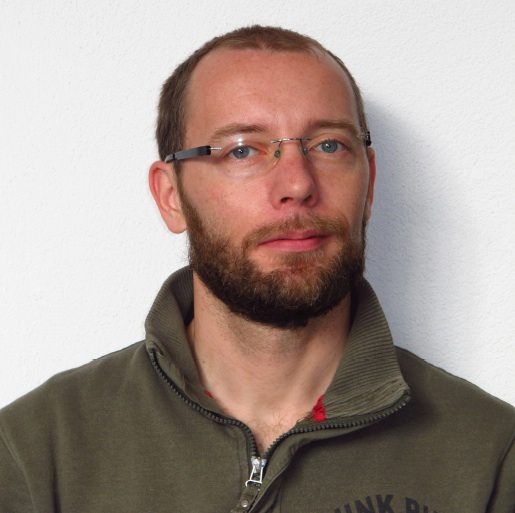 |
Aldo Mozzanica - Paul Scherrer Institut Aldo Mozzanica obtained his Ph.D. in Experimental Physics at the University of Milan with a thesis on the development of scintillating fiber tracker for antiproton cross section, in which he focused on the readout electronics and on the DAQ system. Since February 2008 he works at the Paul Scherrer Institut, in the SLS detector group. In the first years at PSI he developed Gotthard, a Silicon strip detector with integrating readout and automatic gain switching, designed for operation at Synchrotron sources and XFELs . He is now responsible for the SwissFEL detector development, in particular the Jungrfrau project. He has experience in all aspect of single photon counting and charge integrating Silicon detectors, in-depth knowledge of electronics, PCB design, ASIC design and FPGA firmware development. |
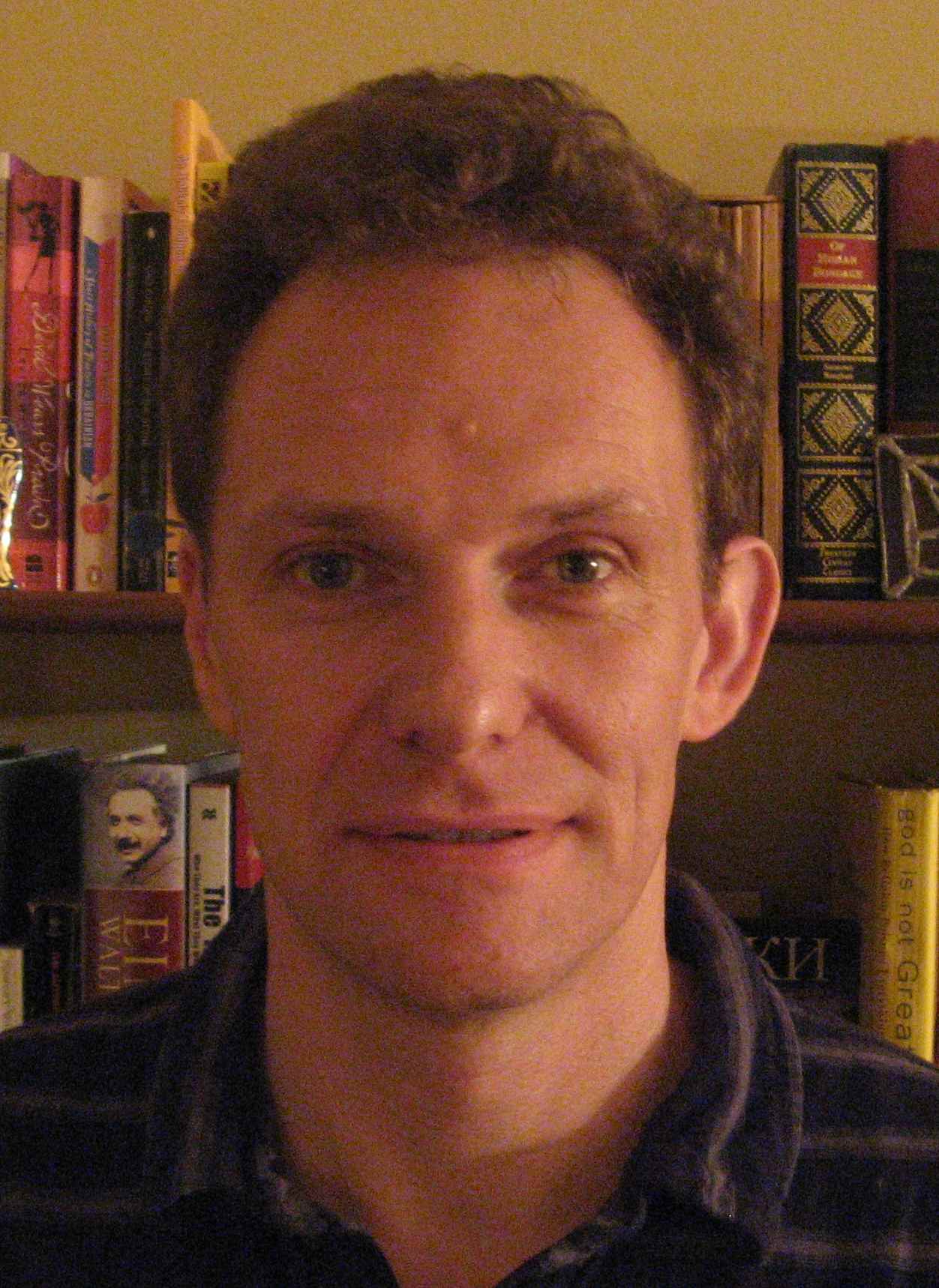 |
Simon Bandler - University of Maryland and NASA Goddard |
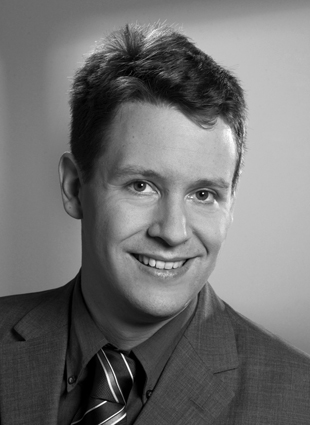 |
Jochen Kaiser - University of Erlangen-Nuremberg Mr. Kaiser obtained his diploma in electrical engineering at the University of Stuttgart in 2005. Afterward he joined the Chair of Electron Devices of the University Erlangen- Nuremberg. During his Ph.D. thesis, he was working on the technology of germaniumbased devices. |
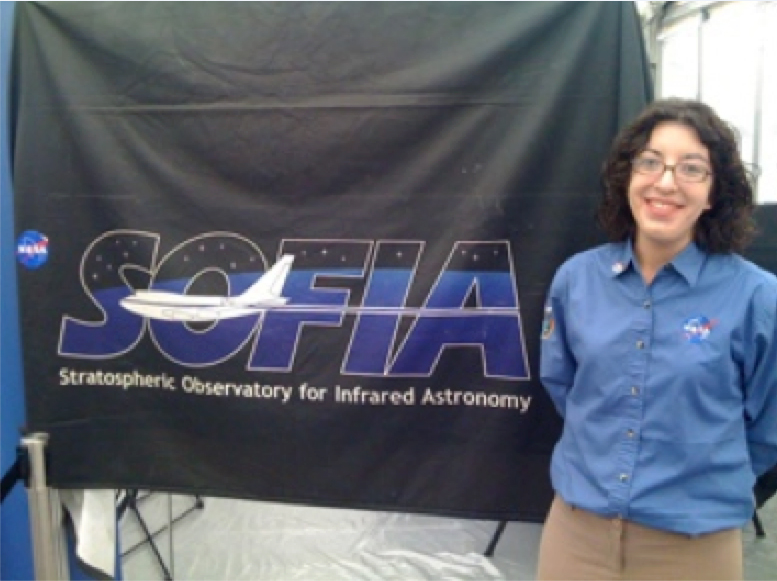 |
Erin Smith - NASA/AMES Dr. Erin Smith serves as the Science Instrument Development Manager for SOFIA. She has also served as Project Scientist and Co-Investigator during the development of the SOFIA instrument FLITECAM, and has served as acting Principal Investigator during SOFIA science missions. Dr. Smith¹s expertise is in the development of astronomical instrumentation, imaging and spectroscopic investigation of Polycyclic Aromatic Hydrocarbons in the ISM |
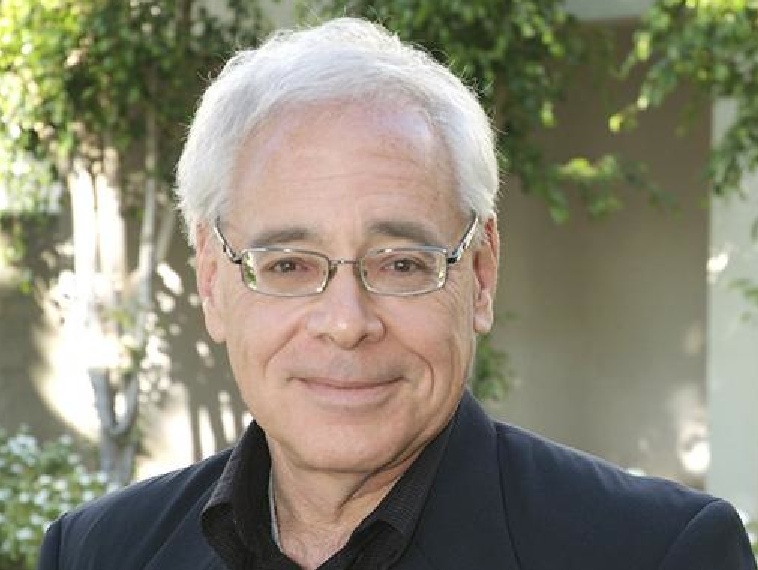 |
Gary Sanders - California Institute of Technology Gary Sanders spent 25 years performing high-energy physics experiments at laboratories in the United States and Europe. He earned an AB degree in physics from Columbia University and a PhD in high-energy physics from the Massachusetts Institute of Technology. He has been a faculty member in physics at Princeton University and a scientist at Los Alamos National Laboratory. In 1994, Gary came to Caltech to serve as the Project Manager and Deputy Director for the Laser Interferometer Gravitational Wave Observatory (LIGO) project. Gary joined TMT as its Project Manager in 2004. He is the author or a co-author of more than 175 peer-reviewed publications and he has been elected a Fellow of the American Physical Society. |
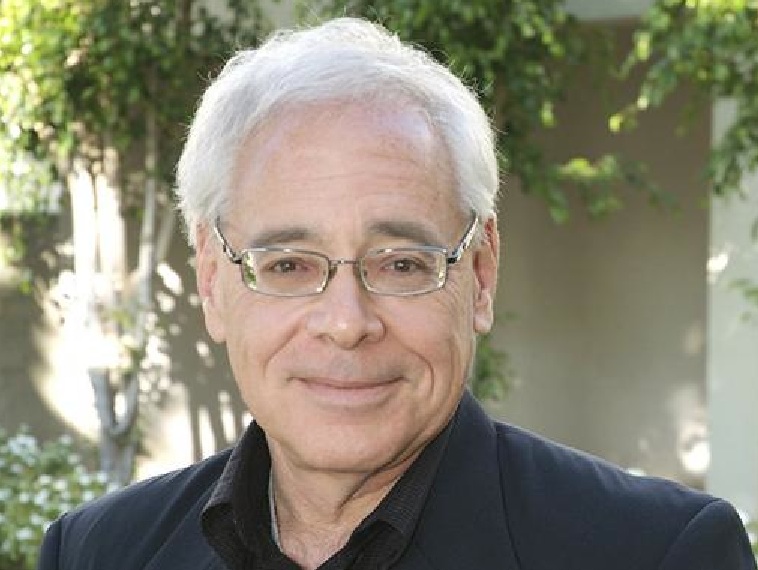 |
Gary Sanders - California Institute of Technology Gary Sanders spent 25 years performing high-energy physics experiments at laboratories in the United States and Europe. He earned an AB degree in physics from Columbia University and a PhD in high-energy physics from the Massachusetts Institute of Technology. He has been a faculty member in physics at Princeton University and a scientist at Los Alamos National Laboratory. In 1994, Gary came to Caltech to serve as the Project Manager and Deputy Director for the Laser Interferometer Gravitational Wave Observatory (LIGO) project. Gary joined TMT as its Project Manager in 2004. He is the author or a co-author of more than 175 peer-reviewed publications and he has been elected a Fellow of the American Physical Society. |
 |
Hsiao-Mei (Sherry) Cho - NIST Boulder and University of Colorado Boulder I joined National Institute of Standards & Technology (NIST) in Boulder, Colorado in 2007, where I have led the research and development effort for detectors for several astrophysics projects, a stand-off body imaging millimeter-wave system for security, and an ultra-low field magnetic resonance imaging system for medical applications. Prior to NIST, I was a postdoc at University of California at Berkeley and was responsible for the successful development of two cosmology projects, APEX-SZ and SPT-SZ. I received my Ph.D. from University of Houston with the bulk of my doctoral research being conducted under Professor John Clarke at the University of California, Berkeley. |
 |
Gene Hilton - NIST Boulder Gene Hilton has been a senior staff scientist at the National Institute of Standards & Technology (NIST) in Boulder, Colorado for 18 years. He leads the fabrication effort of the Quantum Sensors Program, developing fabrication methods for superconducting sensors and multiplexing circuits. He and his team have delivered these components to more than 20 instruments deployed around the world. Prior to NIST, he spent six years at the General Electric Corporate Research & Development Center developing large-area, flat-panel x-ray detectors that are currently the market-leading technology for cardiac and mammographic imaging. He received his Ph.D. in condensed matter physics from the University of Illinois at Urbana-Champaign. |
 |
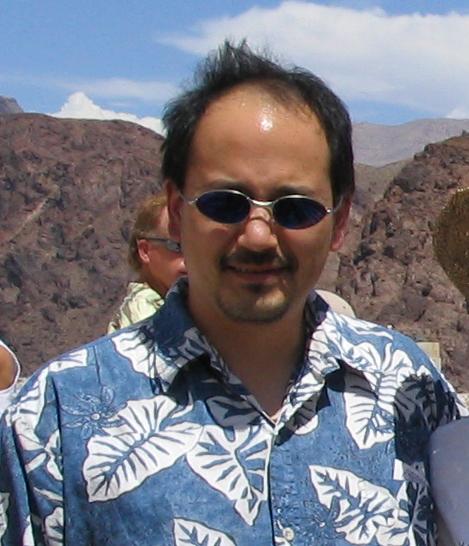
Iris Abt - Max Planck Society for Physics, Munich Studied mathematics and physics at the University of Hamburg. Got my Ph.D. on neutrino nucleaon scattering[CHARM] at CERN. Was working at SLAC from 1986 to 1992 on the SLD experiment. I am senior staff member at the MPI for Physics in Munich since I returned to Germany. I have worked on silicon detectors for ALEPH at CERN and HERA-B at DESY. I have worked on H1 and ZEUS, i.e. on ep scattering at DESY. I am still the physics chair of ZEUS. I have been working with Germanium for 10 years, spent some years on GERDA, and I am now planning for ton-scale experiments based on Germanium. |
 |
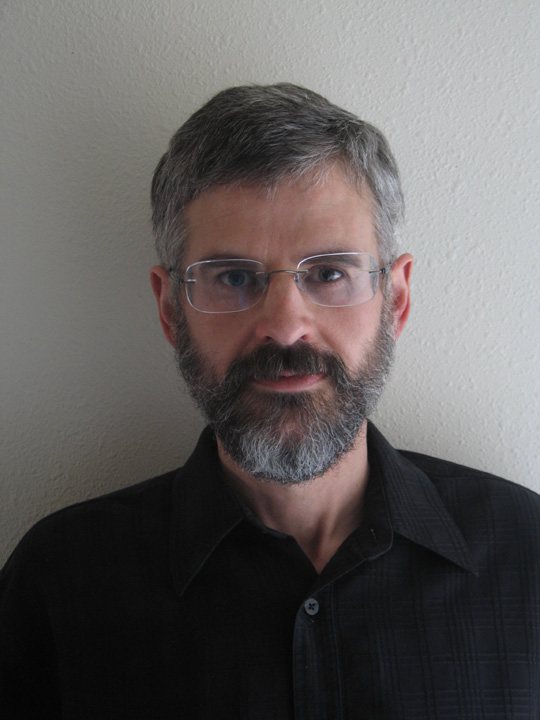
Leo Greiner - LBNL Early to late 1990s - Work on AGS experiments E858, E878, E896 strangelet and H0 searches late 1990s design and construct the trigger system for the STAR experiment at RHIC early 2000s - calibration systems for Kamland 2003 - present - work on the research and development and design of the MAPS based pixel vertex detector for STAR Currently STAR Pixel Detector subsystem project manager |
 |
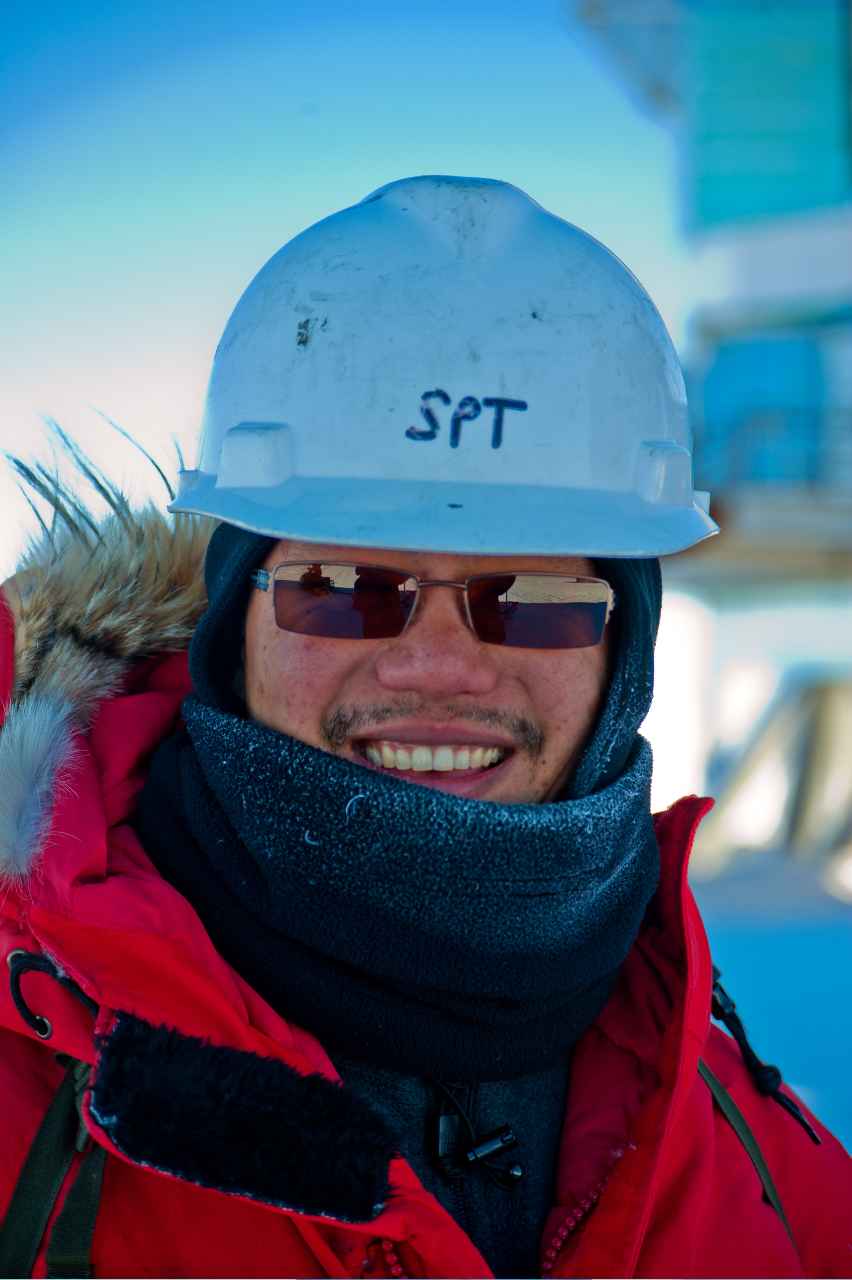
Kent Irwin - NIST Boulder Kent Irwin received a B.S. at Caltech in 1988 and a Ph.D. at Stanford in 1995. He is a Fellow at the National Institute of Standards and Technology in Boulder, Colorado, and an Adjoint Professor of Astrophysics and Planetary Sciences at the University of Colorado, Boulder. He leads the Quantum Sensors Program at NIST, developing superconducting detectors for applications in astrophysics, cosmology, nuclear security, and materials analysis. |
 |
Clarence Chang - Argonne National Laboratory Grad school at Stanford w/ Blas Cabrera working on the CDMS-II experiment Fellow at the Kavli Institute for Cosmological Physics at the University of Chicago with John Carlstro working on the South Pole Telescope Currently an Assistant Physicist at Argonne National Lab. |
 |
Ed Westbrook & Al Thompson - Research Detectors Inc. |
 |
Samuele Sangiorgio - Lawrence Livermore National Laboratory Samuele Sangiorgio received his Master degree in Physics at the University of Milano and his Ph.D. from the University of Insubria in Italy, where he developed an innovative detector technique for the rejection of radioactive contamination in bolometric experiments. As a postdoc at the University of Wisconsin-Madison, he led the effort to design and prototype the calibration system of the CUORE experiment, searching for neutrinoless double beta decay. He is currently a postdoc research staff at the Lawrence Livermore National Lab, where he focuses on the development of detectors for nuclear safeguards and non-proliferation using technologies that are also employed to answer the fundamental scientific questions about neutrinos and dark matter. |
 |
Kent Irwin - NIST Boulder Kent Irwin received a B.S. at Caltech in 1988 and a Ph.D. at Stanford in 1995. He is a Fellow at the National Institute of Standards and Technology in Boulder, Colorado, and an Adjoint Professor of Astrophysics and Planetary Sciences at the University of Colorado, Boulder. He leads the Quantum Sensors Program at NIST, developing superconducting detectors for applications in astrophysics, cosmology, nuclear security, and materials analysis. |
 |
Lindley Winslow - UCLA Lindley was a graduate student (and undergraduate) at Berkeley. She completed a PhD on the KamLAND experiment with Stuart Freedman on solar neutrinos. From there she moved to MIT to work with Janet Conrad on the Double Chooz reactor antineutrino experiment. While at MIT, she started work on an R&D project using nanocrystals in liquid scintillator based detectors. This work earned her and then was supported by the L'Oreal for Women in Science fellowship. This effort will be the topic of today's talk. This work continues along with a new effort on the CUORE neutrinoless double beta decay experiment in her lab at UCLA where she joined the faculty last summer. |
 |
Dr. Daniel Brandt - SLAC After graduating from high school in northern Germany, I completed an undergraduate physics degree at the University of Leicester, followed by a doctoral degree at the Leicester Space Research Center working on the physics of superconducting tunnel junction calorimeters and on the fundamental physics of the superconducting-to-normal transition. I am currently a post-doctoral research associate at KIPAC, SLAC National Accelerator Lab, leading the detector Monte Carlo simulation group of the Cryogenic Dark Matter Search (CDMS) as well as working on a more widely applicable simulation framework for cryogenic solid state calorimeters using the Geant4 Framework. |
 |
Markus Kuster - European XFEL 2010 - present Staff Scientist, European XFEL GmbH Coordinator detector development, head of the European XFEL detector group 2002 - 2010 Visiting scientist, Organisation Européenne pour la Recherche Nucléaire – CERN Solar axion search, project leader of the X-ray telescope group for the CERN Axion Solar Telescope (CAST) Member of the CAST steering committee 2005 - 2010 Postdoctoral Researcher, University of Technology Darmstadt Group Leader astroparticle physics, detector development 2002 - 2004 Postdoctoral Researcher, Max-Plack Institute for extraterrestrial Physics/Max-Planck Semiconductor Laboratory CCD detectors 1997 - 2002 Research Assistant, Institute for Astronomy and Astrophysics Tübingen CCD detectors, data acquisition systems, space qualification of scientific instrumentation for ABRIXAS and XMM-Newton, software development |
|
- |
 |
Florian Aschauer - Max Planck Institute for Extraterrestrial Physics Florian Aschauer studied electrical engineering and information technology with a focus on computer and software engineering at the Technical University of Munich from 2005 to 2009. After graduating with honors, he started his conferral of a doctorate at the Max-Planck-Institute of Extraterrestrial Physics. The main focuses of research are embedded systems for real-time data processing of high speed X-ray detectors based on FPGA processing platforms and the development of new data-processing algorithms and their efficient hardware implementation. He is currently working on the electronics of eROSITA, an X-ray telescope developed at the Max Planck Institute for Extraterrestrial Physics. |
 |
Cristoforo Marzocca - Politecnico di Bari Cristoforo Marzocca is an associate professor of electronics at Politecnico di Bari, Italy, since 2003. Testing of digital and mixed-signal integrated circuits and characterization of electronic devices have been among his first research interests in the past. More recently, in the framework of several projects of the Italian Institute of Nuclear Physics (INFN), his activities have been focused on the design of CMOS analog circuits for the read out of solid state detectors. In the last few years he has been involved in the development of integrated front-end electronics suitable for Silicon Photo-Multiplier detectors. |
 |
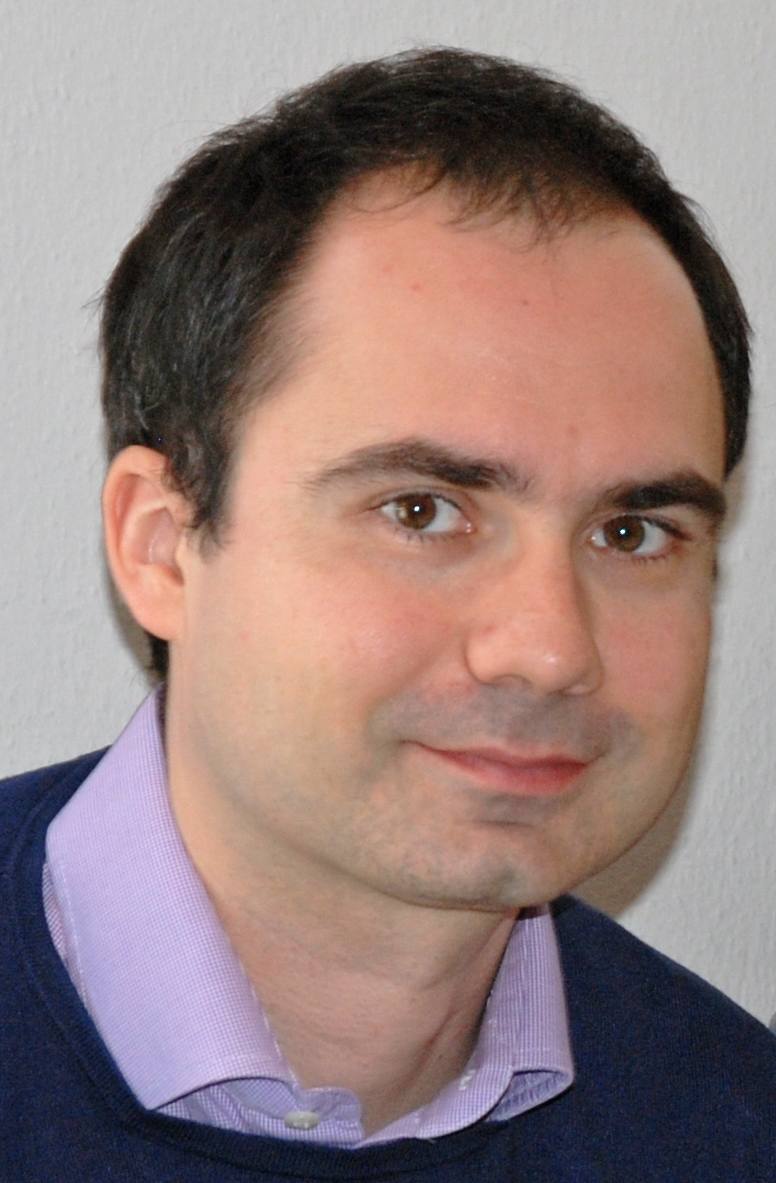
Jean-Francois Pratte - Université de Sherbrooke Jean-François Pratte received his Ph.D. degree from Université de Sherbrooke in 2008. In parallel with his thesis, he was an engineer at the Instrumentation Division of Brookhaven National Laboratory from 2002 to 2009, focussing on Positron Emission Tomography (PET) instrumentation such as the RatCAP and dual modality PET and MRI scanners. He joined in 2009 the Université de Sherbrooke and he is currently Associate Professor for the Electrical Engineering Department. He started a research program on 3D vertically integrated Single Photon Counting Modules for radiation instrumentation. His current research interests are single photon avalanche diodes and their front-end electronics, time-to-digital converters and 3D heterogeneous integration based on through silicon vias. He is an active collaborator on the realization of the front-end electronics for the LabPET II preclinical PET scanner. |
 |
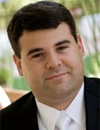
Matteo Porro - Max Planck Institute - Munich Matteo Porro earned his Master’s degree in Electronics Engineering and his Ph.D. in Radiation Science and Technology at Politecnico di Milano, Italy. His research interests focus on the development of low-noise silicon detectors and of the associated readout ASICs. During his Ph.D. he has developed the electrical and noise model of the DEPFET device for X-ray astronomy and has designed the readout ASIC for a compact gamma camera for medical applications. Since 2005 Matteo Porro has been a research scientist at the Semiconductor Laboratory of Max Planck Institute in Munich, Germany. He has been responsible of the development of the ASTEROID ASIC: a multi-channel low-noise integrated circuit for DEPFET matrices. The ASIC is scheduled to be used in the BepiColombo mission of ESA, which will investigate X-ray fluorescence from Mercury. His ASIC development activity also includes the design of the readout for pnCCDs for optical astronomy and for experiments with the new generation of X-ray Free Electron Lasers. In 2007 he became the coordinator and the P.I. of the DSSC project. The project aims at the development of a DEPFET-based large format X-ray imager with mega-frame readout capability for the European XFEL in Hamburg. In 2010 he received the Radiation Instrumentation Early Career Award from the IEEE Nuclear and Plasma Sciences Society. He is author and coauthor of more than 70 publications and one patent. |
 |
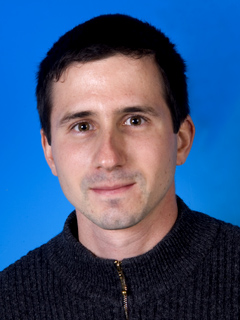
Dr. Ben Mazin - UC Santa Barbara Ben Mazin attended Yale University, graduating in 1997. After Yale, he attended the California Institute of Technology, graduating with a doctorate in Astrophysics in August, 2004. After a short post-doc, he went to work as a scientist at JPL in March, 2005. He joined the faculty at the University of California, Santa Barbara in September, 2008, where he leads a lab dedicated to the development of optical/UV/X-ray Microwave Kinetic Inductance Detectors (MKIDs) and astronomical instrumentation for time and energy resolved studies. He was awarded the Presidential Early Career |
 |
Eric Armengaud - IRFU/SPP CEA Saclay I was born near Paris and did my studies at the Ecole Normale Superieure at Paris PhD on the Auger experiment in 2003-2006 at College de France Since then I am at CEA-Saclay as a staff member, working on the Edelweiss experiment as well as (a little bit) on BigBoss. |
 |
Pat McCarthy - Giant Magellan Telescope Patrick McCarthy is Director of the Giant Magellan Telescope Project. He received his Ph. D. in Astronomy from U. C. Berkeley in 1988. He went to the Carnegie Observatories first as a Carnegie Fellow and then as a Hubble Fellow in 1991. In 1993 he joined the scientific staff at Carnegie. His research is focused on understanding the evolution of massive galaxies at intermediate and high redshifts. As GMTO Director he is responsible for the overall scientific mission of the project. |
 |
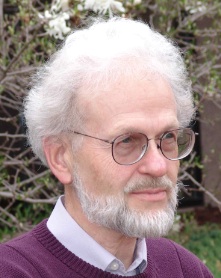
Dr. Ted Liu - Fermi National Accelerator Laboratory Ted Liu received his Ph.D from Harvard in 1995 working on the CLEO experiment at Wilson Lab at Cornell. He then worked on the Belle experiment at KEK from 1995 to 1997 (as Dicke Fellow at Princeton), and the BaBar experiment at SLAC from 1997 to 2000 (as Research Associate at LBNL). In 2000, he moved to Fermilab (Wilson Fellow) and worked on the CDF experiment. He has been a scientist at Fermilab since 2004 and has been in recent years working on trigger upgrade R&D for high luminosity LHC. |
 |
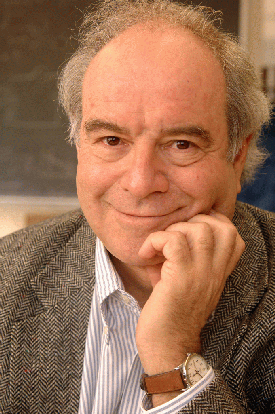
Dr. David Nygren - LBNL |
 |
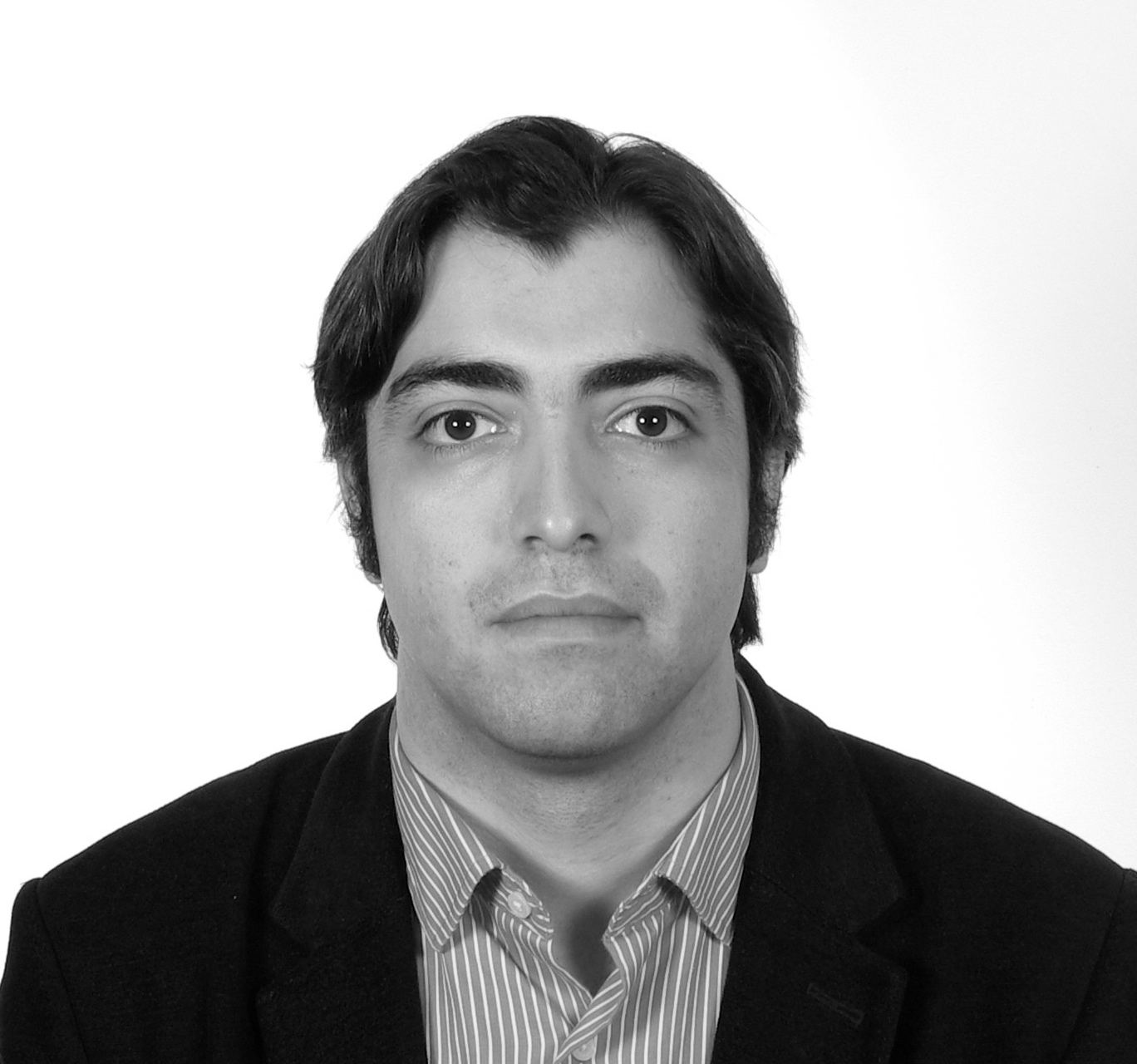
Prof. Henry Frisch - Enrico Fermmi Institute, University of Chicago Henry Frisch received his B.A. degree from Harvard in 1966 and his Ph.D from UC Berkeley in 1971. He has been on the faculty at the Univ. of Chicago working at Fermilab since 1971. His work on the CDF experiment at the Tevatron specialized in precision measurements of the W and Z bosons and the search for the top quark. Following the top quark discovery he has focused on developing signature-based searches for new physics at the Tevatron, emphasizing signatures with vector bosons and 3rd-generation generation quarks. His interest in fast timing stems from the possibility of expanding the universe of such signatures by adding parton identification to the attributes of signatures. It has turned out that there are interesting new things to learn in other areas too. |
 |
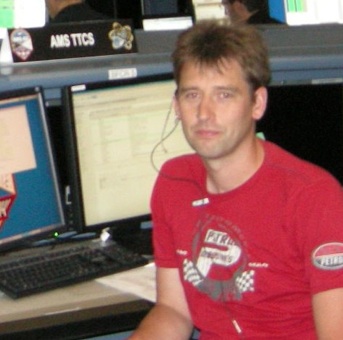
Prof. Amin Arbabian - Stanford Univeristy Amin Arbabian received the B.S. degree from Sharif University of Technology in 2005 and the M.S. and Ph.D. degrees in electrical engineering from UC Berkeley, in 2007 and 2011. In January 2012, he joined Stanford University, as an Assistant Professor of Electrical Engineering, where he is also a Stanford University School of Engineering Terman Fellow. In 2007 and 2008, he was part of the initial engineering team at a new startup company (Tagarray, Inc.) involved with a sub-microwatt RFID project. He spent Summer 2010 at Qualcomm Corporate’s R&D division. Dr. Arbabian's research in the area of high frequency systems has received multiple awards including the 2010 IEEE Jack Kilby Award for Outstanding Student Paper at the International Solid-State Circuits Conference, two time second place Best Student Paper Awards at 2008 and 2011 RFIC symposiums, the 2009 CITRIS award for the big ideas contest, and the 2010-11 Qualcomm Innovation fellowship. |
 |
Bart Verlaat - NIKHEF and CERN |
 |
Adam Bernstein - Lawrence Livermore National Laboratory Dr. Adam Bernstein leads the Advanced Detectors Group in the Physics Division at Lawrence Livermore National Laboratory. He works on the development of radiation detectors for applications in nuclear nonproliferation and nuclear arms control, and on detector development for fundamental physics experiments. He received his B.A. in Physics from the University of California at Berkeley, and his Ph.D. in Experimental High Energy Physics from Columbia University. He has pioneered the use of cubic meter scale water and scintillator based detectors as a practical means for non-intrusive real-time measurement of changes in the plutonium content of operating reactors. Bernstein has also developed large-scale liquid scintillator detectors for improved passive and active detection of Plutonium and Highly Enriched Uranium. He is a member of the Large Underground Xenon (LUX) dark matter search experiment, an international collaboration which will soon directly measure or place the world's most stringent limit on the mass and coupling of a theoretically favored class of dark matter particle, known as the Weakly Interacting Massive Particle or WIMP. |
 |
John Geary - Smithsonian Astrophysical Observatory John Geary received his PhD in Astronomy from the U. of Arizona in 1975. He has worked exclusively in the field of astronomical imaging systems since that time, developing some of the earliest applications for the rapidly expanding offerings of solid-state imaging technology for precision work in this context. In addition to using the sometimes spotty offerings of the imager industry in past years, he has designed and successfully fabricated many useful CCD imagers for astronomical applications. In recent times, he has developed the hardware architecture for numerous large array cameras, both for optical and near-IR use. Since the inception of the present Kepler Mission, he has been a member of the Science Team, responsible to reviewing the technical details of the photometer design, construction, pre-launch testing, and post-launch performance and diagnosis of problem areas. |
 |
Brian Rodricks - BAE Systems Imaging Solutions Brian Rodricks received his MS degree from Ohio University and PhD in Condensed Matter Physics from the University of Michigan. He was the first Argonne Scholar at the Advanced Photon Source at the Argonne National Laboratory and subsequently worked as a Member of the Technical Staff developing instrumentation and techniques for high-speed imagining. He currently manages the Application and System Engineering group at BAE Systems Imaging Solutions (formerly Fairchild Imaging) developing high-performance imaging systems for x-ray and scientific imaging applications. He has over 20 years experience in the field of imaging- from optical to x-ray applications having also worked at Hologic Inc. developing TFT-based imaging system for medical applications and Micron Technology where he was involved in optical imaging for mobile applications. He is Co-Chair of Digital Photography at the SPIE and is a member of the editorial board for Review of Scientific Instruments. |
 |
Thomas Fritzsch - Fraunhofer IZM, Berlin, Germany Thomas Fritzsch received the diploma degree (M.Sc.) in electrical engineering from the University Dresden, Germany, in 1997. In 2001 he joined the Fraunhofer Institute for Reliability and Microintegration Berlin, Germany. He is working as R&D engineer and project manager in the field of wafer level packaging with focus on pixel detetctor application. |
 |
Emanuele Mandelli - Altasens Inc. As Director of Analog and Mixed Signal Design, Emanuele Mandelli is responsible for managing the analog and mixed signal design groups. He has over 20 years of experience in designing low noise readout circuits for imaging and radiation detectors. Prior to joining AltaSens, Dr. Mandelli worked at the Lawrence Berkeley National Laboratory, developing ASICs for medical imaging, space applications, and high energy physics. He started his research career at Pavia’s University, where he got his MS and Ph. D. degrees. Emanuele Mandelli is an alumnus of the Collegio Ghisliseri and was an officer of the Italian Air Forces. He has authored and co-authored over twenty papers and two patents. He is currently a reviewer for the Nuclear Science Symposium and Medical Imaging conferences. |
 |
Megan Eckart - NASA/Goddard Space Flight Center and CRESST/UMBC Megan Eckart is a research associate in the X-ray Astrophysics Laboratory at NASA's Goddard Space Flight Center, where she focuses on low-temperature detector development for X-ray imaging spectroscopy. With the X-ray Microcalorimeter Group, she is developing the TES microcalorimeter array for the Micro-X Sounding Rocket Experiment as well as kilopixel TES arrays for future X-ray missions (e.g., IXO, ATHENA). She also serves as lead calibration scientist for the Astro-H Soft X-ray Spectrometer, a JAXA-led mission set for launch in 2014. Megan received her A.B. from UC Berkeley and her Ph.D. in physics from Caltech in 2007. Her thesis included observational work studying AGN that dominate the 2-10 keV X-ray background using Chandra data and multi-wavelength followup, as well as detector development of Microwave Kinetic Inductance Detectors (MKIDs) for X-ray astrophysics. |
 |
Professor Rusty Harris - Texas A & M University H. Rusty Harris is currently an Assistant Professor in the Electrical and Computer Engineering and Physics Departments at Texas A&M University. His research interests include 3D devices and device processing, new device materials to replace Silicon, semiconductor laser diodes, high voltage and RF GaN device architectures, and low-temperature Ge detector materials and bolometer architectures for the Cryogenic Dark Matter Search (CDMS) project.. His prior experience includes Manager of 3D Device Research with Advanced Micro Devices (AMD) while assigned to SEMATECH in Austin, TX. Dr. Harris earned a BS in Engineering Physics (‘97) and a Ph.D. in Electrical Engineering (‘03) from Texas Tech University in the area of surface and interface analysis for solid state devices. He initiated the design and construction of a $1.9M semiconductor lab at the University of Missouri-Columbia as a Visiting Assistant Professor. He is author and co-author of over 70 journals and conference publications. |
 |
Brenna Flaugher - Fermi Brenna Flaugher is a scientist in the Fermilab Center for Particle Astrophysics at the Fermi National Accelerator Laboratory., a DOE-funded facility that performs research on high-energy physics and the science of matter, space and time. She received her undergraduate degree in Physics from Bates College, in Lewiston, Maine and her PhD from Rutgers, the State University of the New Jersey in the study of the production of jets in proton –antiproton collisions at Fermilab as a member of the CDF Collaboration. She participated in and led the construction of silicon strip vertex detectors for high energy physics projects. In 2003 she participated in the formation of a new project to study the nature of dark energy, The Dark Energy Survey. Since 2004 she has been project manager for the construction of the 570 Mpixel digital camera, DECam, that will be used for the Dark Energy Survey. |
 |
Constance Rockosi - UC Santa Cruz, UCO/Lick Observatory I got my undergraduate degree in electrical engineering, but got my PhD in astronomy and astrophysics at the University of Chicago. I started working on the SDSS imaging camera as an undergraduate, and continued to to work on the camera and helped commission the SDSS instrumentation as a graduate student. I am now using SDSS instrumentation to learn about the halo of our Galaxy, both the dark matter and the stars, at UC Santa Cruz. |
 |
Roman Poeschl - LAL in2p3 Dr. Roman Poeschl received his PhD in 2000 which focused on the Double Differential Dijet Rate in Deep Inelastic Scattering at HERA. He is currently doing research at the University of Paris XI and LAL Orsay. |
 |
John R. Thome - Swiss Federal Institute of Technology in Lausanne (EPFL), Switzerland John R. Thome is Professor of Heat and Mass Transfer at the Swiss Federal Institute of Technology in Lausanne (EPFL), Switzerland since 1998, where his primary interests of research are two-phase flow and heat transfer, covering both macro-scale and micro-scale heat transfer and also enhanced heat transfer. Recently, his work has primarily focused on two-phase flow pattern based heat transfer and pressure drop models for microscale evaporating flows and the development of multi-microchannel evaporators for electronics cooling. In particular, he has developed such models for evaporation of CO2 in small channels. Prof. Thome is director of the Laboratory of Heat and Mass Transfer at the EPFL with a PhD and post-doc research staff of about 18-20 and is also Director of the Doctoral School in Energy. He received his Ph.D. at Oxford University, England in 1978 and was formerly a professor at Michigan State University and then from 1984 to 1998 he set up his own international engineering consulting company. He is the author of four books: Enhanced Boiling Heat Transfer (1990), Convective Boiling and Condensation, 3rd Edition (1994), Wolverine Engineering Databook III (2004) and Nucleate Boiling on Micro-Structured Surfaces (2008). He received the ASME Heat Transfer Division's Best Paper Award in 1998 for a 3-part paper on two-phase flow and flow boiling heat transfer published in the Journal of Heat Transfer. Prof. Thome received the UK Institute of Refrigeration’s J.E. Hall Gold Medal in 2008 for his extensive work in the field of microscale refrigeration heat transfer and the 2010 ASME Heat Transfer Memorial Award for his work on flow pattern based heat transfer models for macro and micro-scale flows. He has published over 130 journal papers since joining the EPFL in 1998. He is the PI of the Swiss National Science Nano-Tera consortium project CMOSAIC, which is studying single- and two-phase cooling, thermal management and manufacturing of future 3D-IC computer chips with channel sizes as small as 50microns. He collaborates with CERN on CO2 flow boiling for cooling of future particle detectors. He is the Director of the European ERCOFTAC Coordination Center (European Research Community On Flow, Turbulence And Combustion) with about 180 affiliated universities, research centers and industrial companies. |
 |
Sven Herrmann - Max-Plank-Institut Halbleiterlabor |
 |
Prof. Mark Horowitz - Stanford University Mark Horowitz received his BS and MS in Electrical Engineering from MIT in 1978, and his PhD from Stanford in 1984. Since 1984 he has been a professor at Stanford working in the area of digital integrated circuit design. While at Stanford he has led a number of processor designs including: MIPS-X, one of the first processors to include an on-chip instruction cache; Torch, a statically-scheduled, superscalar processor; Flash, a flexible DSM machine; and Smash, a reconfigurable polymorphic manycore processor. He has also worked in a number of other chip design areas including high-speed memory design, high-bandwidth interfaces, and fast floating point. In 1990 he took leave from Stanford to help start Rambus Inc, a company designing high-bandwidth memory interface technology. |
 |
Gabriella Carini - Brookhaven National Laboratory Dr. Carini received her undergraduate and doctorate degrees from the University of Palermo. She is currently a physicist at Brookhaven National Laboratory, where she develops specialized, radiation detectors. Dr. Carini has worked with Germanium, CdZnTe, and Silicon based sensors for applications ranging from space science to homeland security. Recently her research has focussed on designing and fabricating the next generation of sensors for use at the LCLS. |
 |
M. Bonner Denton - Univeristy of Arizona M. Bonner Denton is a Professor of Chemistry and a Professor of Geosciences at the University of Arizona. His research centers on developing and applying new detection technology to a wide variety of fields, including optical and mass spectrometry. He received his Bachelor of Science and Bachelor of Arts in 1967 from Lamar State College of Technology. In 1972 he received his Ph.D. from the University of Illinois. He is the recipient of the ACS Division of Analytical Chemistry Award in Spectrochemical Analysis, 2001; The Pittsburgh Spectroscopy Award, 1998; the University of Arizona Excellence in Teaching Award, 1993; and the SAS Lester Strock Award, 1991. Dr. Denton has served as the editor of four texts on Scientific Optical Imaging, and has authored over 190 peer-reviewed manuscripts. He has served as President of The Society of Applied Spectroscopy; Chair of the Analytical Division of the American Chemical Society; Galileo Fellow, College of Science, University of Arizona, 2004; Fellow, Royal Society of Chemistry, 2004; Fellow, Society for Applied Spectroscopy, 2006; and Fellow, National Association of the Advancement of Science, 2006. |
 |
Prof. Boris Murmann - Stanford University Boris Murmann is an Associate Professor in the Department of Electrical Engineering, Stanford, CA. He received the Ph.D. degree in electrical engineering from the University of California at Berkeley in 2003. His research interests are in the area of mixed-signal integrated circuit design, with special emphasis on data converters and sensor interfaces. In 2008, Dr. Murmann was a co-recipient of the the Best Student Paper Award at the VLSI Circuit Symposium and the recipient of the Best Invited Paper Award at the Custom Integrated Circuits Conference (CICC). In 2009, he received Agilent Early Career Professor Award. |
 |
Mark Bautz - MIT Kavli Institute Mark Bautz is a senior research scientist at the MIT Kavli Institute for Astrophysics and Space Research (MKI), where he serves as Associate Director. He has been developing space instrumentation for X-ray astronomy for more than twenty years, and has contributed to instruments for ASCA (launched in 1993), Chandra (1999) and Suzaku (2005). He leads an X-ray detector development program at MKI and also conducts observational research aimed at understanding the astrophysics of galaxy clusters. |
 |
Chih-Hao Li - Harvard 2005 PhD in physics (Dr. Dmitry Budker, UC Berkeley) 2005-2006 Postdoc (Dr. Daniel Kleppner, MIT) 2006-2009 Postdoc (Dr. Walsworth, Harvard Univ) 2009-present Research Associate (Dr. Walsworth, Harvard Univ) |
 |
Toshinobu Miyoshi - Institute of Particle and Nuclear Studies, KEK Toshinobu Miyoshi received PhD from Tohoku University in Japan for his work on hypernuclear spectroscopic study in 2003. He continued to work on hypernuclear spectroscopy at Jefferson Lab as a post-doc for three years. Since 2006, he has been working at KEK as a post-doc and then later as associate researcher on detector development for protein crystallography and SOI monolithic detector. |
 |
Satish K Dhawan - Yale University Satish Dhawan is senior research Scientist at Yale University working in high energy physics instrumentation. He received his Ph.D. in physics from Tsukuba University. Undergraduate degree from BITs, Pilani, India, MS EE from University of Iowa and an EE degree from Columbia University. He is currently working on the Power distribution for the Front End Electronics for the ATLAS Silicon tracker and LiAr for sLHC. He is also working on the powering of SiD detector for LC. He has a long history of involvement in the NIM, CAMAC, and FASTCAMAC etc Instrumentation standardization for physics research. He developed, in conjunction with industry high stability power supplies spectroscopy magnets. |
 |
Bruce Baller - FNAL Bruce Baller has been a staff scientist at Fermilab for 23 years. He has been involved in the development and construction of a variety of detectors and beams and has made contributions in event simulation and reconstruction as well. His career contributions include the design, construction and analysis of the E665 vertex detector drift chambers, E653 silicon micro-strip detector analysis and the development of off-line reconstruction software for DONUT. He served as the first project manager for the MINOS detector and later, the manager of the NuMI beamline. He is currently an assistant division head in the Particle Physics Division and the project manager for LAr20; the LBNE 20 kton liquid argon detector |
|
Ronald Lipton - FNAL Ronald Lipton is a staff scientist at Fermilab. He has been involved in the development and construction of several particle detector systems. He worked on liquid argon calorimeters for Experiment 515 and 653 at Fermilab, and worked on the construction and testing of the end calorimeter for the D0 Tevatron Collider experiment. He led the construction of the D0 Silicon Microstrip Tracker. He also led the construction of the Layer 0 detector for D0, which was installed in the spring of 2006. He is now working on R&D for future detector systems. |
 |
Anton Tremsin and Oswald Siegmund - Space Science Laboratory, University of California Dr. Oswald was PI for 40+ funded technology research program in the general area of sensors, MCP's, photocathodes, image readouts, and electronics. He was also a US PI for FUVITA, UV imaging instrument on Spectrum X-gamma. He was a Co-I on the following missions, SOHO satellite, UVCS, SUMER and CDS, Extreme Ultraviolet Explorer Satellite (EUVE), ALEXIS small satellite, COS HST FUV Spectrometer Instrument, GALEX Small Explorer Satellite, Far Ultraviolet Spectroscopy Explorer Satellite, and an associated Scientist, IMAGE (EUVI, SI, WIC) Midex Satellite Program. Dr. Tremsin has undertaken the research and development of new technologies in position sensitive photon and neutron counting detectors based on microchannel plates. Dr. Tremsin has performed fundamental research into the development and characterization of new UV- and X-ray sensitive photocathodes, new type of electron multiplying devices (silicon microchannel plates, microsphere plates), developments of high spatial resolution readouts, development of novel thermal neutron imaging and collimation technologies. The new non destructive testing techniques with neutrons developed by Dr. Tremsin enable high resolution studies of structure, phase and strain in materials with the help of neutron transmission Bragg edge spectroscopy. He was also working on the advancement of novel X-ray refractive imaging technique with resonant absorption mirrors. Dr. Tremsin has also worked on several successful NASA astrophysical missions, including those still in orbit: IMAGE, GALEX, FUSE. In addition to his fundamental research activities Dr. Tremsin was a lecturer at the Physics Department of the University of California at Berkeley with typically 60-200 enrolled students in his classes. |
 |
Steve Schnetzer - Rutgers University Steve Schnetzer is the senior member of the Rutgers High Energy Physics group and has been active in research in fundamental particle physics for over three decades. In the 1980’s, he was co-founder of an international collaboration that constructed a large collider experiment for the TRISTAN electron-positron collider in Japan. In the 1990’s, he worked on a major experiment at Fermilab studying matter-antimatter asymmetry. Twenty years ago, he proposed and pioneered the use of synthetic diamond as a radiation-hard particle detector. He currently works on the Compact Muon Solenoid experiment one of the large detector facilities being built for the Large Hadron Collider (LHC) at CERN. He is currently eagerly awaiting first physics from the LHC. |
 |
Akito Kusaka - KICP, Univeristy of Chicago Akito Kusaka is a research associate with the Kavli Institute for Cosmological Physics at the University of Chicago. He received his PhD from University of Tokyo for his research on the measurement of the CP violation in B meson system at Belle experiment. He started his carrier as an experimental cosmologist joining QUIET collaboration two years ago. QUIET measures anisotropy of the CMB polarization at the scale ~2 degrees on the sky, seeking for the possible signature of GUT scale physics from inflationary era. |
 |
Gottfried Kanbach - Max Planck Institute for Extraterrestrial Physics Dr. Gottfried Kanbach is a Senior Staff Scientist and a Group Leader for High-Energy Gamma-Ray Astronomy group at Max-Planck-Institute for extraterrestrial Physics in Germany. He has a long history with gamma-ray satellite missions such as OSO-7, SMM, COS-B and EGRET. He is currently an affiliated scientist for Fermi LAT. He is now developing a next generation low- to medium energy gamma ray telescope, GRIPS. |
 |
Gary S. Varner - University of Hawaii Gary Varner is a Professor of Physics at the University of Hawaii and directs his research interests in instrumentation development for particle and astroparticle physics through the Instrumentation Development Laboratory, which he founded and leads. Recently his team successfully developed the custom RF trigger and digitization electronics flown on the ANITA payload. Working toward the future, he is leading an effort to further improve low-power RF recording technology for a large volume terrestrial radio UHE neutrino detector at the South Pole. Remarkably similar sampling and readout technology is being concurrently explored for Super B-factory and ILC detector pixel vertex detectors, future particle identification techniques, as well as a semiconductor multiple Compton x-ray telescope. |
 |
Peter Krizan - University of Ljubljana and J. Stefan Institute Peter Krizan is a professor of physics at the University of Ljubljana, and a principal investigator at the J. Stefan Institute. He did his PhD on the Omicron experiment at CERN, after which he worked on the ARGUS and HERA-B experiments at DESY. In HERA-B, his team was, among others, responsible for the RICH counter. He then joined the Belle experiment at KEK, where he has been involved in several analyses, in the upgrade of the vertex detector, and in the preparation of the particle identification system upgrade for Belle-II. He is also serving as a chair of the Interim Steering Committee of the Belle-II collaboration. |
 |
Paolo Gorla - Gran Sasso National Laboratories Currently, I am a Postdoctoral Fellow at Laboratory Nazionali del Gran Sasso - INFN in Italy. I have been a member of the CUORICINO and CUORE collaborations for the past 10 years. I obtained my Ph.D. from University of Milano-Bicocca in Italy on 2005. My main research interest is focused on the development of advanced detectors for rare events astroparticle physics, and I also have a wide experience in low background techniques. My present research effort is concentrated on bolometric detectors. I actively participated in the construction and operation of the CUORICINO experiment (a detector with an effective mass of 40.2 kg) for the search of Neutrinoless Double Beta Decay. I have been involved in the R&D effort for CUORE -ton scale upgrade of CUORICINO- where my main focus has been the optimization of the detector resolution and it’s background reduction. Presently, I am part of the CUORE construction team. |
 |
Gil Travish - UCLA Gil Travish is an Associate Researcher at UCLA working with the Particle Beam Physics Laboratory (PBPL). Dr. Travish received his Ph.D. from UCLA and has authored over 100 scientific publications. He has worked in beam physics, radiation production and accelerator technology for the past 15 years including: the first high-gain FEL experiments (UCLA); first saturation of a visible high-gain FEL (ANL); development and operation of numerous RF photoinjectors; extensive development of drive lasers, diagnostics and magnet systems for high-brightness beams; and, the design, construction and integration of new accelerator projects in multiple laboratories worldwide. His current work includes the Micro Accelerator Platform, a laser-driven optical-scale accelerator, as well as other dielectric-based accelerator-structures for next generation high energy physics, light source and novel device applications. |
 |
Marc Christophersen - Naval Research Laboratory Dr. Marc Christophersen holds a PhD and a MS in material science and engineering from the University of Kiel, Germany. Since 2007 he is a NRC (National Research Council) postdoctoral fellow at the Naval Research Laboratory, Space Science Division, under the supervision of Dr. B. F. Phlips working on gamma-ray detector designs. Prior to his NRC, he has been a postdoctoral fellow at the University of Maryland and University Rochester working in photonics, MEMS and bioMEMS applications. |
 |
Daniel Rugar - IBM Research Division, Almaden Research Center Daniel Rugar is currently Manager of Nanoscale Studies in the IBM Research Division, and a Consulting Professor of Applied Physics at Stanford University. Dr. Rugar has a long history of contributions to the field of scanning microscopy. He began his work in microscopy as a Ph.D. student in Applied Physics at Stanford University, where he developed a gigahertz frequency scanning acoustic microscope operating in superfluid helium with nanometer spatial resolution. He joined IBM in 1984 and made important contributions to the development of atomic force microscopy (AFM) and magnetic force microscopy (MFM), especially for imaging magnetic materials and for applications to data storage. His research group pioneered mechanical detection of ultrasmall forces, achieving the current record of 800 zeptonewtons in a 1 Hertz bandwidth. In 1992, he became inspired by the possibility of combining magnetic resonance imaging (MRI) with ultrasensitive force detection to allow force microscopes to "see" below the surface and take three-dimensional images. He made the first demonstrations of magnetic resonance force microscopy (MRFM) in 1992 and has worked to improve its sensitivity and spatial resolution ever since. After improving the sensitivity by 7 orders of magnitude, this work reached a key milestone in 2004: the manipulation and detection of an individual electron spin. His current work is focused on three-dimensional nanoscale imaging based on MRFM detection of nuclear spins, with a long term goal of developing a microscope that can directly image the 3D atomic structure of molecules. Dr. Rugar has published over 100 scientific papers and holds 19 patents. He was the 1999-2000 Distinguished Lecturer of the IEEE Magnetic Society. He received the 2004 Scientific American 50 award for research leadership in the field of imaging and the 2005 World Technology Award for Materials. He has also received IBM internal awards for contributions to scanning probe microscopy, near field optical data storage and single electron spin detection. He is a fellow of the American Physical Society (APS), the American Association for Advancement of Science (AAAS) and the Institute of Electrical and Electronic Engineers (IEEE). |
 |
Paul Brink - Stanford University Paul Brink is a Senior Research Scientist in the Department of Physics at Stanford. Detector design, fabrication, testing, and commissioning of the cryogenics of CDMS II at Soudan, Minnesota, have kept him occupied for the past 9 years. Other science interests have included cryogenic detectors for soft X-ray detection, with application for the warm-hot baryonic component of Dark Matter; and optical photon detectors of interest for compact time-varying astrophysical sources. Prior to 2000 he was employed by Oxford Instruments to develop cryogenic X-ray detectors for material analysis, and a superconducting gravity gradiometer. His post-doc was with Prof Blas Cabrera on CDMS I; and his thesis is from the University of Oxford, entitled 'Non-equilibrium Superconductivity induced by X-ray photons'. |
 |
Neal H. Clinthorne - University of Michigan Neal Clinthorne is Research Professor of Radiology at the University of Michigan. For the past three decades, he has been involved with development of new techniques and systems for single photon emission tomography (SPECT), PET, and X-ray CT. SPECT work has included coded apertures, developments for the widely used technique of rotating gamma camera SPECT, and electronically collimated (i.e., “Compton camera”) systems. PET investigations include development of application-specific imaging probes and use of novel detectors. His X-ray CT work was spun off into Xoran Technologies, which he co-founded and is currently Chairman and VP. |
 |
Clarence Chang - University of Chicago Clarence Chang is a research scientist with the Kavli Institute for Cosmological Physics at the University of Chicago. He received his Ph.D. from Stanford University working on CDMS-II which used Transition Edge Sensors (TES) in a direct-detection search for Dark Matter. He has spent the last four years as a member of the South Pole Telescope (SPT) collaboration. During that time, SPT hast constructed a 10-m telescope at the South Pole with a 700 element TES bolometer array. The missions of SPT include a galaxy cluster survey using the Sunyaev-Zeldovich effect, studies of dusty galaxies, and measurements of primary and secondary anisotropies of the CMB. |
 |
James Buckley - Washington University James Buckley is Professor of Physics at Washington University where his research focuses on gamma-ray astronomy, indirect searches for dark matter as well as detector development including: MBE growth of AlGaN/InGaN photodetectors, optical design for astronomical telescopes, design of low-radioactive background detectors for direct dark matter detection and development of computer architectures for high-speed pipelined processing of large data sets. Buckley received his Ph.D. from the University of Chicago in 1992, and worked for the next 4 years on the Whipple Gamma-Ray experiment under Trevor Weekes, before moving on to a faculty position at Washington University. Prof. Buckley has been involved in VERITAS since its inception in 1996, and was responsible for the design and construction of the 2000 channel 500 MHz FADC system. Buckley has authored papers on a number of topics including multiwavelength studies of AGNs, phenomenological modeling of AGN emission, gamma-ray burst remnants in our galaxy, and prospects for gamma-ray detection of dark matter. |
 |
Cinzia Da Via - University of Manchester Cinzia DaViá is a permanent faculty member in the School of Physics and Astronomy at the University of Manchester, UK. She has been working on radiation hard detector development for the past 10 years and is one of the two co-discovers of the ‘Lazarus effect’. This is the recovery - “from the dead” - of silicon detectors after heavy irradiation when operated at cryogenic temperatures. Some of her Ph. D studies were based in Berkeley during which she participated in discussions which led to the design of 3D silicon sensors. She has been working on 3D silicon technology with the proponents since 1998. At present she leads the 3DAtlas pixel R&D, which aims to utilise 3D silicon pixels in the upgraded B-layer of the ATLAS experiment at CERN and is coordinating the 3D silicon detector development for the ATLASFP project, which aims to detect diffractive protons in the forward region in ATLAS. In 2006 she formed the 3D Consortium to transfer the original 3D silicon technology to industry. |
 |
Takeo Higuchi - KEK Takeo Higuchi is an assistant professor at High Energy Accelerator Research Organization (KEK). He has been working on Belle at KEK, and has been co-produced together with BaBar at SLAC the experimental evidence of the Kobayashi-Maskawa theory as well as other remarkable physics results about the CP asymmetry in the B meson decays. Besides the physics research work, he is also involved in the detector readout electronics and the data acquisition system. The COPPER readout system, of which detail is presented in this seminar, is one of his major achievements toward the severer trigger rate and the larger data size expected in the luminosity-upgraded B-factory experiment. |
 |
Andrea Pocar - Stanford University Andrea Pocar is a postdoc at Stanford working on the EXO double beta decay experiment. He graduated from the University of Milan working on silicon pixel detectors for ATLAS. After a brief period spent at UC Santa Cruz developing silicon strips for GLAST, he settled on neutrino physics. He obtained his Ph.D. from Princeton working on the Borexino solar neutrino experiment at Gran Sasso. He has a specific expertise is building large, ultra-low background neutrino detectors, which he refined during his Stanford tenure. He will move to the University of Massachusetts, Amherst, as an assistant professor, in January |
 |
Paul O'Connor - BNL Paul O'Connor is Senior Physicist and Head of the Microelectronics Group in the Instrumentation Division at Brookhaven National Laboratory. After his Ph.D. in solid-state physics at Brown University he joined Bell Laboratories in the Advanced Semiconductor Device Group before coming to Brookhaven. He has been active in the field of sensor interface electronics and signal processing for applications ranging from fiber-optic communications, high energy physics, medical imaging, and astronomy. |
 |
Patric Muggli - University of Southern California Patric Muggli graduated in plasma physics from the physics departments of the Swiss Federal institute of Technology in Lausanne. He received his PhD from the same school after studying high power microwave sources. He then joined UCLA as a post-doctoral fellow. He is currently a research professor at the University of Southern California, and leads the laser plasma accelerator group. His main research interest is the plasma wakefield accelerator, which is a beam-driven, plasma-based accelerator. He is a lead experimentalist on the PWFA experiments at SLAC and Brookhaven National Laboratory. He is a fellow of the American Physical Society, and a Nuclear and Plasma Science Society Distinguished Lecturer. |
 |
Harry van der Graaf - NIKHEF Harry van der Graaf obtained his PhD in 1986, at Delft University of Technology, on Signal Development and -Processing in MWPCs. Working for Nikhef, he was involved in the muon chambers of the L3 experiment at CERN, and, after that, the drift chambers for the ATLAS Muon Spectrometer. He developed the RASNIK alignment system which is used also outside particle physics experiments. Since 2001 he is working on a new generation of gaseous detectors, to be applied in future detectors at ILC, CLIC and SuperLHC. |
 |
Toshinori Abe - University of Tokyo Toshinori Abe is a research associate at University of Tokyo, working on high energy physics. He received his Ph.D. in Physics from Nagoya University and worked at SLAC on SLD, the NLC project, and the BaBar experiment. Currently, Toshi works on photo-detector development, the T2K neutrino oscillation experiment, and R&D towards the ILC. |
 |
Peter von Ballmoos - CESR Researcher at the Centre d'Etude Spatiale des Rayonnements, professor at the University of Toulouse. Main research interrests are the observation, analysis and interpretation of nuclear gamma-ray lines using various balloon and satellite instruments; Co-I of the ESA project INTEGRAL/SPI, PI of the project “first gamma-ray lens” (use of the first Laue diffraction lens) for the French Space Agency CNES. |
 |
Joel Goldstein - Bristol Joel Goldstein is a Reader in Physics at the University of Bristol, having built and operated silicon strip detectors at LEP and the Tevatron. For the past few years he has concentrated on the development of new silicon pixel-based particle detectors for future colliders. |
 |
Lothar Strüder - MPI- Halbleiterlabor Lothar Strüder is a researcher at the Max-Planck-Institute for Extraterrestrial Physics in Munich (1987) and a Professor of Physics at the University of Siegen (2001). He is an expert in the development of Imaging X-ray detectors and applications of state-of- the-art semiconductor detector systems. Lothar has led the MPI Semiconductor Laboratory (HLL) since 1990. This advanced laboratory provides silicon detectors for particle physics and X-ray astronomy not available commercially. The complete silicon technology of the HLL is adapted to the special requirements of semiconductor radiation detectors. Important features are in particular the ability to build wafer size defect free double-sided detectors on ultra-pure silicon. |
 |
Gregg Thayer - SLAC Gregg Thayer is a Software Developer at the Stanford Linear Accelerator Center. A victim of a Fermilab high school outreach program, he went on to receive his B.S. in Physics from the University of Illinois at Urbana-Champaign. He received his Ph.D. from Cornell University where he contributed to the development and commissioning of the CLEOIII data acquisition system and studied rare B decays. Since coming to SLAC he has worked on GLAST focusing initially on testing the Trigger and Dataflow System and more recently on LAT operations. |
 |
Volker Schlott - PSI Switzerland |
 |
Masaaki Hayashida - SLAC Masaaki Hayashida is a JSPS Postdoctoral Fellow at KIPAC/SLAC, working for high-energy astrophysics on the GLAST project. Previously, he worked at Max-Planck-Institute for Physics, Munich in Germany and involved in photodetector developments for MAGIC-II. He received his Ph.D. from Ludwig-Maximilian-University of Munich in March 2008 for work on study of very high-energy gamma-ray emission from active galactic nuclei using the MAGIC telescope. |
 |
John Byrd - Lawrence Berkeley National Laboratory John Byrd received a Ph.D. in accelerator physics from Cornell in 1991 and has been at Berkeley Lab ever since. Presently he lead the Beam Electrodynamics Group in the Center for Beam Physics. He is interested in a wide range of topics in beam dynamics and accelerator technologies. His first jazz CD was issued earlier this year. |
 |
Yoshio Nishi - Stanford University Director of Stanford Nanofabrication Facility Director of Research, Center for Integrated Systems Professor, Department of Electrical Engineering Stanford University Yoshio Nishi received BS in materials science and engineering from Waseda University, and PhD in electronics engineering from University of Tokyo (thesis doctor). He joined Toshiba Corporation, working in the area of semiconductor materials and processes during which he discovered ESR PB Center at Si-SiO2 interface which is now accepted as the origin of the fast interface states. He is one of the pioneers in MNOS nonvolatile memory resulting in 256 and 1024 bit MNOS RAM productized in early 70’s. He led the group of silicon on sapphire (SOS) based device research in R&D Center, and developed technology for 16bit SOS microprocessor for medical computer for high speed image data processing. Later he managed the group of memory technology R&D in Semiconductor Device Engineering Laboratory which developed the world first 1Mbit CMOS DRAM, and 256Kbit SRAM and EPROM. In 1986 he joined Hewlett-Packard as Director of Silicon Process Lab, and then became Center Director for ICBD R&D Center running HP’s high performance CMOS technology R&D for PA RISC chips. He established ULSI Research Laboratory as the advanced IC technology research for HP. In 1996 he joined Texas Instruments Inc, as Senior Vice President and Director of R&D in which he established new R&D model and Kilby Center for TI’s IC technology R&D. In 2002 he joined Stanford University as Professor of Electrical Engineering, and also Director of Stanford Nanofabrication Facility, and lately Research Director of Center for Integrated Systems. His research interest at Stanford is quantum confined high mobility channel, metal gate work function engineering, resistance change nonvolatile memory device and 3D devices. Professor Nishi published more than 220 papers/conference talks, 12l books co-authored/edited, and held more than 50 patents in US and Japan. He is a Fellow of IEEE and the recipient of IEEE Jack Morton Award (1995), IEEE Robert Noyce Medal (2002) and PICMET Leadership in Technology Management Award (2007). |
 |
Uwe Oberlack - Rice University Uwe Oberlack is William V. Vietti Assistant Professor at the Department of Physics and Astronomy at Rice University in Houston. After his Ph.D. thesis in gamma-ray astronomy at the Max Planck Institute for extraterrestrial Physics in Germany, he went to Columbia University to work on the LXeGRIT experiment, a balloon-borne liquid xenon TPC for gamma-ray astronomy. He is currently P.I. on a NASA grant for R&D towards a future Liquid Xenon Advanced Compton Telescope, and Co-I on the XENON Dark Matter project, with current focus on the XENON100 experiment at Gran Sasso National Laboratory in Italy. |
 |
Justin Vandenbroucke - UC Berkeley Justin Vandenbroucke is completing his PhD in the IceCube collaboration at UC Berkeley. In addition to working on acoustic neutrino detection R&D, he has helped build optical Cherenkov calibration devices and spent three seasons at the South Pole constructing the IceCube detector. |
 |
Mike Pivovaroff - Lawrence Livormore National Laboratory |
 |
Stefan Hau-Riege - Lawrence Livermore National Laboratory Stefan Hau-Riege is a physicist at LLNL, working on free-electron-laser interactions with materials in the context of LCLS. Previously he worked on Extreme-Ultraviolet Lithography and laser-assisted recrystallization. Prior to joining LLNL in 2001, he was with Intel Corp. working on metallization reliability, and prior to that with AT&T Bell Laboratories. He received his Ph.D. in Materials Science from Massachusetts Institute of Technology and a Masters in Solid-State Physics and Applied Mathematics from the University of Hamburg, Germany. He has published extensively in the areas of metallization, laser-material interaction, and diffractive imaging, holds several U.S. patents, and organized and taught UC Berkeley Extension courses for several years. |
 |
Stephen Derenzo - Lawrence Berkeley National Laboratory STEPHEN E. DERENZO is a Senior Scientist at the Lawrence Berkeley National Laboratory, Head of the Medical Imaging Technology Department in the Life Sciences Division, and Professor-in-Residence in the Electrical Engineering and Computer Science Department at UC Berkeley. He and his colleagues constructed two pioneering positron emission tomographs (PET) and developed advanced scintillation detectors for PET that provide high spatial resolution, depth-of-interaction information, and compact integrated circuit readout. For the past 20 years he has lead a search for new heavy scintillators and currently heads a project for the discovery of scintillation detector materials that uses automation to increase the rate of synthesis and characterization. He has authored or co-authored over 200 technical publications and seven patents. He has received two awards from the IEEE Nuclear and Plasma Sciences Society: the Merit Award in 1992 and the Radiation Instrumentation Outstanding Achievement Award in 2001. He became an IEEE Fellow in 2000. |
 |
Andrew Sonnenschein - Fermilab Andrew Sonnenschein is a Wilson Fellow at Fermilab. He received a PhD in 1999 from the University of California, Santa Barbara and did postdoctoral work at Princeton University and the University of Chicago. His research has focused on the development of novel techniques for the detection of dark matter particles and solar neutrinos. |
 |
Brian Lantz - Stanford University Dr. Lantz (Ph.D. Physics, MIT, 1999) is a Senior Research Scientist at Stanford University. He is the lead scientist for the Seismic Isolation and Alignment System for Advanced LIGO. |
 |
Daniel Palanker - Stanford University Daniel Palanker is an Associate Professor in the Department of Ophthalmology and in Hansen Experimental Physics Laboratory at Stanford University. Dr. Palanker received PhD in Physics in 1994 from the Department of Applied Physics at Hebrew University of Jerusalem, Israel. He is working at the interface of physics and medicine studying the interactions of electric field and light with biological cells and tissues. He develops applications of these interactions to imaging, diagnostic, therapeutic, and prosthetic technologies. His current therapeutic research includes surgical techniques with cellular precision based on pulsed lasers and plasma-mediated electrical discharges, as well as electronic control of vasculature. In the field of prosthetics he is working on a high-resolution optoelectronic retinal prosthesis for restoration of sight in patients with retinal degeneration. He also develops a wide-field Coherent Anti-Stokes Raman Scattering Microscopy for medical imaging and diagnostics. |
 |
Hartmut F.-W. Sadrozinski - SCIPP, UC Santa Cruz Hartmut F.-W. Sadrozinski has been working on Tracking Systems for Colliding Beam applications since getting his Ph.D. from MIT. This started at SPEAR with the Princeton group, where he built the polymeter, a 4pi tracker surrounding the beam pipe to identify event topologies. After moving to the University of California at Santa Cruz, he worked on prototyping and building the drift chamber for Mark II Upgrade at the SLC. As part of this work he started to be interested in radiation damage effects, in this case the aging of gases. With the rise of silicon detectors he applied them to the Leading Proton Spectrometer at HERA, which included the first radiation hard readout electronics. His interest in optimizing silicon sensors and readout electronics with special attention to radiation hardness continued with the silicon tracking system for the SSC, and was extended to the LHC, where he was involved in the development of many of the concepts used in the Semiconductor Tracker (SCT) in ATLAS. Radiation effects played also a role in GLAST, the first large-scale application of silicon sensors in space. With T. Ohsugi, he lead the procurement of the 11,500 silicon sensors for GLAST, jump-starting the use of 6” wafers in the commercial production of silicon detectors. In GLAST he also lead the radiation testing program for sensors and ASICs, including single event effect (SEE) testing in Legnaro and Texas A&M. The work on radiation effects led to application of silicon detectors in radiology. For the proton therapy synchrotron at Loma Linda University Medical Center, he built silicon strip detector tracking systems for Nanodosimetry and for the development of proton CT. The ultimate challenge in radiation hardness for semiconductor detectors will come with the proposed upgrade of the LHC, and he has responded to this challenge within the CERN collaboration RD50 for the last four years. Recently, ATLAS has organized the upgrade R&D work, and he is co-leading a collaboration to develop silicon strip sensors for the inner tracking detector. |
 |
Henry Kapteyn - JILA and Department of Physics, University of Colorado and NIST, Boulder CO 80304 |
 |
John Bowers - University of California at Santa Barbara John E. Bowers is a professor in the Department of Electrical and Computer Engineering at the University of California, Santa Barbara. He is also CTO and cofounder of Calient Networks. His research interests are primarily concerned with silicon photonics, optoelectronic devices, optical switching and transparent optical networks. Prof. Bowers is cofounder of the Center for Entrepreneurship and Engineering Management, and founder of Terabit Technology. Prof. Bowers received the M.S. and Ph.D. degrees from Stanford University. He worked for AT&T Bell Laboratories and Honeywell before joining UCSB. Dr. Bowers is a fellow of the IEEE, OSA and the American Physical Society, and a recipient of the IEEE LEOS William Streifer Award and the South Coast Business and Technology Entrepreneur of the Year Award. He was an elected member of the IEEE LEOS Board of Governors, a LEOS Distinguished Lecturer, and Vice President for Conferences for LEOS. He has published eight book chapters, 400 journal papers, 600 conference papers and has received 52 patents. He is a member of the National Academy of Engineering. He and coworkers received the ACE Award for Most Promising Technology for the hybrid silicon laser in 2007. |
 |
Jerry Va'vra - SLAC Jerry Va'vra works at SLAC since 1978. Since coming to SLAC, he worked on LASS, HRS, SLD and BaBar experiments. He has experience with many types of detectors, including RICH detectors, both gaseous and vacuum-based types. He organized SLAC 1998-99 detector school on detector techniques, where he also lectured. He contributed to the OPAL central drift chamber development while a visitor of CERN in 1982-83, and was also a visitor at Weizmann Institute working on CsI photo-cathodes. He is currently leading an effort to develop novel PID detectors Focusing DIRC and high precision TOF counter, both possible candidates for the Super B factory. His undergraduate studies were done at Charles University in Prague and his diploma work at Physics Institute of Academy of Science in Prague. His Ph.D. was obtained in 1972 at McGill University in Montreal for experiments on Bevatron, LBL. He was a post-doc at Triumf/UBC and Carleton Universities in Canada. |
 |
Robert Johnson - University of California at Santa Cruz Robert Johnson is a Professor of Physics at the University of California at Santa Cruz. He received his B.S. in physics from the University of Kansas and Ph.D. from Stanford University in the field of Experimental High Energy Particle Physics. He has worked on colliding-beam experiments at SLAC and CERN, contributing to instrumentation, reconstruction software, and data analysis in the areas of two-photon physics, b physics, and electroweak physics. During the past decade he has worked exclusively on the Gamma-ray Large Area Space Telescope mission, for which he led all of the development work on the silicon-strip tracker and served as the tracker subsystem manager during the engineering and fabrication stages. |
 |
Kent Irwin - National Institute of Science & Technology, Boulder Dr. Kent Irwin �ENational Institute of Standards and Technology
|
 |
Takaaki Tanaka - KIPAC Takaaki Tanaka is a JSPS Postdoctoral Fellow at KIPAC/SLAC, working on high energy astrophysics. He has been involved in development of semiconductor detectors for hard X-ray detection and study of cosmic-ray acceleration in supernova remnants. He received his Ph.D. from University of Tokyo in 2007 for work on study of non-thermal X-ray emission from supernova remnants using data from a Japanese X-ray astronomy satellite, Suzaku. Currently, he is mainly working on GLAST mission. |
 |
Harris Kagan - Ohio State University Harris Kagan is a Professor of Physics at the Ohio State University. He received his Ph.D. from the University of Minnesota in the field of Experimental High Energy Physics. During his career he has carried out a broadly based research program on b, charm and tau physics as well as detector development and front end analog electronics. He is an APS fellow and is presently a member of the ATLAS and BaBar experiments. He was a co-proposer of the idea and has been a leading force in the development of diamond based detectors. |
 |
Masashi Yokoyama - Kyoto University Masashi Yokoyama is an assistant professor at Kyoto University in Japan, working for accelerator neutrino experiments. Before coming to Kyoto in 2003, he had been involved in the Belle experiment as a graduate student at the University of Tokyo. He worked with the silicon vertex detector and the observation of time-dependent CP asymmetry in the B meson system. Currently he is working for T2K neutrino oscillation experiment as the convener of the muon monitor group and co-convener of the near detector photo-sensor working group. He has also spent past year at Fermilab to lead the commissioning of SciBooNE neutrino scattering experiment. |
 |
Carl Haber - Lawrence Berkeley National Laboratory Carl Haber is an experimental particle physicist. He received his Ph.D. in Physics from Columbia University and is a Senior Scientist in the Physics Division of Lawrence Berkeley National Laboratory at the University of California. Most of his research interest involves the development of instrumentation and methods for precision tracking. He is member of the ATLAS and CDF collaborations. He has also worked on the application of optical metrology and image analysis to recorded sound restoration. He is a Fellow of the American Physical Society and of the John Simon Guggenheim Memorial Foundation. |
 |
Gary S. Varner - University of Hawaii Gary Varner is a Professor of Physics at the University of Hawaii and directs his research interests in instrumentation development for particle and astroparticle physics through the Instrumentation Development Laboratory, which he founded and leads. Recently his team successfully developed the custom RF trigger and digitization electronics flown on the ANITA payload. Working toward the future, he is leading an effort to further improve low-power RF recording technology for a large volume terrestrial radio UHE neutrino detector at the South Pole. Remarkably similar sampling and readout technology is being concurrently explored for Super B-factory and ILC detector pixel vertex detectors, future particle identification techniques, as well as a semiconductor multiple Compton x-ray telescope. |
 |
Erik Heijne - CERN Dr Erik H.M. Heijne is instrumentation physicist at CERN, where he has worked on silicon devices since he came there in 1973. Most of his innovations were derived from ongoing technology developments in industry. At first a few hundred classical silicon diode particle detectors were installed in the neutrino beams, for measuring the muon flux and calculating the neutrino cross section. In 1980 he built with Paul Burger in Strasbourg the first silicon microstrip detectors, for which Pierre Jarron designed miniaturized readout amplifiers. In 1988 the UA2 inner Si pad detector was the first to use CMOS readout chips in a particle collider. In 1991 the first operational hybridized silicon pixel detector telescope was used in the CERN Omega spectrometer for tracks from lead ion interactions. Around 1990 Erik also developed the ideas for radiation hard CMOS chips in deep submicron together with Nelson Saks from NRL. Most recently, quantum particle imaging devices such as Medipix and Timepix have been used to record direct images of interactions and particle trajectories, with precisions well below 1 um. |
 |
Bill Schlotter - SLAC ... |
 |
Kirk Gilmore - SLAC D. Kirk Gilmore is the camera manager of the Large Synoptic Survey Telescope (LSST) and is a research physicist at the Stanford Linear Accelerator Center (SLAC). His background is with the development of astronomical instrumentation at large telescopes and building infrared instruments that he has used for observing occultation's and the Galactic Center on the Kuipper Airborne Observatory, He was responsible for major instrument development and commissioning at the Multiple Mirror Telescope and the Keck Observatory. |
 |
Joe Dwyer - Florida Institute of Technology n/a |
 |
Peter Weilhammer - CERN Peter Weilhammer holds at present a Visiting Professorship at the University of Perugia/Italy and he works as a visiting scientist at CERN |
 |
Jessamyn Fairfield - University of Pennsylvania |
 |
Cameron Geddes - LBNL Cameron Geddes is a scientist in the LOASIS program at LBNL working on laser driven high gradient particle accelerators. Previous fields included laser fusion at at Livermore Laboratory, and tokamak and spheromak plasmas. He received the Ph.D. from UC Berkeley in 2005, and B.A. from Swarthmore college in 1997. |
 |
Joe Incandela - UC Santa Barbara Joe Incandela is a professor at UC Santa Barbara. More information is coming soon! |
 |
Peter Denes - LBNL Speaker's Bio: not available |
 |
Dr. Jesse Wodin - SLAC Jesse Wodin is currently a postdoc for Marty Briendebach at SLAC, working on the EXO neutrinoless double beta decay experiment. In 2007, Jesse received his PhD. from the Stanford Physics Department under Giorgio Gratta for work done on trapping and observing single Ba ions in a buffer gas, in addition to liquid Xe energy detector physics studies. Prior to this, Jesse worked under Peter Fisher at MIT on the Alpha Magnetic Spectrometer. |
 |
Dr. Lothar Strüder - Max-Planck-Institute Lothar Strüder is a researcher at the Max-Planck-Institute for Extraterrestrial Physics in Munich (1987) and a Professor of Physics at the University of Siegen (2001). He is an expert in the development of Imaging X-ray detectors and applications of state-of- the-art semiconductor detector systems. Lothar has lead the MPI Semiconductor Laboratory (HLL) since 1990. This advanced laboratory provides silicon detectors for particle physics and X-ray astronomy not available commercially. The complete silicon technology of the HLL is adapted to the special requirements of semiconductor radiation detectors. Important features are in particular the ability to build wafer size defect free double sided detectors on ultrapure silicon. |
 |
Peter Hommelhoff - PostDoc Stanford Physics Department Since 2003 Peter Hommelhoff works as a postdoc in Mark Kasevich's lab in Stanford's Physics Department and is currently a Trimble SCPNT fellow. Prior to coming to Stanford he worked as a postdoc in Ted Hansch's lab at the Max Planck Institute for Quantum Optics and Ludwig Maximilian University in Munich. In the same lab in 2002 he obtained his PhD for the first demonstration of Bose-Einstein condensation in a magnetic microtrap ('chip trap') and follow-up experiments. Dr. Hommelhoff holds a Diploma in Physics from the Swiss Federal Institute of Technology (ETH) Zurich. |
 |
Helmuth Spieler - Lawrence Berkeley National Laboratory American born and educated in Germany, Helmuth Spieler returned to the US in 1982 as a staff scientist at LBNL where he is a leading expert in the development of semiconductor detectors, readout electronics and signal-processing techniques. His recent book, Semiconductor Detector Systems, has become an instant classic in the field and he is much sought after as a reviewer and lecturer on both detector technologies and readout electronics. Helmuth currently leads an effort to develop new instrumentation for measuring the cosmic microwave background (CMB), for which significant advances are required to achieve the sensitivity necessary for the next generation of experiments. |